Key takeaways:
- Conserve Big Bend and six plaintiffs filed a federal lawsuit in Washington, D.C., seeking to stop border walls, barriers and roads through private land in western and southwestern Texas.
- The lawsuit says the Big Bend sector accounted for 1.3% of Southwest border apprehensions in 2025 and 1.16% over the past five years, the lowest among the nine sectors each year.
- Conserve Big Bend says 65% of the 609 miles of planned Big Bend sector border project would be on private property.
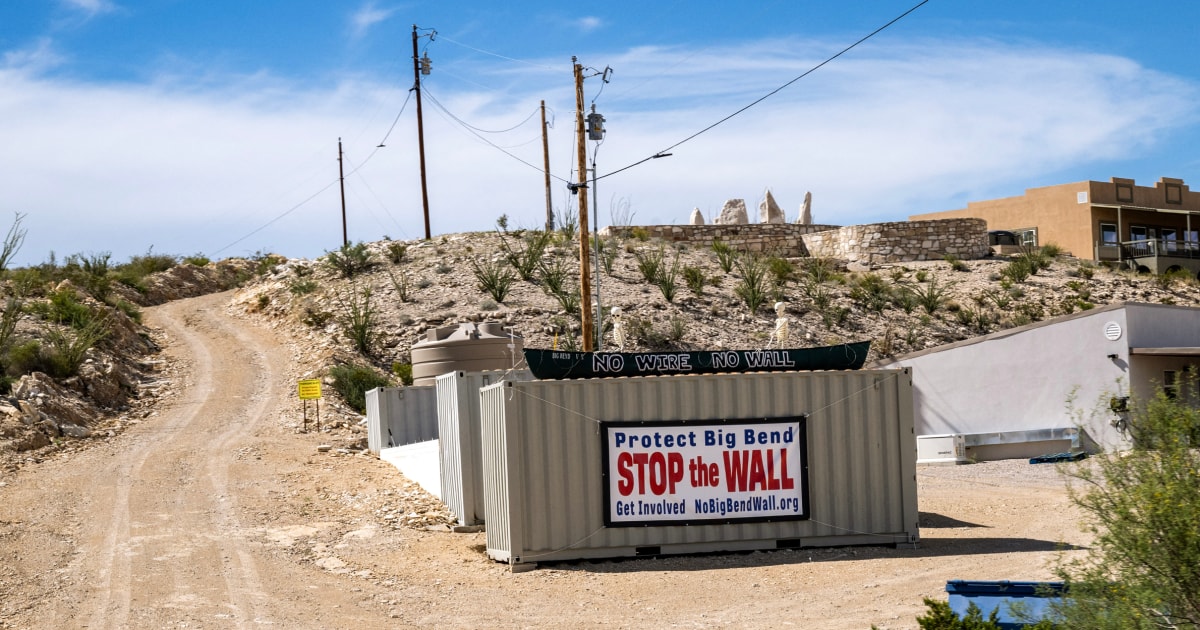
Texas landowners, ranchers and a nonprofit coalition sued the Trump administration Monday to stop border wall construction through private property in the remote Big Bend region, arguing the government is wrongly using emergency powers in an area with some of the lowest illegal crossing numbers on the Southwest border.
The lawsuit, filed in federal court in Washington, D.C., by Conserve Big Bend and six plaintiffs, seeks to halt planned walls, barriers and roads across western and southwestern Texas. Conserve Big Bend represents a coalition of about 230 landowners, including residents in Hudspeth, Brewster, Presidio and Val Verde counties who have received written notices from U.S. Customs and Border Protection identifying their land as potentially needed for the project.
The plaintiffs say the administration improperly designated the Texas border area as one of “high illegal entry” to invoke “extraordinary power” to build in “one of the most remote, rugged and ecologically significant stretches of the United States.” According to the lawsuit, the Big Bend sector, which covers 77 counties and Oklahoma, recorded the fewest apprehensions among the nine Southwest border sectors in 2025, accounting for just 1.3% of the total. Over the past five years, the lawsuit says, the sector accounted for 1.16% of apprehensions and had the lowest number each year.
“For us, the Big Bend is not an empty place on the map,” said David Keller, a regional archaeologist, historian and Conserve Big Bend board member. “It is our home.”
Keller, who owns a 10-acre farm in Presidio County, said the group organized after landowners began receiving letters from the government. The lawsuit says he uses his land for boating, guiding river trips and personal use, and fears construction could cut off his access to the Rio Grande, affect irrigation and make the property unusable for farming.
At a news conference outside the Presidio County Courthouse in Marfa, supporters held signs reading “Landowners against Border Wall” and flags including one that said, “Don’t Mess with Big Bend.” Some of the opponents had previously demanded tougher border enforcement and criticized the Biden administration over increased crossings.
“We spoke real loud when our border was being invaded. And as a two-time Trump voter, you know the border’s secure. Thank you, thank you, President Trump. You’ve secured the border, but now let it go,” said Laura Allen, a Val Verde County rancher and former county judge who is part of Conserve Big Bend but is not a named plaintiff.
Allen said construction related to immigration enforcement now threatens land that has been in her husband’s family since 1920. She said plans would run through the middle of their property near Lake Amistad and the Rio Grande and would place “working facilities” behind “walls,” cutting off a subdivision of about 100 retirement homes and weekend getaways.
Joaquin Peña said his family has farmed in Redford, Texas, for generations. “Farming is the backbone to our community, and now we’re being told that we have to give up land for a threat that doesn’t even exist,” he said. “Yet the real threat is the government taking away land from honest Texans, and that’s just not right.”
William Zuberbueler, whose family’s Val Verde County land dates to the 1880s, said the government has taken portions over decades for U.S. Highway 90, Seminole Canyon State Park and Lake Amistad. The lawsuit says CBP sent him multiple notices between February and July involving 11 tracts for possible construction-related access. “Our land, which my brother still actively ranches, running sheep, goats and cattle, our birthright, is now being taken by an administration that has promised to protect it,” he said.
The case comes as the administration expands a $46 billion effort to build border infrastructure along the roughly 2,000-mile U.S.-Mexico border, including 30-foot steel bollard walls, vehicle barriers and technology, according to Al Jazeera. The effort has drawn opposition from Indigenous groups, environmentalists, local officials, tour guides and landowners in several states.
NBC News reported that the Department of Homeland Security did not immediately comment Monday. CBP last month paused construction and survey work in Big Bend National Park after heavy equipment and desert clearing drew backlash on social media. CBP Commissioner Rodney Scott said on X that the agency was pausing “all construction activity in Big Bend National Park while I visit and conduct a personal, on-the-ground evaluation.” That pause is due to expire Sept. 30.
Landowners outside the park say their property remains at risk. Conserve Big Bend says 65% of the 609 miles of the planned Big Bend sector border project is on private property.








Be First to Comment