Key takeaways:
- U.S. Central Command said it destroyed five Iranian oil tankers Tuesday after two attempted ballistic missile attacks on a U.S. Navy warship.
- Jordan’s military said it intercepted 18 ballistic missiles launched toward its territory and reported no casualties after Iran said it targeted U.S. assets there.
- Brent crude traded above $99 early Wednesday as hostilities continued around routes critical to global oil shipments.
The U.S. military said it destroyed five Iranian oil tankers, and Iran responded by launching missiles toward U.S. targets in Jordan, intensifying a series of retaliatory strikes in a war that has disrupted one of the world’s most important oil routes.
Jordan’s military said Wednesday that its air defenses intercepted 18 ballistic missiles launched toward its territory and that two others fell in unpopulated areas. It reported no casualties. Iranian state-run media said Tehran had targeted U.S. assets in the region in retaliation for American attacks on its oil tankers. U.S. Central Command said it had no information to offer when asked about the strikes on the Jordanian air base.
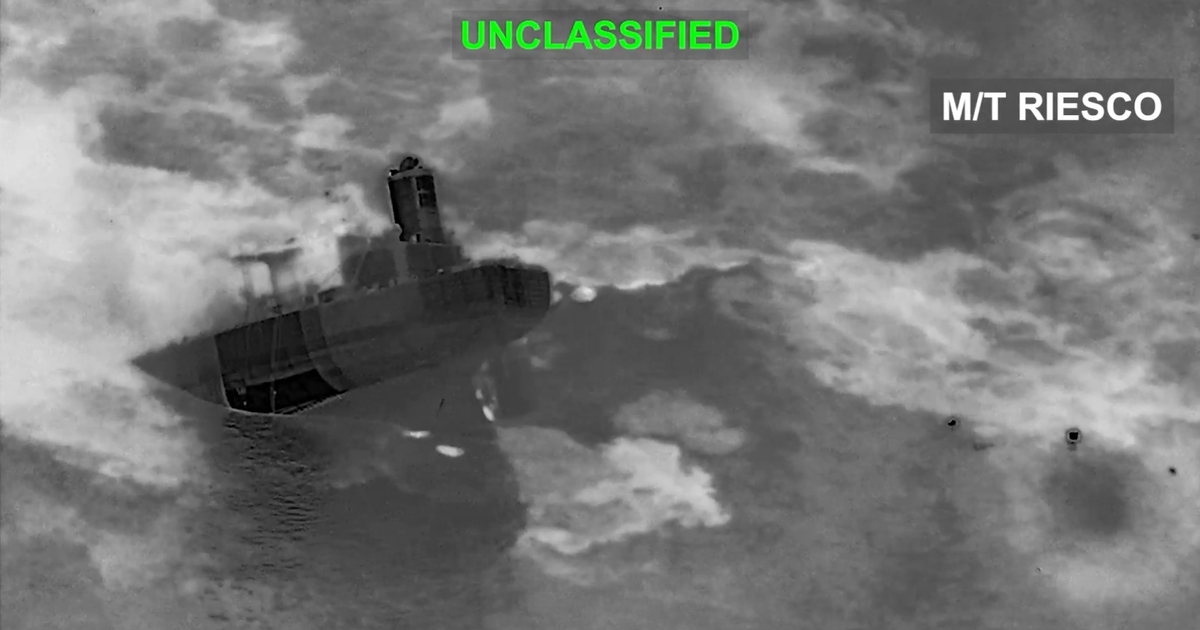
CENTCOM said Tuesday night that U.S. forces “destroyed” five oil tankers associated with Iran’s Islamic Revolutionary Guard Corps after the Revolutionary Guards targeted a U.S. Navy warship with ballistic missiles twice over the past two days. The U.S. warship evaded the attempted attacks and continued patrolling regional waters, CENTCOM said, adding that no American personnel were harmed.
“American forces directed the crews to abandon ship before the vessels were struck and rendered inoperable,” CENTCOM said.
The military identified four of the tankers struck in the Gulf of Oman as the Kivik, Charminar, Horizon 1 and Riesco. A fifth vessel, the Derya, was hit near Kharg Island, an island in the Persian Gulf that serves as Iran’s primary crude oil export terminal. CENTCOM said the ships were part of Iran’s shadow fleet, a network of tankers used to export oil and generate revenue for the regime.
Iranian state television also reported the U.S. strikes, saying American forces attacked Iranian oil tankers near the southern port of Jask and near Kharg Island. It said the crews were evacuated. A state TV reporter in Jask said an Iranian tanker was struck near the coast of Yekbeni, and state television later reported a second tanker had been attacked near waters off Jask. Another tanker was reported attacked in the Kharg Island anchorage area.
The U.S. military also destroyed three Iranian oil tankers Saturday after Iran’s Revolutionary Guards tried to attack a U.S. aircraft carrier and destroyer with ballistic missiles, according to NPR. The U.S. had warned that it would, “if necessary, destroy Iran’s limited and exposed oil fleet.”
Secretary of State Marco Rubio said Tuesday that Iranian attacks on U.S. naval ships would not go unanswered. “Iran continues to try to hit U.S. naval ships. And for every time they do that or try to do that, they’re going to lose tankers. And I think you’ll see that again today,” Rubio told reporters while traveling in Colombia.
Iran’s Revolutionary Guard Navy warned crews of oil tankers near ports in Kuwait and Bahrain to leave their vessels immediately, saying the ships could be targeted in retaliation for the U.S. attacks. It accused Kuwait and Bahrain of hosting U.S. forces and assisting in the attacks.
The strikes have raised pressure around the Strait of Hormuz, where about one-fifth of the world’s oil passed before the war began in February. Traffic through the strait has since plummeted, with only small periods of temporary and limited recovery. Brent crude, the international benchmark, traded above $99 early Wednesday after briefly climbing as high as $99.46 on Tuesday. U.S. benchmark crude rose 1.2% to $94.17 a barrel.
The conflict is also spilling into Yemen. Yemen’s Iran-backed Houthis reported more than 30 Saudi strikes on several regions Wednesday, a day after the rebels launched major attacks on Saudi Arabia that Saudi authorities said caused temporary shutdowns at oil sites and injured 73 people. Saudi Arabia did not immediately comment on the Houthi report. Deadly fighting reignited in Yemen last week when the Houthis launched a campaign to seize territory near the Bab al-Mandab strait, which has become increasingly important for Saudi oil since Iran effectively closed the Strait of Hormuz, choking Gulf exports.








Be First to Comment