Key takeaways:
- More than 1,200 people were killed in the Aug. 26 flash flood, with NBC News reporting more than 4,000 missing and Al Jazeera reporting about 4,750 missing in Nepal and China’s Tibet region.
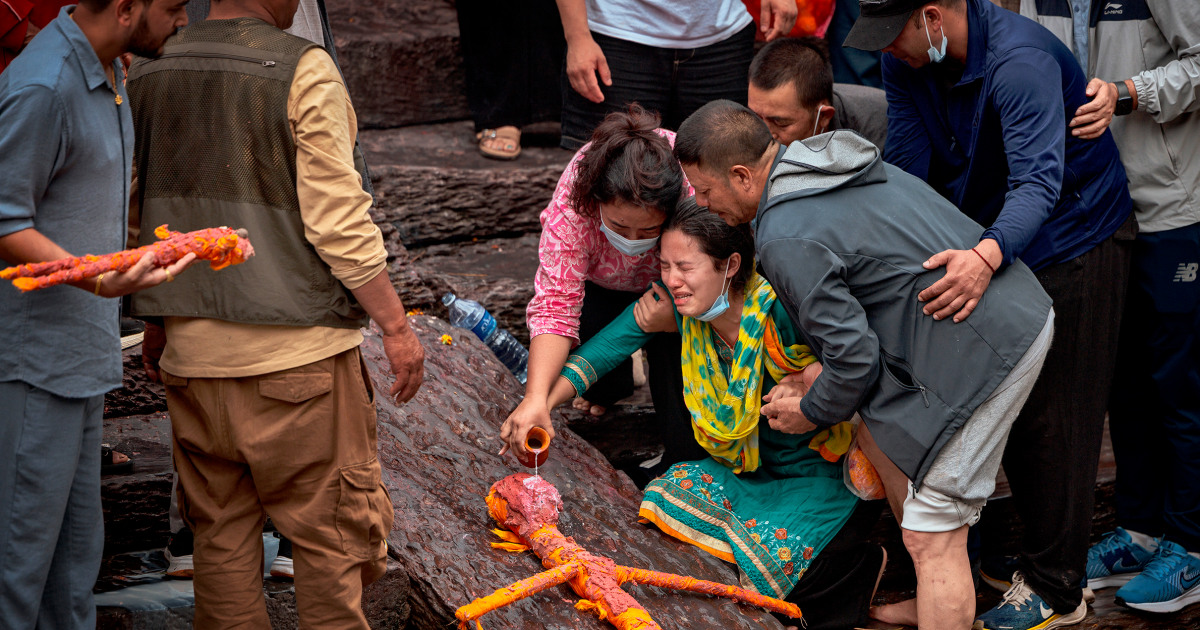
- Families gathered at Kathmandu’s Pashupatinath Temple to burn kusa grass effigies in symbolic Hindu cremations for missing relatives presumed dead.
- Authorities say they are preserving DNA samples, photographs and identifying details from recovered bodies so remains can later be matched and returned to families.
Families in Nepal are holding symbolic cremations for loved ones still missing after a wall of ice, water and rock tore through the Himalayan region, killing more than 1,200 people and leaving thousands unaccounted for.
A week after the disaster, hopes of finding survivors have faded. Many families have no bodies to cremate, a central rite in Hindu funeral tradition, because remains have been swept far downstream, left unrecognizable or are feared buried under thick mud. Morgues have been overwhelmed by the scale of the deaths and the number of unidentified remains.
At Kathmandu’s Pashupatinath Temple on Wednesday, mourners gathered along the holy Bagmati River to mark the loss of missing relatives. The temple, with its pagoda-style roof, has stood for centuries and is considered one of Asia’s most important Hindu pilgrimage sites.
On the riverbank, families burned effigies made of kusa grass, also called darbha, a plant used in Hindu rituals. The small stick figures were wrapped in orange cloth, rubbed with paste and covered in garlands of orange flowers before being placed on miniature funeral pyres.
Some relatives collapsed into the arms of loved ones as the ceremonies unfolded. Nepali service members in military fatigues stood on the steps leading from the temple to the river, holding rifles and providing military honors.
For families without remains, the symbolic funerals offer a way to observe a vital final rite and, according to Al Jazeera, are intended to help free the souls of those presumed dead. The ceremonies have also provided an outlet for grief and uncertainty as families wait for word on the missing.
The Aug. 26 flash flood was one of the deadliest disasters to strike Nepal in recent years. Al Jazeera reported that more than 1,200 people were killed and about 4,750 remain missing in Nepal and China’s Tibet region after a huge wave of mud and debris destroyed towns, roads, bridges and several hydropower dams. NBC News reported that more than 4,000 people are missing.
Authorities have been burying recovered bodies in temporary or mass graves as they work to prevent the spread of disease and manage the large number of remains. Some relatives of the missing have expressed frustration that mass burials are being carried out without families’ consent.
Officials say they are preserving DNA samples, photographing distinguishing facial features and recording other identifying details to help match remains with missing people. Local officials have said bodies identified after burial could later be exhumed and handed over to families.
For now, many families are proceeding without certainty. With bodies missing or unidentified, the symbolic pyres at Pashupatinath have become a substitute for the funerals they cannot yet hold.



Be First to Comment