Key takeaways:
- The BBC reported more than 175 deaths and 800 missing, while Al Jazeera reported about 180 deaths and at least 1,400 missing across Nepal and Tibet.
- Nepal’s Prime Minister’s Office said 19 vehicle bridges and 43 kilometers of highway were swept away, according to Al Jazeera.
- Survivors in Nuwakot and Rasuwa described losing relatives, homes, livestock, farmland and hydropower facilities in the sudden flood.
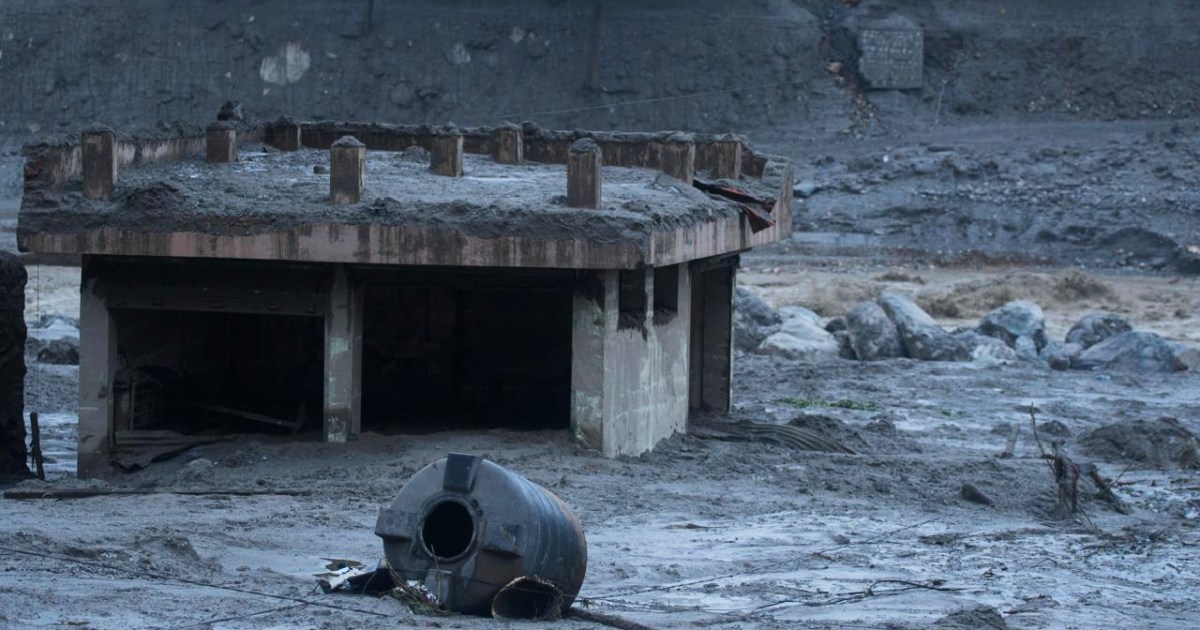
Survivors in Nepal described watching relatives vanish into torrents of mud after a massive flash flood swept through Himalayan communities on the Nepal-Tibet border, destroying villages, bridges, farms and power facilities and leaving hundreds missing.
The BBC reported that more than 175 people have died and 800 others are missing after Wednesday’s floods, while Al Jazeera reported about 180 deaths and at least 1,400 people missing across Nepal and Tibet. Officials said the numbers were expected to rise as floodwaters recede and communications are restored in the worst-hit areas.
The flood was so powerful that seismologists initially identified it as an earthquake, the BBC reported. Nepalese authorities rushed aid and relief supplies to affected areas Thursday as rescuers moved through thick mud and debris.
“My family members were swept away by the flood in front of my eyes,” Kalpana Malla of Nepal’s Nuwakot district told the BBC. She said her father, mother, sister and her sister’s children were all taken by the flood.
“They could not escape the flood; there was no chance at all,” Malla said. “This flood took everything, but my son and I climbed the rooftop of a house and survived but couldn’t explain how.”
Her son, Sugam Malla, said he pulled his mother by the hand to save her. He said he had given his phone to his sister so she could keep in touch, but the mobile was no longer reachable. “I am worried she must be swept away,” he said.
In Bidur, a city in Nuwakot district along the Trishuli river, students at Trishuli Secondary School fled after teachers shouted warnings. Gyan Deep Sapkota, a grade 11 student, told Al Jazeera that some students crossed an old bridge while others ran uphill. “Some of the students also had panic attacks and fainted,” he said. “It’s still giving me goosebumps and anxiety.”
Al Jazeera reported that the flood followed a suspected glacial lake outburst upstream in Tibet and swept away settlements and dams. Nepal Police spokesperson Abi Narayan Kafle said late Wednesday that search and rescue teams had recovered 95 bodies. Senior superintendent Rajendra Prasad Dhamala said most bodies recovered in Bagmati province were found downstream.
Among the missing, Al Jazeera reported, are police, government employees, hydropower engineers, Nepalese citizens and hundreds of foreign tourists. Many missing people were Indian tourists heading to Tibet for the Kailash Mansarovar Yatra, a Hindu pilgrimage to a lake sacred to Hindus, Buddhists and Jains.
Residents described widespread destruction. “Till early this morning it was very scenic around here. There were houses and horticulture gardens here. There was a hydropower station and plant. Everything has been swept away,” healthcare worker Rajendra Poudel of Betrawati told Al Jazeera. “There is nothing here. This is heartbreaking; I am out of words.”
Goma Pandit told the BBC she lost her buffaloes and other cattle. “My farmland is also swept away. Ten sacks of mustard seeds, tons of corn and rice paddy are all gone. Nothing is left.”
A statement from Nepal’s Prime Minister’s Office said 19 vehicle bridges and 43 kilometers of highway connecting lower regions to affected areas were swept away, Al Jazeera reported. Rasuwa, Nuwakot, Dhading, Gorkha and Chitwan districts were placed on high alert, and authorities urged people to stay far from rivers.
At hospitals in Kathmandu, relatives searched for news of loved ones. Ram Khumari Shrestha showed the BBC a photo of her husband, a driver bound for Rasuwa. “He was in contact with me until 8 pm yesterday. But I couldn’t call him this morning. The phone was switched off,” she said.
Trekking guide Sonam Dorjee told the BBC he left his village of Rasiwa Syafru about an hour before the flood struck. “It sounded like an earthquake,” he said. “My house has collapsed… I have seen a photo.” His sister, her husband and several relatives were missing. “There is a 10% chance, we hope,” he said.





Be First to Comment