Key takeaways:
- The jury of nine women and three men reported Tuesday that it was unable to reach a unanimous decision after more than 17 hours of deliberations.
- Lindsay Clancy, 36, has pleaded not guilty to first-degree murder in the deaths of Cora, 5, Dawson, 3, and Callan, 8 months, in Duxbury, Massachusetts, on Jan. 24, 2023.
- The defense says Clancy suffered from postpartum psychosis and was not criminally responsible; prosecutors say she planned the killings and knew right from wrong.
Jurors weighing murder charges against Lindsay Clancy told a Massachusetts judge Tuesday that they could not reach a unanimous verdict, but the judge ordered them to keep deliberating after a trial centered on whether she was criminally responsible for killing her three young children.
The 12-person jury, made up of nine women and three men, began its fourth day of deliberations in Plymouth Superior Court and met for less than an hour before sending a note to Judge William Sullivan shortly after 10 a.m.
“After many hours of deliberation, we are unable to come to a unanimous decision,” Sullivan read from the jury’s note in court.
Sullivan instructed jurors to return to the deliberation room.
“I know that this was a long trial,” he said. “I know there were over 80 witnesses, over 300 exhibits, but because of that, I’m going to ask you to go back out, keeping in mind all the instructions that I gave you. To go out and to continue your deliberations at this time.”
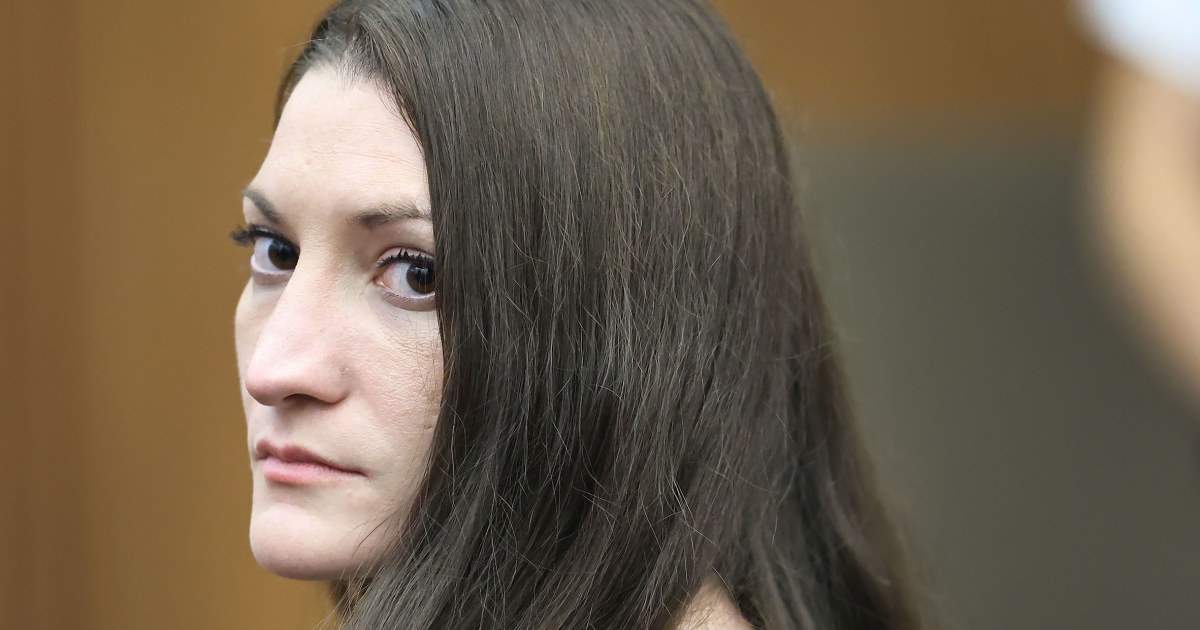
Neither prosecutors nor Clancy’s attorney, Kevin Reddington, objected. Clancy, who wore a beige sweater, showed no visible emotion in court. Her parents and sister were also present, and CBS News reported there were no noticeable reactions from Clancy or her family after the note was read.
Clancy, 36, has pleaded not guilty to first-degree murder in the deaths of her children — Cora, 5, Dawson, 3, and Callan, 8 months — at the family’s home in Duxbury on Jan. 24, 2023. Prosecutors accused her of using exercise bands to strangle the children in the basement while her husband was out running errands. When he returned, he found her outside beneath a second-story window after a suicide attempt that left her paralyzed from the waist down.
The trial lasted about five weeks. NBC News reported the jury heard more than 80 witnesses and reviewed more than 300 exhibits, while CBS News reported testimony from 85 witnesses and more than 200 pieces of evidence. Jurors have deliberated for more than 17 hours since receiving the case last Thursday. On Friday, they asked to review pill bottles and a knife that had been entered into evidence.
The central dispute is Clancy’s mental state at the time of the killings. Reddington has argued that Clancy was suffering from postpartum psychosis, had been overmedicated and heard a voice when the children were killed. Her defense team has said she previously sought help for mental health issues.
Prosecutors said Clancy was not in psychosis, planned the killings and knew right from wrong.
WBZ-TV legal analyst Jennifer Roman told CBS News that the length of deliberations may feel long, but not in light of the witnesses and documents jurors must review. “I think their primary focus is really going to be around that million-dollar question, which is – did she have the mental capacity to appreciate right from wrong and conform her conduct to the law when she killed these three children?” Roman said. “That is… that is the question the jury has to answer.”
Jurors may convict Clancy of first-degree murder or lesser charges, including second-degree murder and manslaughter. They also may acquit her or find her not guilty by lack of criminal responsibility, meaning they believe she could not control her actions because she was in psychosis. CBS News reported that a conviction on murder or manslaughter charges would send Clancy to prison, while a finding of not guilty by reason of insanity would require her to remain at Tewksbury State Hospital, with periodic review of her case.
Before Tuesday’s deadlock note, Reddington told reporters he had “really strong faith” in the jury and said he would “absolutely” try the case again if the trial ends with a hung jury.
“Maybe today’s the day; we’ll see. I don’t know,” Reddington said.
Asked what a hung jury would mean, he replied: “Try it again.”











Be First to Comment