Key takeaways:
- German officials said police work, offense patterns and intelligence findings established Russian responsibility for the Aug. 4 attempted drone attack at Leipzig/Halle Airport.
- Germany said it will close Russia’s consulate general in Bonn, terminate the Russian House contract in Berlin and tighten entry controls for Russian nationals.
- Mark Rutte said NATO stands in full solidarity with Germany, while European Commission President Ursula von der Leyen said the EU is preparing additional sanctions against Russia.
Germany accused Russia of responsibility for an attempted drone attack at Leipzig/Halle Airport, saying the case fit a broader pattern of Russian hybrid operations in Europe.
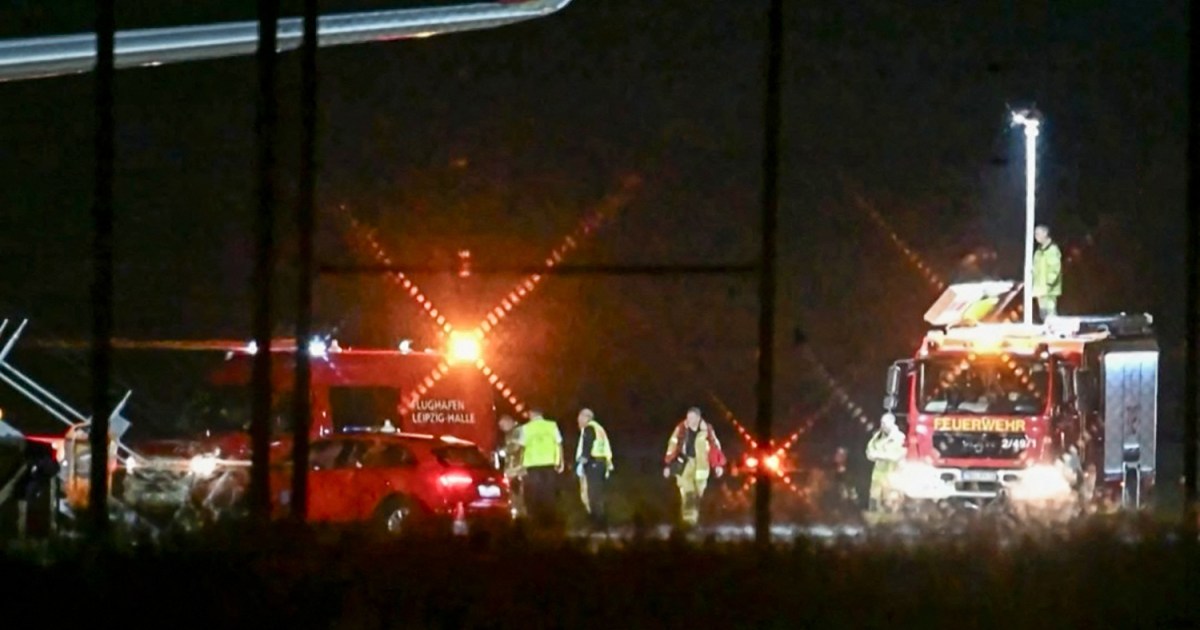
Interior Minister Alexander Dobrindt said Tuesday that police investigations, the pattern of the alleged offense and intelligence findings established Russian responsibility for the attempted attack at the airport in eastern Germany. A drone carrying an explosive device was discovered there on Aug. 4 near Ukrainian cargo planes and was defused after it failed to explode, apparently because of a faulty detonator.
“Taken together, police investigations, patterns of the offences and intelligence findings establish Russian responsibility for the attempted attack,” Dobrindt said at a news conference in Berlin alongside Foreign Minister Johann Wadephul. He said the incident followed a “well-established pattern of Russian hybrid operations in Europe” and that German authorities did not view it as isolated.
Investigators also suspect a second drone collided with a cargo aircraft nearby, the BBC reported. A third drone was reportedly found near the airport 10 days later.
Leipzig/Halle Airport is used by the German military and NATO allies to transport military goods. It also serves as a base for Ukraine’s Antonov Airlines, which carries much of the country’s aerial cargo.
Germany announced diplomatic and security measures in response. Wadephul said he had summoned Russia’s ambassador to Germany, Sergei Nechayev, and said Germany would close Russia’s consulate general in Bonn. He also said the contract for the Russian House cultural center in Berlin would be terminated. The BBC reported that many observers have said Russian House has been used for espionage and to spread Russian propaganda.
Wadephul said Germany would tighten entry controls for Russian nationals and, through the European Union framework, seek additional sanctions and travel restrictions. He also pledged to increase pressure on Russia’s “shadow fleet,” older tankers used by Moscow to circumvent Western sanctions imposed after its 2022 invasion of Ukraine.
Maria Zakharova, spokeswoman for Russia’s Ministry of Foreign Affairs, said Moscow would respond to Germany’s measures in a “mirror-image” fashion, according to the German Press Agency. Interfax reported that she described Berlin’s steps as “anti-Russian action.” She also told the German Press Agency that “Berlin is sponsoring terrorism,” referring to Germany’s military and economic support for Ukraine.
Russia has previously rejected accusations that it was involved in sabotage operations in Europe. Before Tuesday’s announcement, German officials had said only that “foreign powers” might have been involved in the Leipzig incident, while U.S. media had reported that American officials had linked it to Russia.
NATO and EU leaders backed Germany after the announcement. Mark Rutte wrote on X that the alliance “stands in full solidarity with Germany,” the BBC reported. He added: “The evidence is clear. And I welcome the measures announced by Germany in response.”
European Commission President Ursula von der Leyen wrote on X: “We are united in our resolve to stand against Russian aggression. We will deter anyone who seeks to undermine our freedom and security.” She said the EU was preparing additional sanctions against Russia.
Several NATO member states have reported drone sightings at airports, military locations and industrial sites over the past year. European countries supporting Ukraine have also reported an increase in sabotage attacks and attempted attacks that they blame on Russia.
Germany has warned that it is a “daily target” of hybrid warfare. Chancellor Friedrich Merz said last week that those who carried out hostile acts against Germany would “pay a price,” and the government is seeking to expand the powers of its intelligence services to counter such threats.
Separately, German police said they were investigating the discovery Tuesday of improvised explosive and incendiary devices at a power substation in Brandenburg. A power line was damaged, causing a temporary outage. Authorities have not said who planted the devices.












Be First to Comment