Key takeaways:
- Trump asked the Supreme Court on Friday to keep construction moving on a planned $400 million White House ballroom.
- The D.C. Circuit upheld an injunction issued by U.S. District Judge Richard Leon, but the ruling has not yet taken effect.
- A key issue is whether the National Trust for Historic Preservation has legal standing to challenge the project based on alleged aesthetic harm to its members.
President Donald Trump asked the Supreme Court on Friday to let construction continue on a planned $400 million ballroom adjacent to the White House, seeking emergency relief after a federal appeals court upheld an order that would block work while litigation proceeds.
The filing asks the justices to keep the appeals court decision on hold as the administration prepares a full appeal. Construction is continuing for now because the appeals court’s ruling has not yet taken effect. The Supreme Court faces an Aug. 21 deadline to act.
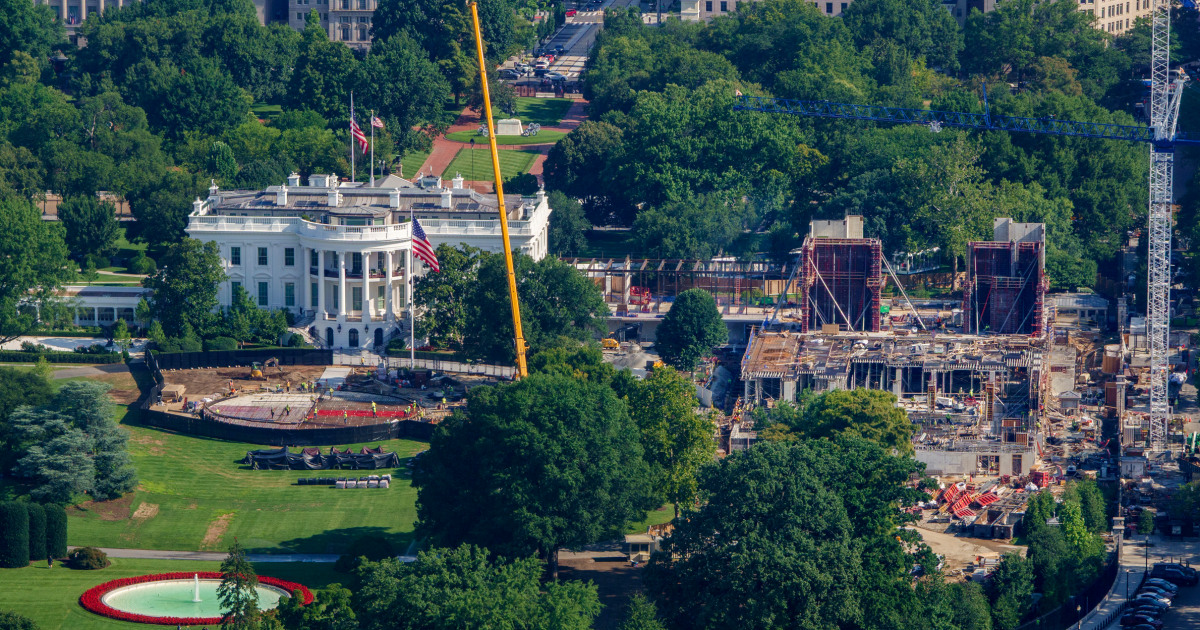
The dispute centers on a large ballroom project next to the White House that opponents are challenging in court. The U.S. Court of Appeals for the District of Columbia Circuit on Aug. 7 upheld an injunction issued by U.S. District Judge Richard Leon. The Guardian reported that the appeals court ruled the project lacked necessary approval from Congress.
Solicitor General D. John Sauer, representing the administration, argued in the emergency application that allowing the injunction to take effect would improperly shift control over White House construction decisions to one judge.
“If allowed to go into effect, the injunction would wrongfully install a single district judge as sole arbiter of what further construction is ‘strictly necessary’ to protect the safety of the President, his family, staff members, and visitors to the White House, including foreign dignitaries, and presidents and prime ministers of other countries,” Sauer wrote.
Leon had initially allowed the White House to move forward with below-ground construction of security and medical facilities, while barring work on the ballroom itself. He later ruled that all construction would have to stop. The administration immediately appealed, and that ruling has not gone into effect.
The underlying lawsuit was brought by the National Trust for Historic Preservation. A key issue is whether the group has legal standing to sue based on alleged harm to its members from construction of a building they oppose on aesthetic grounds.
The administration’s Supreme Court filing frames the case as an urgent matter involving security and White House operations. The challengers have sought to pause the project while the courts consider their claims.
If the Supreme Court grants the administration’s request, construction could continue while the broader legal fight plays out. If the justices allow the appeals court ruling to take effect, work at the site would be halted under Leon’s injunction.










Be First to Comment