Key takeaways:
- A divided federal appeals court ruled that the Trump administration cannot build the White House ballroom during ongoing litigation without congressional authorization.
- The ruling allows below-ground work, including construction related to a presidential bunker, to continue while blocking above-ground ballroom construction.
- The majority said presidents are “temporary tenants” of the White House, while dissenting Judge Neomi Rao said the preservation group lacked standing and accused the courts of judicial overreach.
A federal appeals court on Friday upheld an order blocking above-ground construction of President Trump’s planned White House ballroom, ruling that the administration cannot proceed with the 90,000-square-foot project without approval from Congress.
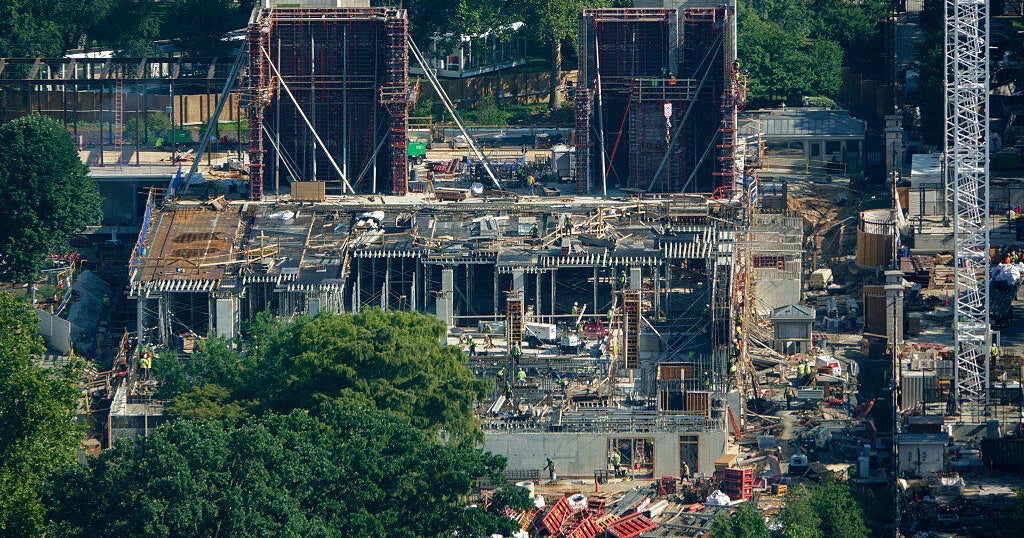
The 2-1 decision by a federal appellate panel in Washington affirmed a modified preliminary injunction issued by U.S. District Judge Richard Leon. The ruling allows below-ground work to continue, including construction related to a presidential bunker, but bars work on the ballroom itself while the case moves forward.
The appeals court stayed its own ruling for 14 days, giving the Trump administration time to appeal. CBS News reported that the Justice Department could ask the full appeals court to hear the case or appeal directly to the Supreme Court.
“Whether or not a massive ballroom should be constructed is for Congress to decide and is not a matter for Executive self-help,” the majority wrote.
Judges Patricia Millett and Bradley Garcia said the Constitution gives Congress, not the president, authority over proposed changes to the physical design of the White House, even when an administration says those changes serve security interests. Millett was appointed by President Barack Obama, and Garcia was appointed by President Joe Biden.
“Each President is a temporary tenant, not the owner, of the White House and its Executive Residence,” the judges wrote. “The President has no — and claims no — constitutionally assigned authority over that property, which is designed and maintained for the use of all Presidents, current and future, and for the American people.”
The court said the administration acted without Congress’ permission when it demolished the East Wing in October 2025 to make way for the ballroom, a project CBS News reported is estimated to cost $400 million and is claimed by the president to be funded largely through private donations.
“We are aware of no instance in American history in which a President unilaterally and using privately collected funds demolished substantial portions of the White House that Congress authorized to be built and American taxpayers paid for,” the judges wrote. “Until now.”
The majority stressed that its decision did not address whether the ballroom is a good idea. “This holding has nothing at all to do with whether the proposed ballroom is desirable, or not, as a matter of policy,” the judges wrote. “This ruling does not even necessarily mean that the Defendants may not ultimately construct the ballroom. What it does mean is that the Defendants may not do so during the district court’s expeditious litigation without securing Congress’s authorization, as the Constitution and laws require.”
Judge Neomi Rao, a Trump appointee, dissented. She wrote that the National Trust for Historic Preservation, which sued to block the project, lacked proper legal standing and accused the lower court and her colleagues of “judicial overreach.” NBC News reported that Rao said the underlying order “abused its discretion in seizing control of construction at the President’s home and office.”
The White House and Justice Department did not immediately respond to requests for comment, according to CBS News and NBC News.
The National Trust sued the administration late last year, alleging it failed to follow federal guidelines before demolishing the East Wing and breaking ground on the ballroom. The group also questioned the funding structure for the project.
Leon ruled in March that the challenge was likely to succeed, finding that “no statute” cited by the government “comes close to giving the President the authority he claims to have.” The administration argued that a law allowing routine maintenance and repairs at the executive mansion justified the work. Acting Attorney General Todd Blanche also pointed to an attempted attack at the White House Correspondents’ Association Dinner in April as evidence of the need for a secure ballroom on White House grounds.
After the administration appealed, the appellate judges directed Leon to reconsider national security issues. He later modified his order to stop above-ground work while allowing underground construction to continue. An administrative stay in April had allowed all construction to proceed while the appeals court considered the case.
CBS News reported that a U.S. Commission of Fine Arts panel made up of Trump allies unanimously approved the ballroom proposal in February, and the National Park Service has said construction could be completed by mid-2028.






Be First to Comment