Key takeaways:
- Iran’s Revolutionary Guards said they attacked US targets in Bahrain, Kuwait and Jordan with drones and long-range missiles.
- Jordan’s armed forces said they shot down five missiles fired from Iran toward Azraq, with no injuries or material damage reported.
- US Central Command said the American strikes were ordered after a US Apache helicopter went down off Oman; a US official told the Associated Press it collided with an Iranian drone, though intent was unclear.
Iran’s Revolutionary Guards said Wednesday they attacked US military targets in Bahrain, Kuwait and Jordan, retaliating hours after American strikes hit Iranian sites along the Strait of Hormuz and put a fragile April ceasefire under new strain.
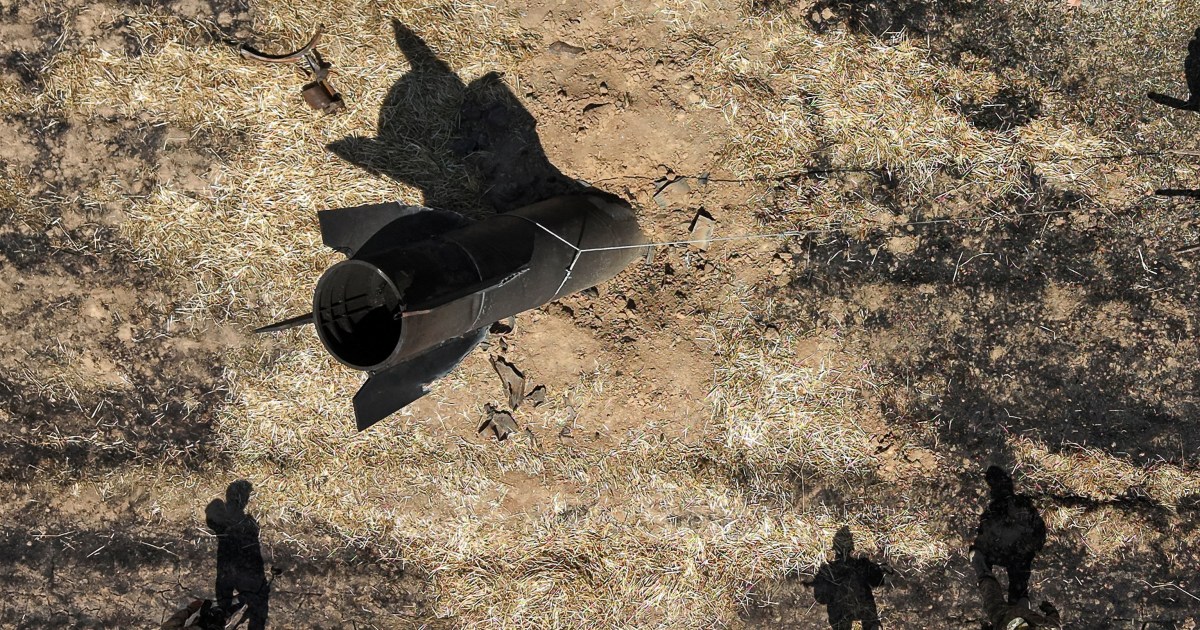
The Islamic Revolutionary Guard Corps said in a statement carried by Iranian state media that it launched drone attacks on the US Fifth Fleet in Bahrain and the Ali Al Salem airbase in Kuwait, as well as a long-range missile strike on the al-Azraq airbase in Jordan. It said it attacked 21 US targets and destroyed four of them, including an F-35 fighter jet hangar at the Jordanian base, and claimed it had shot down a US MQ-9 drone over the Iranian city of Jam.
Iran also said its targets included F-35 fighter jet hangars and a command-and-control centre. US officials told Reuters that nearly all the missiles and drones launched by Iran were intercepted. Jordan’s armed forces said they intercepted and shot down five missiles fired from Iran toward Azraq, adding that shrapnel fell without causing injuries or material damage.
The attacks set off air raid alarms in Bahrain and Kuwait. Kuwait’s military said earlier it was intercepting “hostile aerial targets” in the country’s airspace, without giving further details.
The Iranian strikes followed US attacks on Qeshm Island and ports along the Iranian coast in the Strait of Hormuz after President Donald Trump blamed Tehran for the downing of a US Apache helicopter near the strait. US Central Command said Trump directed the military to begin strikes at 10 p.m. UK time Tuesday in response to the helicopter incident off the coast of Oman. US media, citing White House officials, reported that Centcom targeted radar and air defence facilities along the strait.
A US official who spoke to the Associated Press on condition of anonymity said the helicopter went down after colliding with an Iranian drone, but it was unclear whether the collision was intentional. Official statements have said the incident remains under investigation. Trump said on social media that the helicopter had been “shot down” and wrote that Washington could not allow the incident to go unanswered.
Centcom said the mission was “a proportional response to unjustified Iranian aggression,” while US officials signalled they were not seeking a return to full-scale war. The helicopter’s two crew members were rescued after about two hours in the water in what the US military described as its first known drone rescue at sea. Centcom spokesperson Capt. Tim Hawkins said an unmanned 24-foot vessel called a Corsair located the aviators.
Iran’s foreign minister, Abbas Araghchi, responded on social media: Iran “will leave no attack or threat unanswered. Leave our region if you want to be safe.” Iran’s foreign ministry also warned Gulf neighbours that they had a “legal and moral responsibility” to prevent American and Israeli strikes.
The IRGC said the US strikes damaged a telecommunications tower in Sirik and destroyed two water tanks there. It warned that its forces remained ready to deliver a “crushing and decisive” response to further US military action.
The confrontation came a day after Iran and Israel exchanged fire in their most serious escalation since the April ceasefire took effect. Iranian state television reported Tuesday that Israeli attacks killed at least two members of Iran’s air defence units. Since the US and Israel began striking Iran on February 28, the war has shaken the global economy, driven up energy prices and made basics, including food, more expensive.
Talks to turn the ceasefire into a permanent deal have moved slowly, complicated by Israel’s expanding campaign in Lebanon against Iranian-backed Hezbollah. Before accusing Iran over the helicopter incident, Trump had said there was “a good chance” of a deal in “two or three days,” adding: “We’re very close to having a very, very good, strong, powerful deal.”
Iran’s chief negotiator, Mohammad Bagher Ghalibaf, said: “We prefer the language of diplomacy, but we speak other languages far more fluently. Break your commitments, and we’ll switch to what we speak best.”






Be First to Comment