Key takeaways:
- Prime Minister Nikol Pashinyan’s Civil Contract party is seeking a mandate to deepen cooperation with Europe while maintaining what he calls respectful institutional relations with Russia.
- Russia has imposed restrictions on several Armenian exports, a move the European Commission described as economic coercion and Moscow said was tied to import rule violations.
- Armenian investigators issued six arrest warrants for members of the pro-Russia Strong Armenia party on vote-buying allegations one day before the election.
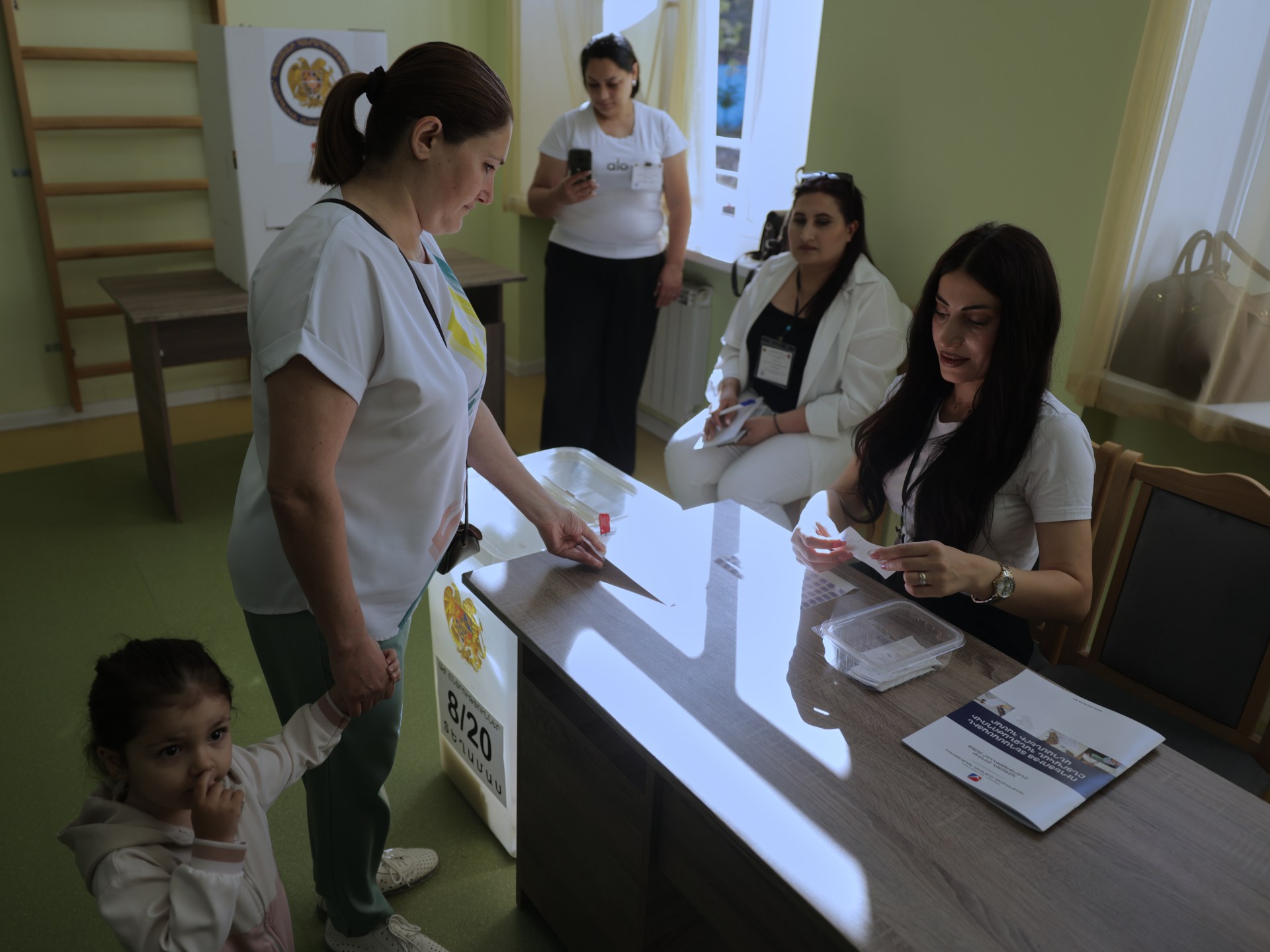
Armenians voted Sunday in a parliamentary election that has become a test of Prime Minister Nikol Pashinyan’s effort to move the country closer to Europe while managing rising pressure from Russia and pursuing peace with Azerbaijan.
Pashinyan and his governing Civil Contract party are seeking a strong mandate for what they describe as a more independent, balanced foreign policy. Their opponents include several pro-Russia parties that accuse the government of endangering Armenia’s security and weakening ties with Moscow.
After casting his ballot, Pashinyan said Armenia would continue to strengthen its “independence, statehood, democracy and rule of law.” He added: “The European Union is our main partner in democratic reform implementation, and we will continue that path.”
At the same time, he rejected suggestions of a rupture with Moscow. “Our relations with Russia are institutional and based on mutual respect,” he said, according to the Armenpress news agency.
Two political blocs and 17 parties are competing in the election. Polls opened at 8 a.m. local time and were set to close at 8 p.m. Armenia’s National Assembly must have at least 101 members, elected to five-year terms. Parties need at least 4% of the vote to enter parliament, while blocs of three or more parties must reach 8%.
Most pollsters and experts have predicted that Pashinyan, who came to power in 2018 after mass street protests, will finish ahead. Civil Contract lawmaker Hripsime Grigoryan said voters want “a peaceful, independent and prosperous Armenia.”
The campaign has unfolded against the backdrop of Armenia’s strained relationship with Russia, its longtime security partner and a major energy supplier. Russian officials have recently imposed restrictions on a range of Armenian exports, including flowers, some cognac and wine, eggplant, potatoes, dried fruits and fish. Moscow says the bans are tied to agricultural import violations.
The European Commission called the measures “nothing short of economic coercion,” saying: “By extending export restrictions on Armenian products, Moscow is weaponizing economic relations for political pressure. We know this playbook all too well.”
Russian President Vladimir Putin has said Moscow would not object if Armenians saw benefits in joining the European Union, but he also drew a comparison to Ukraine’s attempt to move closer to the EU. “We are currently living through everything that is happening in respect of Ukraine. And how did it start? It started with Ukraine’s joining or attempting to join the EU,” he told reporters after Russia’s Victory Day parade on May 9.
Putin has also said Armenia cannot join the EU while remaining in the Eurasian Economic Union, a Russia-led customs bloc. “Being in a customs union with the European Union and the Eurasian Economic Union is impossible,” he said. “It’s simply impossible by definition.”
Pashinyan has said Armenia needs good relations with the United States, Europe, Russia and regional powers including Turkey and Iran. His approach has drawn support from several European leaders and U.S. President Donald Trump, who called him “a great friend and Leader” on social media and urged Armenians to “Make (Armenia) Great Again.”
Security and identity have dominated the campaign. Pashinyan has framed the vote as a choice between lasting peace with Azerbaijan and a return to war. He and Azerbaijani President Ilham Aliyev initialed a document at the White House in August on moving toward a peace deal. Armenia and Azerbaijan had fought for decades over Karabakh, a breakaway region once controlled by ethnic Armenian forces backed by Armenia. Azerbaijan took control of the entire region in a rapid offensive in 2023, after which most of the Armenian population fled, Al Jazeera reported.
Opposition parties have sharply criticized Pashinyan’s peace efforts and his handling of relations with Russia. Strong Armenia, led by Russian-Armenian billionaire Samvel Karapetyan, favors closer business ties with Moscow and has accused Pashinyan of trying to start a war with Russia. Karapetyan is under house arrest on allegations of advocating the government’s overthrow, a charge he denies as politically motivated.
Armenian investigators said they issued six arrest warrants for Strong Armenia members the day before the election, accusing them of buying votes. The Central Election Committee allowed the party to run after a member of the Republic party sought to have it barred over corruption allegations.
Escorted to a polling station Sunday, Karapetyan said the arrests “would not change the minds of Armenian voters.” He added: “The Armenian people will make the right choice and Armenia will finally have a legitimate government.”




Be First to Comment