Key takeaways:
- Tennessee officials called off Tony Carruthers' execution after failing to establish a backup IV line for lethal injection drugs.
- Carruthers has maintained his innocence since his 1996 conviction for a 1994 triple murder, with his legal team citing lack of physical evidence and reliance on paid informant testimony.
- DNA testing requested by Carruthers' attorneys did not link him or co-defendant James Montgomery to the crime scene evidence, but further testing requests were denied.
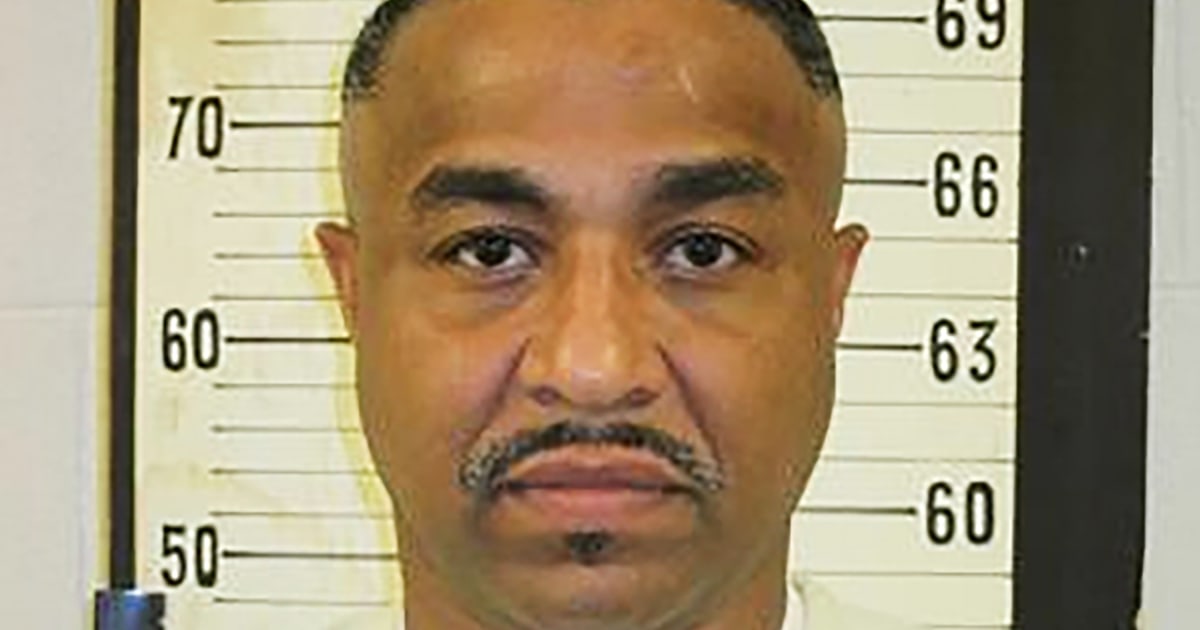
Tennessee officials called off the execution of death row inmate Tony Carruthers on Thursday after struggling for about an hour to find a vein to administer lethal injection drugs, according to Carruthers’ attorney who was present at the event. The Tennessee Department of Corrections (TDOC) confirmed that while medical personnel quickly established a primary intravenous (IV) line, they were unable to immediately establish a backup line as required by the lethal injection protocol. Attempts to insert a central line also failed, leading to the cancellation of the execution.
Prior to the execution being halted, Carruthers’ attorneys filed an emergency stay of execution in both state and federal courts, citing the department’s inability to obtain intravenous access for the lethal injection. Federal public defender Amy Harwell told NBC News that Carruthers was currently “off the gurney” and undergoing medical assessment. Melanie Verdecia, counsel for Carruthers alongside the ACLU, stated, “The State of Tennessee is currently torturing a man who maintains his innocence in the name of justice. This is not how our system is supposed to work.”
Carruthers was the first person scheduled for execution in Tennessee this year. His legal team had expressed concerns that expired drugs might be used, noting that the TDOC refused to provide assurances that only unexpired drugs would be administered. Tennessee resumed executions last year after a three-year pause that followed revelations about improper testing of lethal injection drugs. An independent review later confirmed that drugs used in 2018 had been fully tested.
Carruthers was convicted in 1996 for the 1994 triple kidnapping and murder of Marcellos “Cello” Anderson, his mother Delois Anderson, and Frederick Tucker. He has consistently maintained his innocence. His current attorneys argue that no physical evidence linked him to the crime and that the prosecution’s case relied heavily on testimony from a paid informant. The victims’ bodies were found buried beneath a casket in a Memphis graveyard.
Investigators were led to the grave by Jonathan Montgomery, who implicated his brother James Montgomery and Carruthers as suspects. A blood-stained blanket-like cloth was found in the grave with the bodies. Jonathan Montgomery was found hanged in his jail cell before trial. Carruthers and James Montgomery were tried together, convicted of three counts of first-degree premeditated murder, and sentenced to death.
Carruthers represented himself during part of his legal proceedings, which his current attorneys describe as “inept, ineffective and disastrous,” citing his mental illness and incompetence at the time. An appeals court later overturned Montgomery’s conviction due to Carruthers’ self-representation, granting Montgomery a new trial. During the retrial, Montgomery requested DNA testing of crime scene evidence. Similarly, the ACLU requested DNA testing before Carruthers’ scheduled execution, hoping to prove his innocence.
The DNA testing did not match Carruthers or Montgomery to the evidence. Most samples were inconclusive or matched the victims, but one robust male profile was found on a white blanket buried with the victims. The request for further DNA testing was denied. Montgomery accepted a plea deal for reduced charges and was released from prison in 2015.
The Tennessee Attorney General’s office declined to comment on the emergency stay motion, and Governor Bill Lee had not responded to requests for comment at the time of reporting.







Be First to Comment