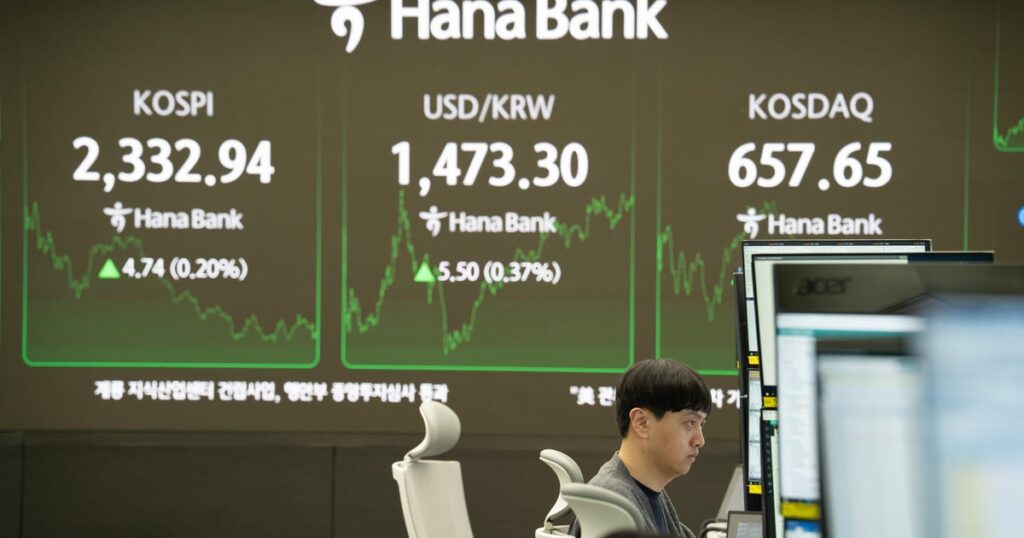
In pre-market trading on Tuesday, major U.S. stock indexes, including the S&P 500, Nasdaq, and Dow Jones Industrial Average, showed gains of between 1% and 2%, reflecting cautious optimism despite recent volatility. The ongoing trade conflict between the U.S. and China, exacerbated by President Trump's announcement of potential additional tariffs, continues to create uncertainty in global markets. Despite these tensions, global stocks, including the Nikkei 225 index in Tokyo, managed to recover some losses, indicating a modest rebound and signs of stabilization in financial markets.
Posts tagged as “Nasdaq”
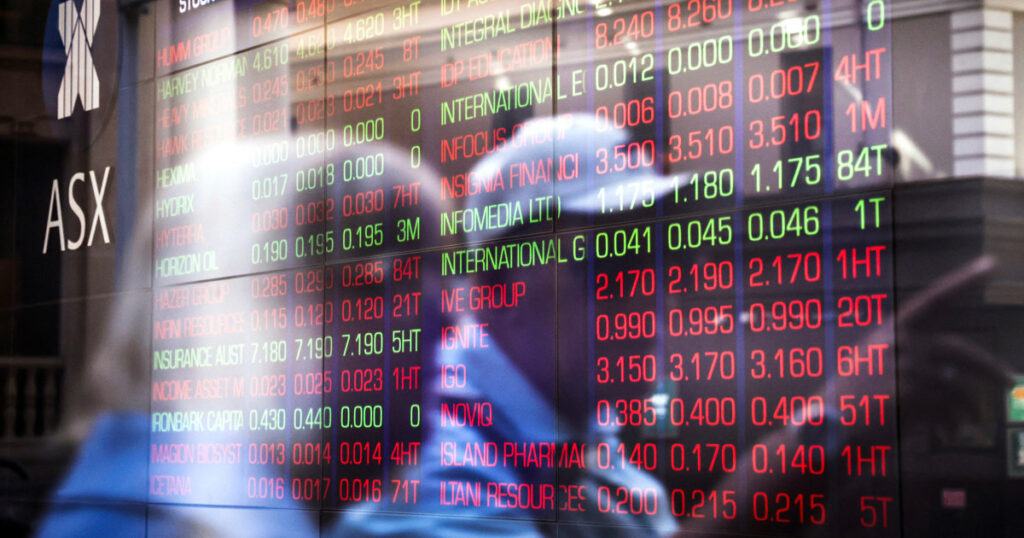
Global financial markets are experiencing significant turbulence due to investor concerns over the economic impact of tariffs imposed by the Trump administration, with U.S. stock futures and international markets showing substantial declines. The imposition of tariffs has introduced a new dynamic in international trade relations, affecting both allies and adversaries, and raising concerns about the potential unraveling of globalization. As markets and governments worldwide monitor the situation, the tariffs have the potential to significantly alter the global economy and impact the financial well-being of billions.
Major U.S. stock indexes saw a significant decline on Monday, driven by investor concerns over slowing economic growth, persistent inflation, and an unstable job market, with the S&P 500 dropping 2% and the Nasdaq Composite falling 3.4%. The downturn, exacerbated by ongoing U.S.-China trade tensions and retaliatory tariffs on American agricultural products, has erased recent gains and pushed the Nasdaq to its lowest level since September. As the market grapples with these challenges, volatility persists, with potential for further fluctuations based on economic data and policy developments.
On Monday, U.S. stock markets experienced a significant downturn after President Donald Trump announced 25% tariffs on nearly all goods imported from Mexico and Canada, raising concerns about U.S. economic growth and inflation. The announcement coincided with a Federal Reserve Bank of Atlanta forecast predicting a 2.8% economic contraction in the first quarter, reversing earlier growth projections. This led to a sharp sell-off on Wall Street, with the S&P 500, Nasdaq Composite, and Dow Jones Industrial Average all seeing notable declines as investors reacted to the potential economic impact of the tariffs.
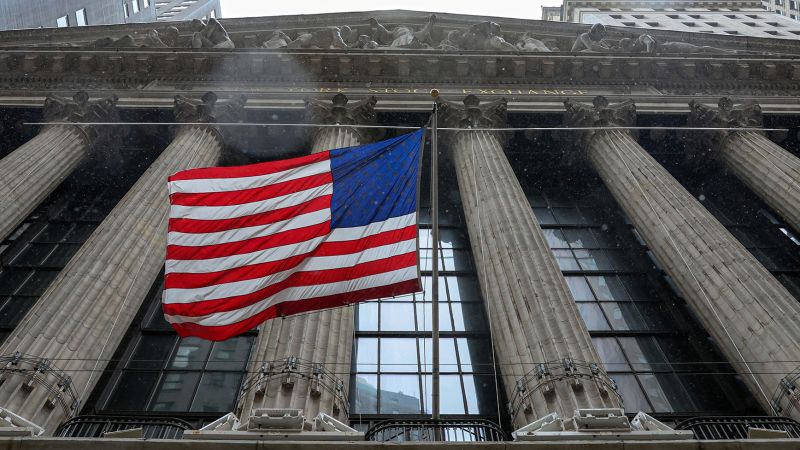
Wall Street is facing a tumultuous week as banking woes continue to plague markets both domestically and abroad. On Wednesday, the Dow Jones Industrial Average opened with a decline of more than 500 points, while the S&P 500 and Nasdaq composite were 1.1% and 0.8% lower respectively. The losses come after the collapse of Silicon Valley Bank and Signature Bank last week, and investors are closely watching to see how the situation develops. Credit Suisse has been struggling for years, including losses it took from the 2021 collapse of investment firm Archegos Capital.
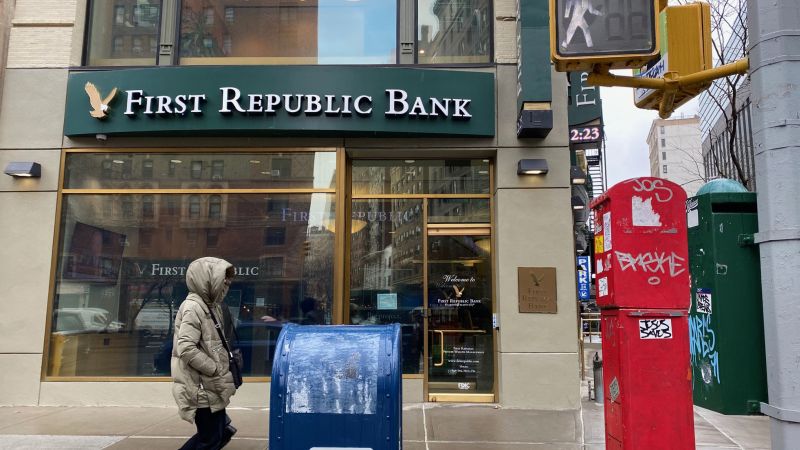
Following the second- and third-largest bank failures in U.S. history, the Biden administration and federal regulators announced emergency measures to backstop customers’ deposits, even those that weren’t insured. Despite the emergency measures, Wall Street’s confidence in regional banks remained shaky, causing the S&P 500, Dow Jones Industrial Average, and Nasdaq composite to dip or rise, respectively. Investors are uncertain about the future of regional banks and are watching to see if the emergency measures will be enough to protect customers’ deposits and stabilize the banking system.
The US banking sector is facing uncertainty following the collapse of Signature Bank, the second and third largest bank failure in US history. Investors are worried that a relentless rise in interest rates meant to get inflation under control are approaching a tipping point, and stocks have dropped as a result. The US federal government has stepped in to guarantee customer deposits, but the repercussions of Signature Bank's failure continue to reverberate across global financial markets, causing investors to worry about a potential banking meltdown.