
California’s proposed billionaire wealth tax has qualified for the November ballot after supporters submitted enough signatures. Backers still have until June 25 to decide whether to proceed as opponents, including Gov. Gavin Newsom and major tech figures, mobilize against it.
Posts tagged as “Medicaid”

Maine Democrats voted in a Senate primary where Graham Platner was expected to win despite late allegations and past controversies. The size of his margin could shape party confidence in his campaign against Republican Sen. Susan Collins.
Voters in California, Iowa, Montana, New Jersey, New Mexico and South Dakota are casting ballots in primaries that will shape key races for governor, Congress and the Senate. California’s top-two governor’s race and Iowa’s open-seat contests are among the most closely watched.

A federal appeals court has blocked the mailing of the abortion pill mifepristone nationwide, requiring in-person dispensing and limiting access through telehealth. The ruling supports Louisiana's abortion restrictions and challenges FDA regulations established during the COVID-19 pandemic.

The United States is experiencing a worsening housing affordability crisis driven by factors such as restrictive zoning, high construction costs, and policy challenges, with recent bipartisan legislation facing uncertainty due to political disputes. Although the Trump administration has taken steps like reducing building regulations and expanding incentives for low-income housing, critics argue that rollbacks of civil rights protections and cuts to social programs undermine housing security for marginalized communities. This crisis reflects broader economic inequality, as wealth gains concentrate among the top 1% while many Americans struggle with rising living costs, exacerbating social and political tensions ahead of upcoming elections.

The Supreme Court is set to hear a case concerning whether Medicaid recipients can sue to choose their healthcare providers, with Planned Parenthood at the center of the dispute. Originating from efforts by anti-abortion officials in South Carolina to block Medicaid funds to Planned Parenthood, the case unfolds amid significant changes in abortion laws following the reversal of Roe v. Wade. The outcome could impact Medicaid recipients' access to healthcare providers and influence the national debate on reproductive rights and public health funding.
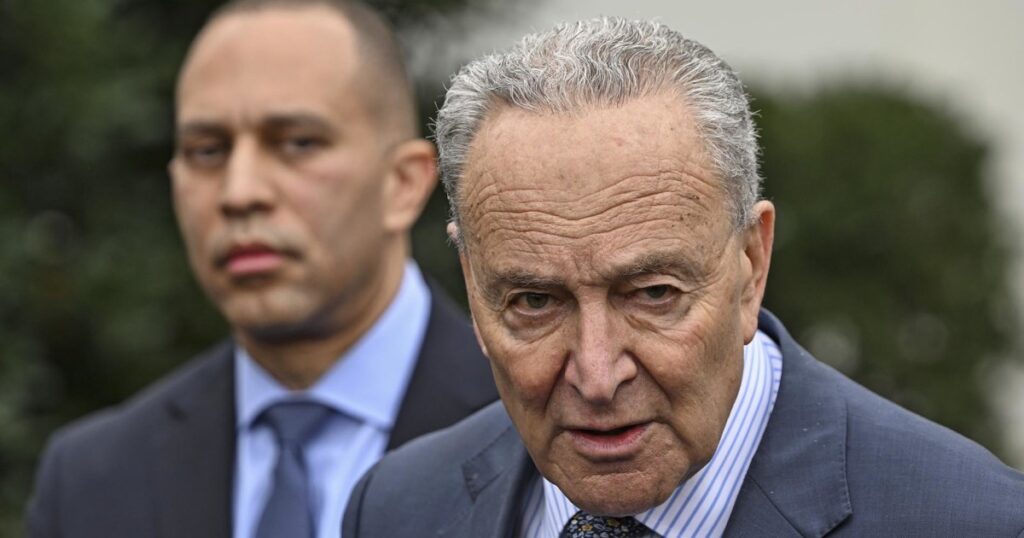
Senate Minority Leader Chuck Schumer has reaffirmed his commitment to leading the Senate Democrats amidst internal criticism for supporting a Republican-led measure to avert a government shutdown. Despite initial opposition, Schumer provided a crucial vote for the measure, defending his decision as necessary to prevent the shutdown and emphasizing his focus on opposing President Trump's agenda, particularly regarding Medicaid cuts. Alongside House Minority Leader Hakeem Jeffries, Schumer is working to unify the Democratic Party and concentrate on countering Republican policies, with his leadership being pivotal in shaping the party's strategy.

A Texas judge has blocked a state law that would have banned transition-related medical care for minors, while a Missouri judge ruled that a similar ban in that state can take effect on Monday. The ruling in Missouri means that health care providers are prohibited from providing gender-affirming surgeries to minors, with the exception of those who began puberty blockers or hormones before Monday. Physicians who violate the law face having their licenses revoked and being sued by patients, and the law has been met with strong opposition from civil rights groups. The legal fight over efforts by conservatives to restrict transition-related medical care is ongoing.