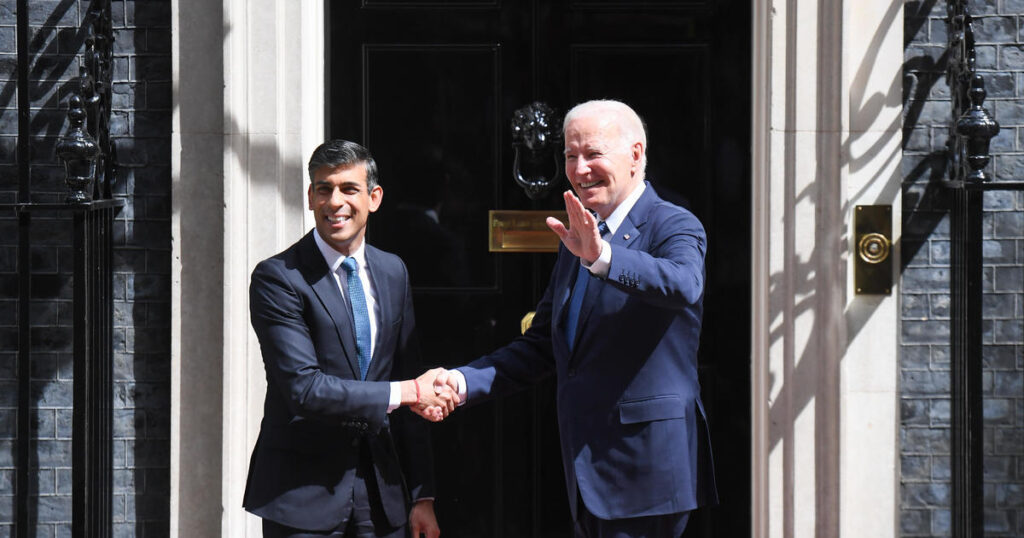
President Joe Biden is in Europe this week for the NATO summit in Lithuania, and has already held a meeting with U.K. Prime Minister Rishi Sunak. The U.S. and its NATO allies are looking to maintain a unified voice in support of Ukraine, and Biden will also meet with King Charles III to discuss the war and revise plans for dealing with Russian aggression. The trip will conclude in Helsinki, Finland, where Biden will celebrate the expanding alliance with Finland as the newest member of NATO.
Posts tagged as “Belarussian”

Ukrainian President Volodymyr Zelenskyy visited Snake Island in the Black Sea to commemorate the 500th day of the war and honor the Ukrainian soldiers who fought for the island. He laid flowers at a memorial and released wreaths onto the water, and said that reclaiming control of the island is a sign that Ukraine will regain its territory. The video serves as a reminder of the 500 days of full-scale war that Ukraine has endured, and of the bravery of its soldiers in the face of the Russian invasion.
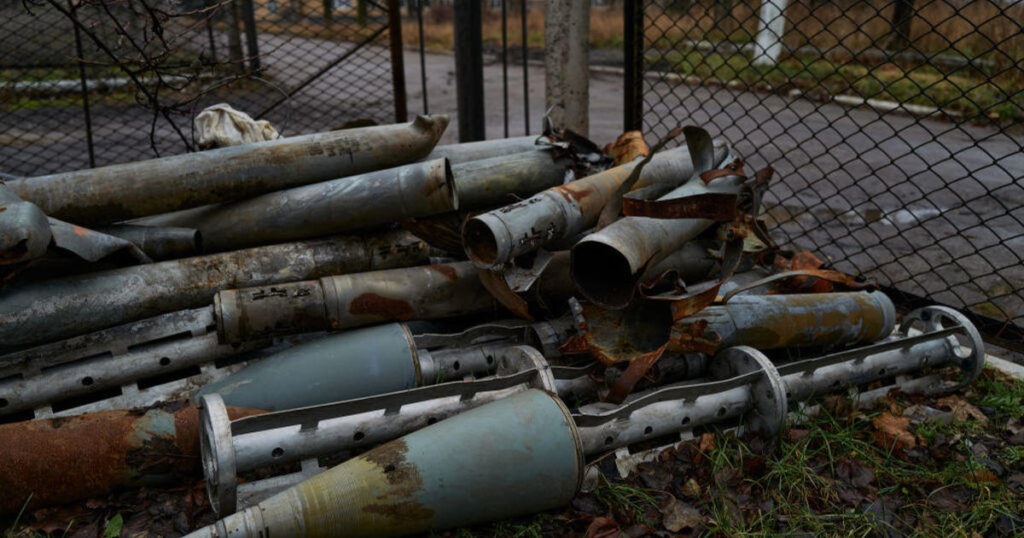
The White House has defended the decision, arguing that the munitions will only be used in a limited capacity and will not be used in populated areas, and that the U.S. is not alone in providing Ukraine with military aid. Human rights groups have criticized the decision, citing the weapons' potential for causing significant civilian casualties.

This Friday, the Biden administration is expected to announce a weapons package for Ukraine, which includes cluster bombs. These bombs, which disperse multiple small bombs over a wide area, have been criticized for their potential to cause civilian casualties, and the UN has called for a ban on their use. The package is intended to bolster Ukraine's military in its fight against Russian forces.
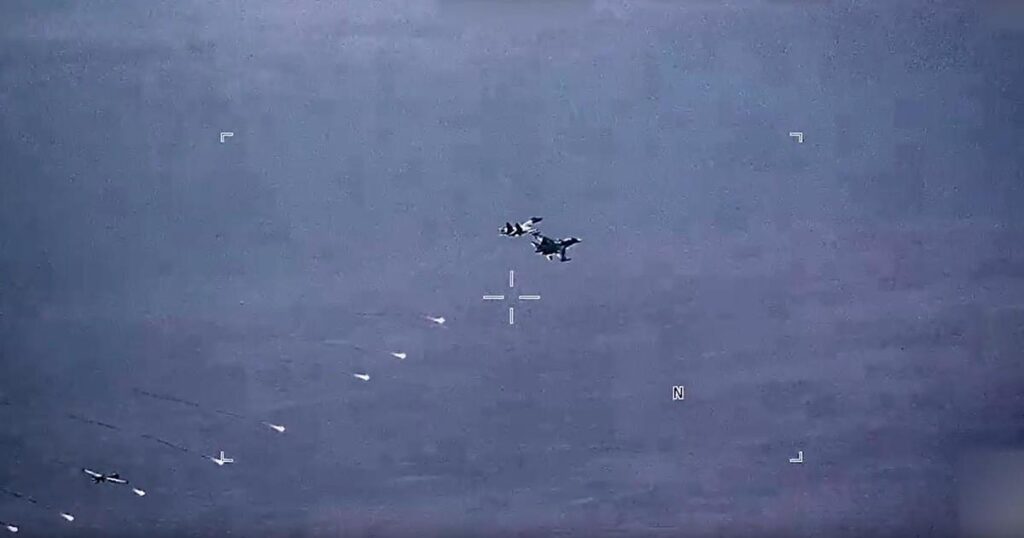
The U.S. military has accused Russia of engaging in unsafe and unprofessional behavior towards U.S. Air Force drones over Syria. On Thursday, July 25th, two Russian fighter jets flew dangerously close to Reaper drones carrying out an operation against Islamic State targets. This is the second instance of such behavior in two days and is likely to be a source of tension between the two countries. The U.S. has expressed concern and urged Russia to respect the safety of coalition forces operating in the region.

Belarusian President Alexander Lukashenko has claimed that Yevgeny Prigozhin, the leader of the Wagner Group, is in Russia and his troops are in their field camps. Footage of Prigozhin's home has been released, showing opulence and a cache of weapons, and the Kremlin has refused to comment on his whereabouts. Ukraine's security service has also claimed that Russian generals supported the Wagner Group during the mutiny, raising questions about the end of the challenge to President Vladimir Putin's rule.

This article discusses the mysterious fate of the Wagner Group, a Russian mercenary group led by Yevgeny Prigozhin, who attempted to march on Moscow in a mutiny against the Kremlin's military leaders. Alexander Lukashenko, the leader of Belarus, has stated that Prigozhin is in St. Petersburg and his troops have remained at the camps they stayed in before the attempted mutiny, contradicting the Kremlin's statement that they had been exiled to Belarus. The mystery continues, with no clear answer as to their whereabouts or if Prigozhin will face any consequences.

The U.S. has accused Russia of harassing its military drones in Syria, with Air Force Lt. Gen. Alexus Grynkewich saying that three Russian fighter jets dropped parachute flares in front of the drones, forcing them to conduct evasive maneuvers. This is the latest in a series of similar incidents, with the U.S. accusing Russia of attempting to disrupt its operations in Syria. The U.S. has called on Russia to adhere to international norms and protocols in its interactions with U.S. aircraft, though it is unclear how the U.S. will respond to the latest incident.