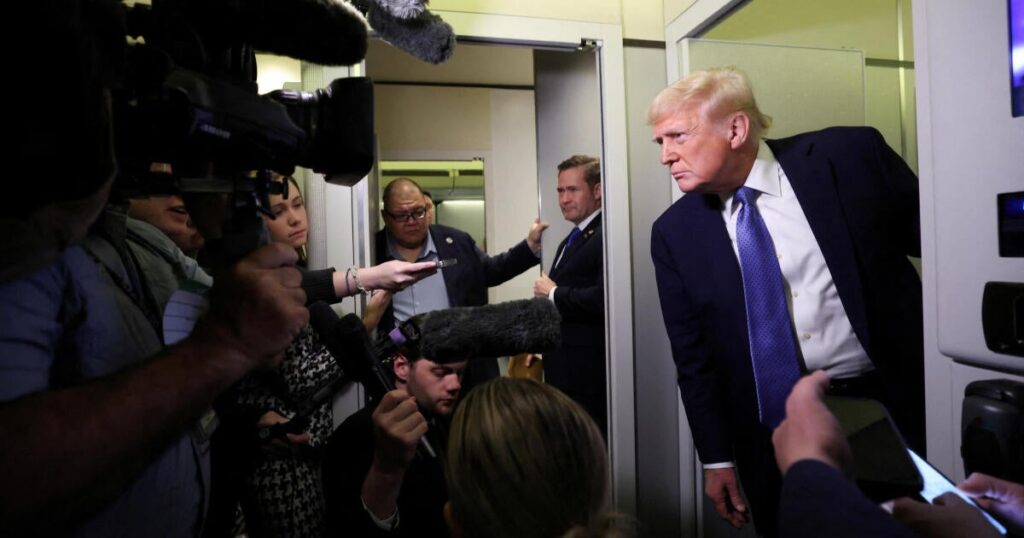
Negotiations between Washington and Moscow have begun to address the division of assets between Russia and Ukraine, aiming to end the ongoing conflict that started with Russia's invasion of Ukraine. President Donald Trump announced plans to discuss the matter further with Russian President Vladimir Putin, focusing on assets like land and power plants as potential steps toward resolution. While a recent proposal for a 30-day ceasefire was made in Saudi Arabia, further discussions are necessary as President Putin has not yet committed to a formal agreement, though diplomatic efforts continue with cautious optimism.
Posts tagged as “― Trump”
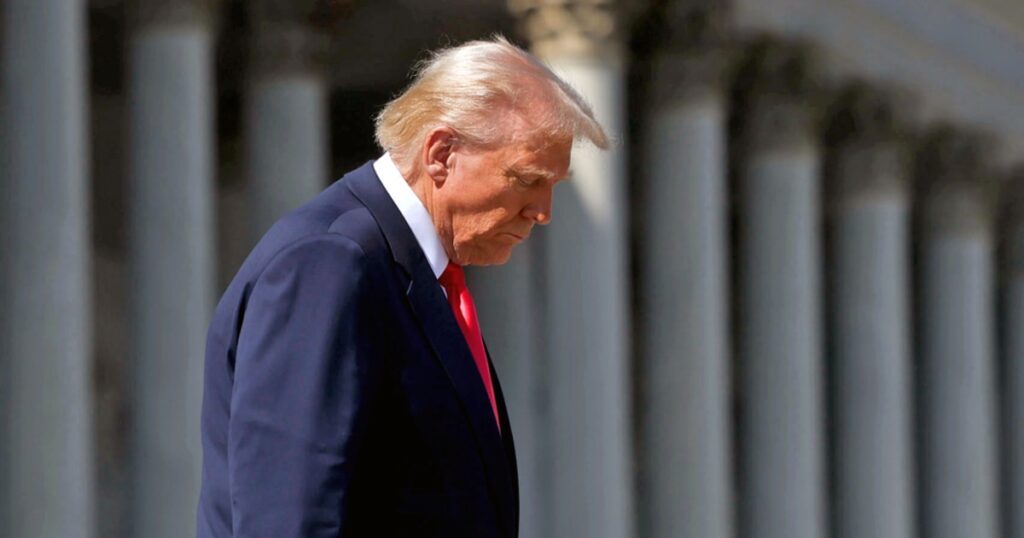
A recent NBC News poll highlights growing voter dissatisfaction with the U.S. economy and President Donald Trump's handling of economic issues, with only 18% rating the economy positively and a majority disapproving of his management of inflation. The poll also reveals skepticism towards government efficiency initiatives, with 47% holding negative views of the Department of Government Efficiency and 51% disapproving of Elon Musk's involvement. Amidst these domestic challenges, President Trump is also addressing international issues, such as proposing a cease-fire in Ukraine, while his overall approval rating stands at 47%, reflecting a divided public opinion.

The Israel Defense Forces (IDF) identified two Hamas operatives involved in drone operations amid ongoing tensions with Hamas, as recent Israeli military strikes have resulted in casualties. The Gaza Ministry of Health reported 14 deaths and 51 injuries from these strikes, while international negotiators work to reinforce the fragile ceasefire. Concurrently, the Trump administration is exploring the resettlement of Palestinians from Gaza to countries like Sudan, Somalia, and Syria as part of a broader strategy to resolve the conflict and rebuild the Palestinian enclave.

Former President Donald Trump issued an executive order targeting the New York-based law firm Paul, Weiss, suspending security clearances for its employees as part of a broader strategy to challenge legal entities representing his adversaries. This action has sparked debate, with Republican Senator Lindsey Graham supporting Trump's move and suggesting that private businesses have collaborated with government entities to undermine Trump. The situation highlights ongoing discussions about the perceived weaponization of legal and governmental institutions against Trump, with insights from figures like former U.S. Attorney Barb McQuade and First Amendment scholar Lee Bollinger contributing to the discourse on the intersection of politics, law, and business in the U.S.

In early 2025, a new NBC News poll reveals mixed voter sentiments about the U.S. economy and President Donald Trump's management, with an increase in positive perceptions following his re-election, largely due to strong Republican support. Elon Musk, CEO of Tesla, has emerged as a significant supporter of Trump, contributing $300 million to his re-election campaign, which has bolstered Tesla's public image as Trump endorses Musk's efforts in the electric vehicle industry. Despite a 47% approval rating for Trump and 51% disapproval, his administration continues to advance its policy initiatives, with the collaboration between Trump and Musk highlighting the administration's focus on technological innovation and support for American businesses.
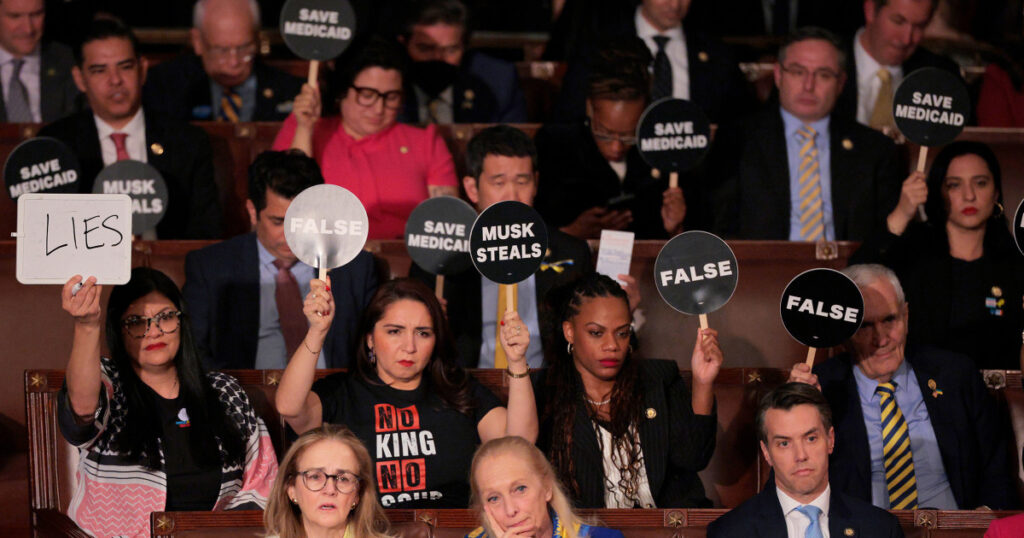
A recent NBC News poll indicates that only 27% of registered voters have a positive view of the Democratic Party, the lowest since 1990, partly due to dissatisfaction after the party's loss to Donald Trump in the 2024 election. Meanwhile, Senate Republicans passed a short-term spending bill to prevent a government shutdown, with support from several Senate Democrats, highlighting internal tensions within the party. The poll results and legislative actions underscore the need for the Democratic Party to reassess its strategies and address the concerns of its base to regain voter confidence.
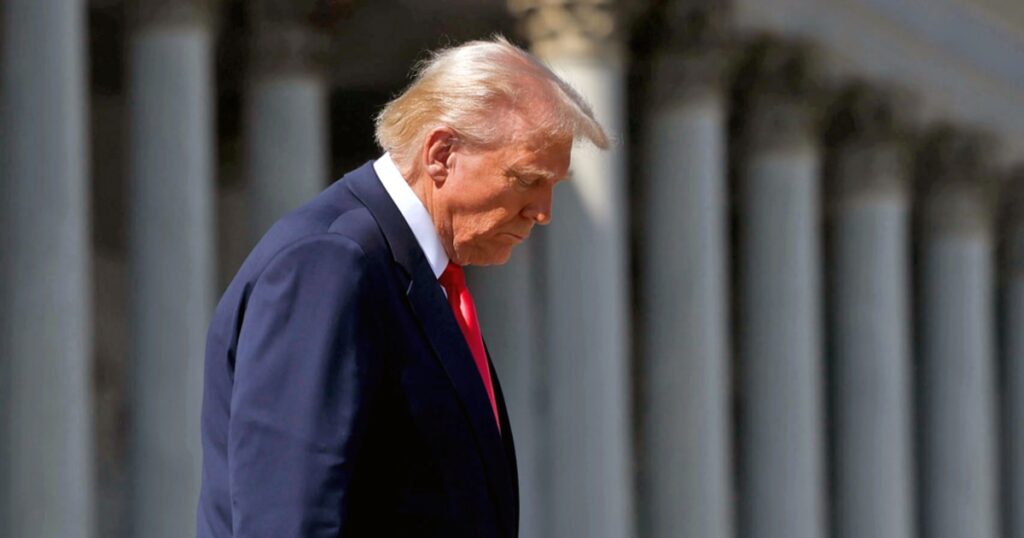
A group of Venezuelan men in immigration custody in Texas and New York have filed a federal civil lawsuit against former President Donald Trump and his administration officials, seeking to prevent deportation under the Alien Enemies Act of 1798. The lawsuit, supported by the ACLU and Democracy Forward, argues that applying this 18th-century wartime law to categorize Venezuelans as part of a gang is inappropriate and could lead to unjust deportations. A federal judge has temporarily blocked the use of the Alien Enemies Act for these deportations, sparking legal challenges and discussions about the relevance of historical laws in modern immigration policy.
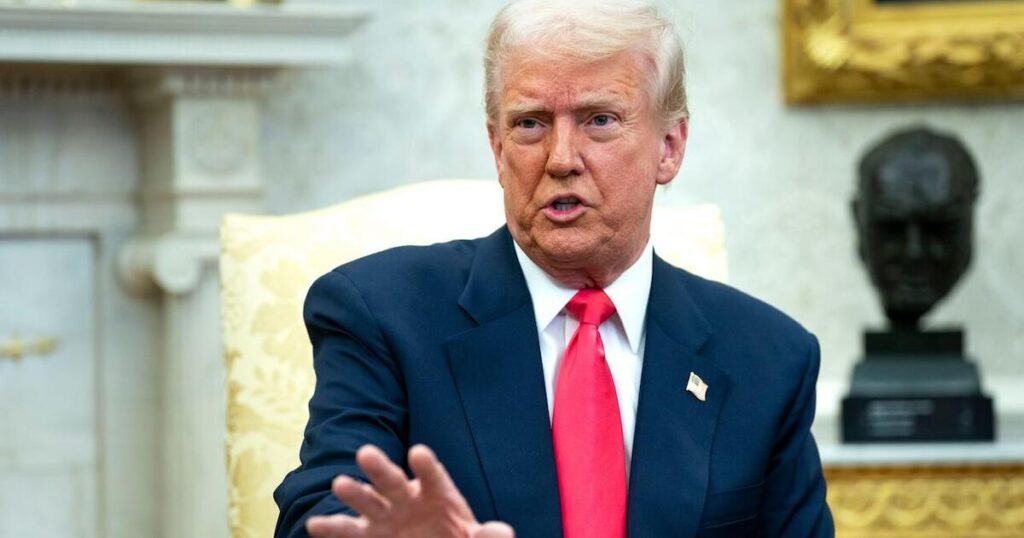
President Donald Trump has invoked the Alien Enemies Act of 1798 to facilitate the detention and deportation of Venezuelan migrants suspected of being linked to the Tren de Aragua gang, which he describes as an "invasion" or "predatory incursion." This decision, despite a federal judge's temporary limitation on the act's use, underscores the president's view of the gang as a significant national security threat due to their alleged involvement in drug trafficking and "irregular warfare." The move has sparked discussions about the historical and modern implications of using such a law, with potential impacts on U.S.-Venezuelan relations and the broader immigration and national security discourse.