In the legal case of Kilmar Abrego Garcia, a federal judge in Maryland has denied the government's secret request to further delay proceedings, following a previous weeklong postponement. The case involves efforts to return Abrego Garcia to the United States after his erroneous deportation to El Salvador, despite an immigration judge's order preventing his removal. President Trump has suggested he could resolve the issue with a phone call to Salvadoran President Nayib Bukele, but this contrasts with the administration's legal position that it lacks the authority to bring him back, amid allegations of Abrego Garcia's gang affiliation, which his legal team denies.
Posts published in “Politics”
President Donald Trump has addressed concerns about tariffs on Chinese imports, asserting that the primary burden falls on China, though acknowledging potential temporary impacts on American consumers, such as reduced availability of certain goods and slightly higher prices. During a Cabinet meeting, he emphasized that the economic strain is greater for China and suggested that many Chinese imports are non-essential for Americans, potentially limiting the impact on the U.S. market. Despite criticism that the tariffs could cause domestic economic challenges, Trump defends them as necessary for correcting trade imbalances and protecting American industries, while also dealing with frustrations over stalled Russia-Ukraine peace talks, adding complexity to his foreign policy agenda.
The United States Senate is set to vote on a resolution to block President Trump's "Liberation Day" tariffs, which were imposed under a national emergency declaration. Spearheaded by Senators Ron Wyden and Rand Paul, the bipartisan effort seeks to nullify the tariffs due to concerns about their economic impact, though it faces an uncertain future in the Republican-controlled House of Representatives. The vote highlights the ongoing tension between the executive and legislative branches over trade policy, with significant implications for international trade and the domestic economy.
Columbia University student Mohsen Mahdawi, a Palestinian and U.S. permanent resident, was released on bail after being detained by immigration authorities during his naturalization interview, with his attorneys arguing the detention was politically motivated due to his involvement in pro-Palestinian protests. His case has sparked discussions about the intersection of immigration enforcement and political activism, particularly concerning the rights of non-citizens participating in political demonstrations. Mahdawi's release and public statements underscore the broader struggle for freedom and may influence future cases involving similar circumstances.
The Trump administration's decision to deport migrants to a maximum-security prison in El Salvador, using the Alien Enemies Act of 1798, has sparked constitutional debates, particularly in the case of Kilmar Abrego Garcia. Despite a Supreme Court mandate for his release, President Trump has refused to intervene, stating that the decision is not his to make. This reliance on an outdated law has raised concerns about its relevance today, with critics pointing out that many deportees have no criminal records, prompting scrutiny of the administration's deportation practices.
More than 40 Democratic members of Congress have expressed concerns about Customs and Border Protection (CBP) practices, citing increased denials of entry and reports of harsh questioning and arbitrary detentions. A notable incident involving the deportation of a 2-year-old U.S. citizen to Honduras has intensified scrutiny of the administration's immigration policies, with Homeland Security Secretary Kristi Noem explaining the child's deportation was at the mother's request. As the administration reports a significant decrease in illegal border crossings, incidents like the detention of an American citizen questioning her travel partner's treatment have fueled ongoing debates over border officials' conduct and calls for greater transparency and accountability.
The United States Supreme Court is set to hear a pivotal case regarding the establishment of St. Isidore of Seville Catholic Virtual School in Oklahoma, which could become the nation's first religious charter school. This case has sparked debate over the potential impact on laws in 45 states, the District of Columbia, and the federal charter school program, all of which currently require charter schools to be nonsectarian. A ruling in favor of the school could lead to public funds being directed to religious institutions, challenging the separation of church and state and potentially setting a precedent for the future of public funding for religious education nationwide.
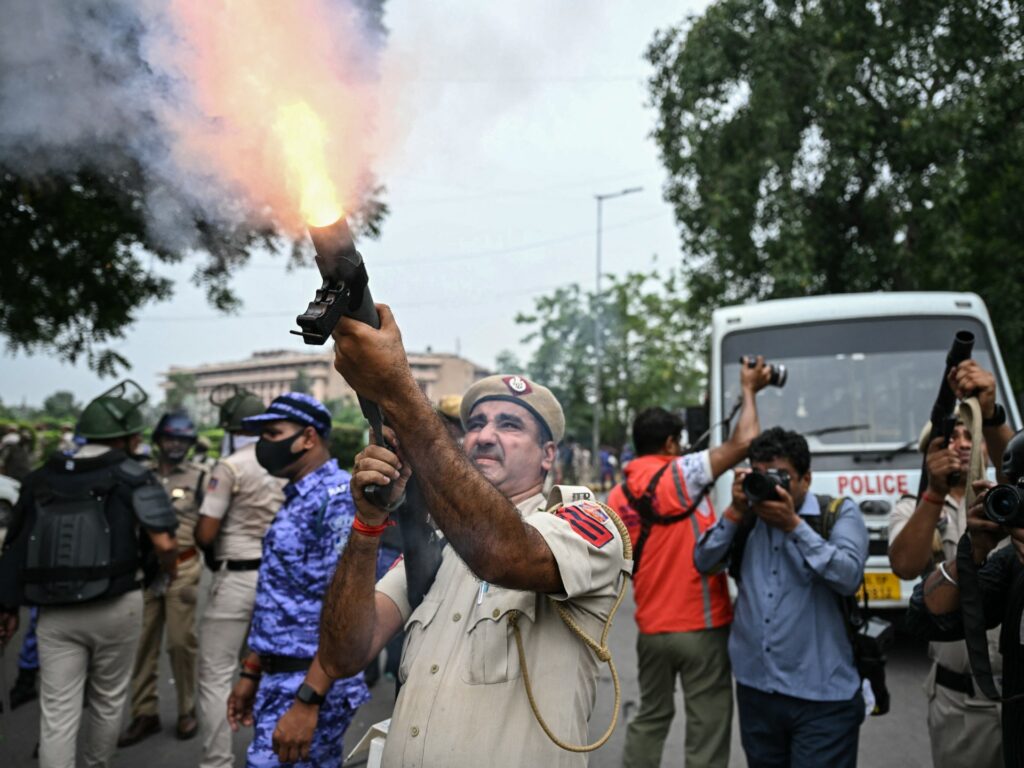
Tensions between India and Pakistan have intensified following Pakistan's Information Minister Attaullah Tarar's announcement of "credible intelligence" indicating potential Indian military strikes in response to accusations of Pakistan's involvement in a recent terrorist attack in Kashmir. The attack, which occurred on April 22 and resulted in 26 deaths, has led to a sharp exchange of accusations between the two nations, further straining their already fraught relations. With both countries possessing nuclear capabilities, the situation is being closely monitored by the international community, emphasizing the need for diplomatic efforts to prevent further escalation and focus on peaceful resolutions.