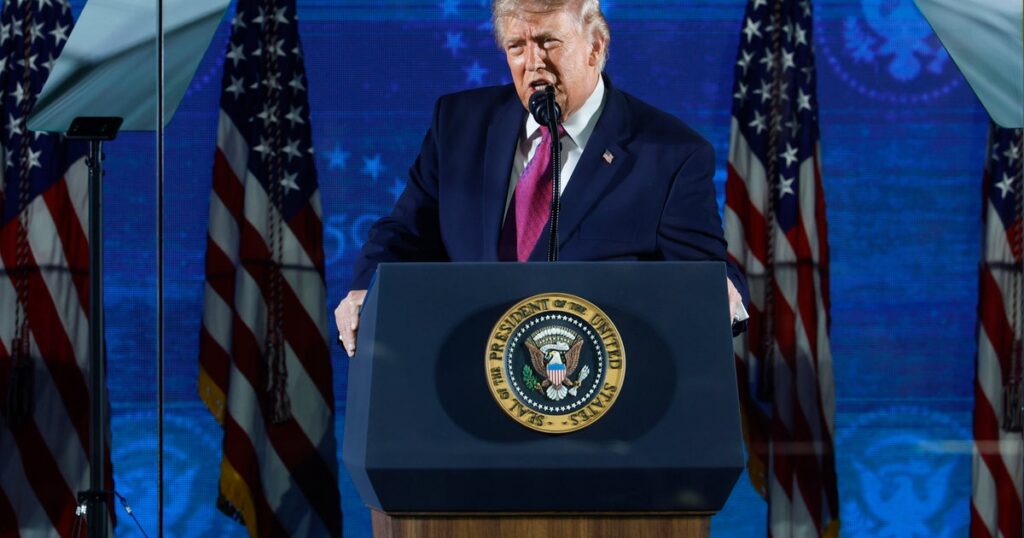
On April 2, President Donald Trump announced new tariffs, including a 10% universal tariff on imports and reciprocal tariffs targeting 60 trade partner countries, aiming to address trade imbalances. The announcement led to significant reactions in global markets, with declines in U.S. stock indexes and concerns about economic impacts, as companies reliant on global supply chains saw their stock values drop. The tariffs are expected to increase costs for U.S. importers like Walmart and Amazon, potentially leading to higher consumer prices and exacerbating financial strain amid existing inflationary pressures.
Posts published in “Politics”
President Donald Trump announced new tariffs on imported goods, implementing a 10% baseline tariff on all foreign imports and higher reciprocal tariffs on countries that impose tariffs on U.S. exports. This marks a shift from his previous targeted approach, aiming to significantly alter the global trade landscape despite warnings of potential price increases. The administration's strategy, intended to address perceived unfair trade practices, risks retaliatory measures from affected countries and could lead to prolonged negotiations in global trade dynamics.
The Trump administration's increased scrutiny of foreign students participating in pro-Palestinian activities has led to the detention and visa revocation of several students at U.S. universities, raising concerns about First Amendment rights. This has sparked a debate over the balance between national security and individual rights, particularly following recent incidents at institutions like Tufts University and Columbia University. As universities express support for their international students, the situation underscores the tension between immigration policies and the rights to political expression, with broader implications for academic freedom and free speech in the U.S.
Senate Republicans have introduced a new budget blueprint that aims to make the 2017 tax cuts permanent and proposes an additional $1.5 trillion in new tax cuts, using a "current policy baseline" method that controversially scores the cost of extending these cuts at zero dollars. The proposal also includes provisions to raise the debt ceiling by up to $5 trillion and is being advanced through the reconciliation process, allowing Republicans to bypass the typical 60-vote threshold in the Senate. This strategic maneuver sets the stage for further legislative activity to solidify and expand upon the 2017 tax policies, with significant potential impacts on the economy and national debt.
In Wisconsin's state Supreme Court race, liberal candidate Susan Crawford achieved a decisive victory over conservative Brad Schimel, despite Schimel receiving over $20 million in support from Elon Musk and endorsements from Donald Trump. The election, which saw a turnout of over 2.3 million voters, highlights the state's political dynamics and voter engagement in off-year elections. Crawford's win is seen as a boost for Democrats, reflecting strong voter mobilization efforts, while contrasting outcomes in Florida's special elections underscore the varied political landscape across the United States.
California lawmakers have decided to uphold existing policies that allow transgender children and teenagers to participate in sports teams that align with their gender identities, rejecting two proposed bills aimed at changing these policies. The decision underscores California's commitment to supporting transgender rights in school sports amid a broader national debate on the issue. Advocates for maintaining the current policies emphasize inclusivity and respect for transgender students, while opponents raise concerns about fairness in competitive sports.
Arizona Senator Ruben Gallego has decided to block the confirmation of key leaders at the Department of Veterans Affairs, intensifying Democratic efforts to prevent the Trump administration from reducing the agency's workforce. This move, along with Representative Adam Schiff's hold on a separate Trump nominee, underscores the heightened partisan tensions over federal agency staffing. These actions reflect broader Democratic concerns about the potential negative impact of the administration's plans on the effectiveness of federal agencies in serving the public.
The Supreme Court is set to hear a case concerning whether Medicaid recipients can sue to choose their healthcare providers, with Planned Parenthood at the center of the dispute. Originating from efforts by anti-abortion officials in South Carolina to block Medicaid funds to Planned Parenthood, the case unfolds amid significant changes in abortion laws following the reversal of Roe v. Wade. The outcome could impact Medicaid recipients' access to healthcare providers and influence the national debate on reproductive rights and public health funding.