Key takeaways:
- Trump said the U.S. would maintain its naval blockade against Iran while keeping forces ready to resume military action.
- Qatar’s prime minister said White House talks addressed a deal to bring peace to the region; Iranian officials dismissed Trump’s remarks.
- Trump reiterated his opposition to an Iranian nuclear weapon, while Iran denied seeking one.
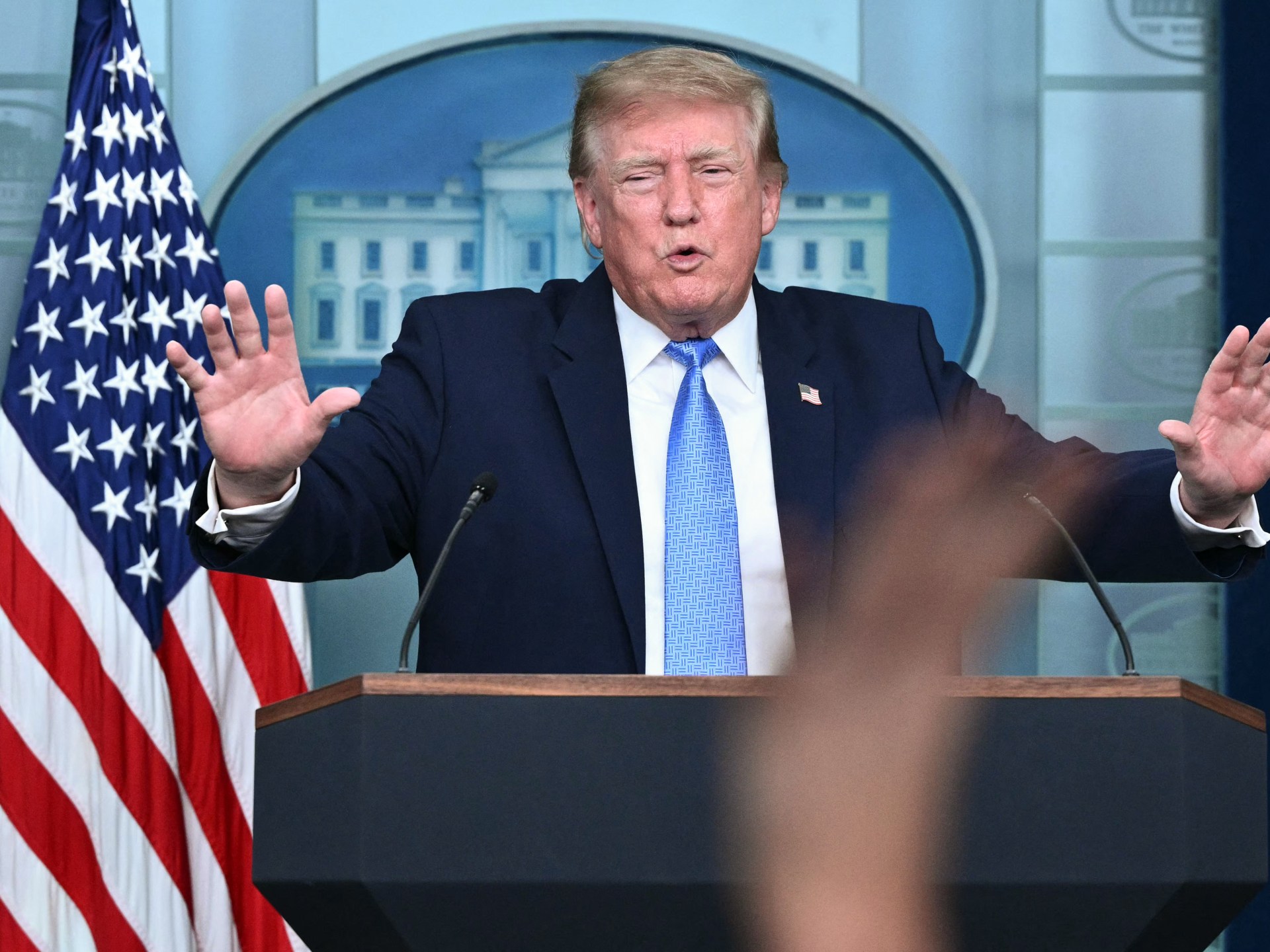
President Donald Trump said Monday that the war with Iran was “effectively over” after talks with Qatar’s prime minister, but he said the United States would maintain its naval blockade and remained ready to resume military action.
“At this point, taking the military action doesn’t seem to be a very necessary thing – but we’re locked and loaded, ready to go for any reason,” Trump told reporters at the White House. He said Israel and Gulf allies were protected from Iranian threats and that he saw “momentum toward the end of this conflict.”
Trump and Vice President JD Vance had met with Qatari Prime Minister Mohammed bin Abdulrahman Al Thani. The prime minister later wrote on social media that he was “grateful for the positive discussions on reaching a deal and bringing peace to the region.” The Guardian reported that Al Thani and other Gulf leaders had urged Trump not to resume the fighting.
Trump said the leaders of Qatar, Saudi Arabia, the United Arab Emirates, Bahrain and Kuwait preferred what he called the “status quo”: a continuation of the U.S. naval blockade against Iran. Al Jazeera reported that Trump said the policy also included the newly announced Task Force Iron Gate, which seeks to cut off trade by land and through the Caspian Sea.
“Iran, militarily, is effectively over. We’re just keeping it the status quo,” Trump said. He did not commit to a lasting ceasefire. “I don’t guarantee anything,” he told reporters, adding that U.S. forces were ready to go back in if necessary.
Iranian officials dismissed Trump’s remarks. Mohsen Rezaei, secretary of Iran’s Supreme National Security Council, wrote on social media that Washington was flailing “like a desperate gambler.” His post continued: “FOLD YOUR HAND. STOP manufacturing FAKE NEWS about imaginary talks.” Separately, Iran’s state-aligned Tasnim News Agency quoted President Masoud Pezeshkian as saying Iran was open to further negotiations but would not yield to pressure. “We will not surrender to force and bullying,” Pezeshkian said.
The war began on February 28 with U.S. and Israeli attacks on Iran, according to Al Jazeera. Iran moved to shut down the Strait of Hormuz and launched missile and drone attacks in Gulf countries, many targeting U.S. military installations. Al Jazeera reported that related conflicts had emerged involving Saudi Arabia and the Houthis, and Israel and Lebanon. It also reported that the Trump administration had announced “minor strikes” on Iran’s Qeshm Island and offered a $20 million reward for information about Iran’s nuclear program.
Trump reiterated that Iran would not be allowed to develop a nuclear weapon. Iran denies seeking one and says its uranium enrichment program is for civilian energy, Al Jazeera reported.
The Guardian reported that U.S. troop movements before the midterm elections had fueled speculation about a renewed military campaign after the vote. Republicans lost both houses of Congress, and Vance subsequently cited the Iran war as a key reason for the defeats. Trump said Monday that an escalation was not needed.






Be First to Comment