Key takeaways:
- The Supreme Court lifted a Texas judge’s order halting Big Bend border construction; Justice Ketanji Brown Jackson would have denied emergency relief.
- The lawsuit challenges three Homeland Security waivers: one issued by Kristi Noem in February and two by Markwayne Mullin in May and July, according to NBC News.
- The administration cites more than 89,000 apprehensions in the sector from 2021 to 2025, while challengers say it has the border’s lowest apprehension rate.
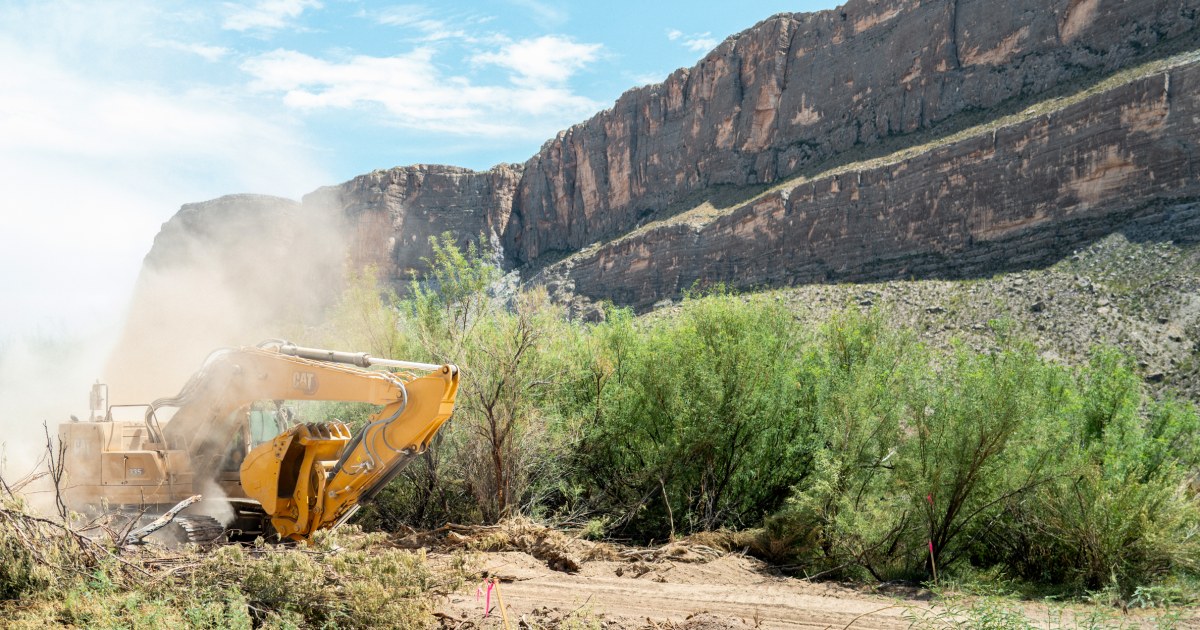
The Supreme Court on Monday cleared the way for the Trump administration to resume building border barriers and roads in Texas’ remote Big Bend region, lifting a judge’s order that had halted work while a lawsuit proceeds.
In an unsigned, five-page decision, the justices said the lower court’s order delayed construction and impeded the government’s “compelling interests” in border security and integrity. NBC News reported that the court said the federal judge lacked authority to issue the order. Justice Ketanji Brown Jackson said she would have denied the administration’s request for emergency relief.
The dispute centers on three waivers issued by the Department of Homeland Security. According to NBC News, then-Secretary Kristi Noem issued a waiver in February, and her successor, Markwayne Mullin, issued waivers in May and July. The department invoked a 1996 immigration law that allows its secretary to waive legal requirements to speed construction of barriers and roads near the southern border. The waivers covered requirements under environmental protection, conservation and historic-preservation laws.
The Center for Biological Diversity, Friends of the Ruidosa Church and Danny Miller, a river guide and property owner, sued to stop the project. According to NBC News, they argue that the 1996 law permits only limited waivers for construction in areas where illegal crossings are pervasive. They also say the work would permanently damage the landscape and threaten historic and cultural sites. Their lawyers warned that once habitat is destroyed and wilderness fragmented by roads and barriers, “no final judgment can restore the status quo.”
U.S. District Judge Kathleen Cardone found that the homeland security secretary had exceeded his authority in issuing the waivers. She barred border barriers, related infrastructure and other ground-disturbing work in the Big Bend sector. The administration then sought emergency relief from the Supreme Court.
The sector spans more than 500 miles of the U.S.-Mexico border and includes Big Bend National Park. The government says its plans involve 341 miles of construction, according to NBC News. Customs and Border Protection Commissioner Rodney Scott has said the proposed 30-foot wall will not run through the national park. Plans do call for more than 200 miles of patrol roads and roughly 17 miles of vehicle barriers there, according to CBS News.
The administration says immigration officers apprehended more than 89,000 people attempting to cross illegally in the sector between 2021 and 2025. Solicitor General D. John Sauer warned that stopping construction could leave a gap that draws illegal crossings and trafficking into the area, while imposing delays and costs on work already underway.
The challengers dispute the need for barriers there. They say Big Bend has the lowest apprehension rate among the border’s seven sectors, accounting for between 0.3% and 2.2% of annual border-wide apprehensions despite covering more than a quarter of the U.S.-Mexico border.
Construction of a 47-mile stretch of wall in Hudspeth County began in September, according to immigration agencies cited by CBS News. The Supreme Court’s decision allows work to proceed as the legal challenge continues.




Be First to Comment