Key takeaways:
- Democrats won both chambers of Congress, and Trump acknowledged that the war with Iran likely contributed to Republican losses.
- Iran’s chief negotiator called the vote a rejection of war, while its supreme leader warned against expecting a change in U.S. policy.
- Iran’s Revolutionary Guard said four oil tankers caught fire after striking mines in the Strait of Hormuz.
Iran’s chief negotiator said Wednesday that U.S. voters had rejected the war with his country, while Iran’s supreme leader warned that the midterm election results would not end Washington’s hostility toward Tehran.
Democrats won control of both chambers of Congress in the vote, dealing President Donald Trump’s Republican Party a major defeat. Trump acknowledged that the U.S.-Israel war against Iran, which began in February, likely contributed to the losses. He told The Wall Street Journal that he did not regret the conflict and “would have done it again.”
“Conscience or the cost of living, Americans said NO TO WAR, and we endorse this message,” Mohammad Bagher Ghalibaf, Iran’s parliament speaker and chief negotiator with Washington, wrote on X. He warned that if the U.S. government ignored what he called the public’s will, “it will learn our NO comes with a Nightmare.”
A written statement published on Supreme Leader Ayatollah Mojtaba Khamenei’s website took a different view of what the election could change. Anyone hoping that a shift between U.S. political parties would alter Washington’s approach to Iran was “seriously mistaken,” it said. The statement warned that renewed attacks would make the war’s scope “much wider.”
Khamenei succeeded his father, Ayatollah Ali Khamenei, after the elder leader was killed in the initial U.S.-Israeli strikes, according to CBS News. U.S. officials believe the younger Khamenei was seriously wounded in the same strike, CBS reported. He has not appeared or spoken publicly since being named supreme leader.
Trump told the Financial Times on Tuesday evening that he had no immediate plans for new strikes. “We’re locked and loaded if we need to go, but there may be no reason for it,” he said. He also suggested higher gasoline prices had affected voters, saying they were probably not ready “for the short-term consequence of paying more for gasoline.”
The Strait of Hormuz remains a flashpoint. Four oil tankers caught fire after striking mines while trying to pass through the waterway, Iran’s Revolutionary Guard said Wednesday, according to CBS News. The outlet reported that oil prices remained 60% to 70% above their prewar levels.
China called preventing renewed fighting a “top priority” and said it supported U.S.-Iranian negotiations and a comprehensive solution for reopening the strait. Its foreign ministry said a Middle East envoy would visit Iran, Oman and Saudi Arabia later this month to promote talks.
In Lebanon, Prime Minister Nawaf Salam warned against drawing his country into another regional war. “We do not accept the country again becoming a theater for the conflict of others,” he said. Fighting in Lebanon has been a sticking point in U.S.-Iranian negotiations, with Tehran rejecting a deal that does not also end fighting there and in Gaza.
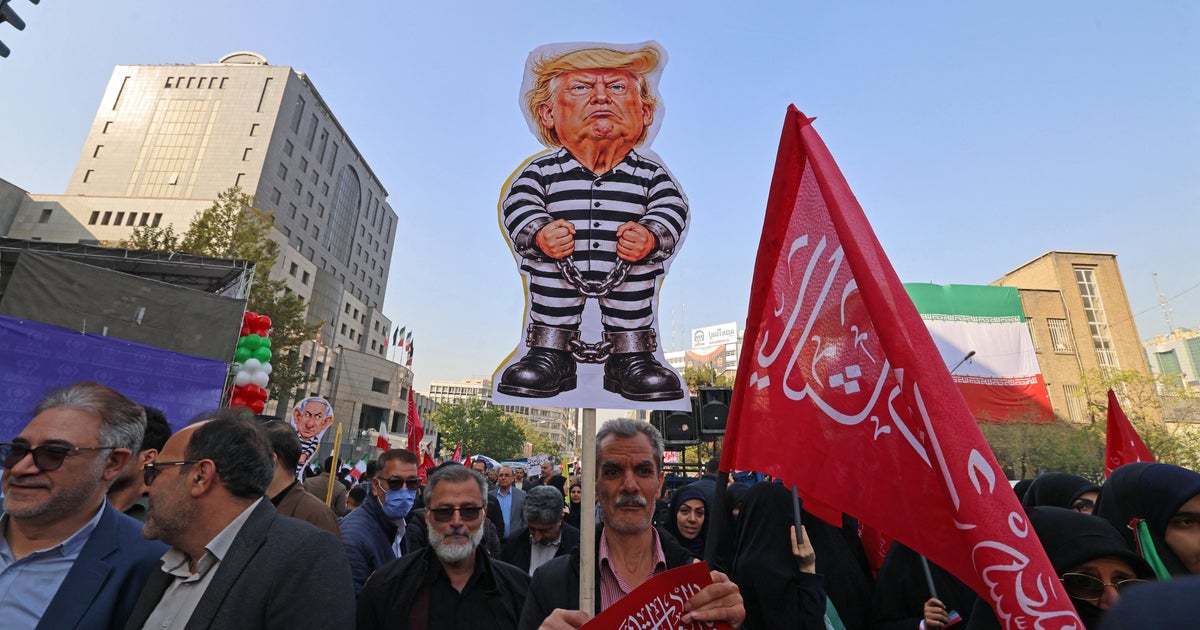
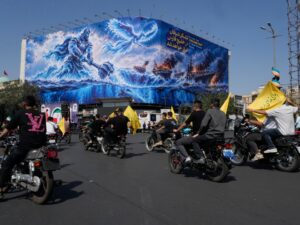
In Tehran, demonstrators marked the anniversary of the 1979 takeover of the U.S. Embassy with a pro-government rally. Some voiced doubt that the election would change U.S. policy. “Whether it is the Democrats or the Republicans, there is no difference for us,” a civil servant identified as Mohammad told AFP.


Be First to Comment