Key takeaways:
- Mojtaba Khamenei ordered Iran’s armed forces to prepare an immediate response without geographic limits if the country is attacked again.
- Iran’s foreign minister said no meetings with U.S. officials are planned, while Qatari and Pakistani mediators continued consultations.
- Iran reported tanker explosions in the Strait of Hormuz; the U.S. military said the shipping lanes were open.
Iran’s supreme leader warned Saturday that any renewed U.S. or Israeli attack would draw an immediate response unconstrained by geography, as mediators pressed for a peace deal and conflicting claims about shipping in the Strait of Hormuz underscored the risk of escalation.
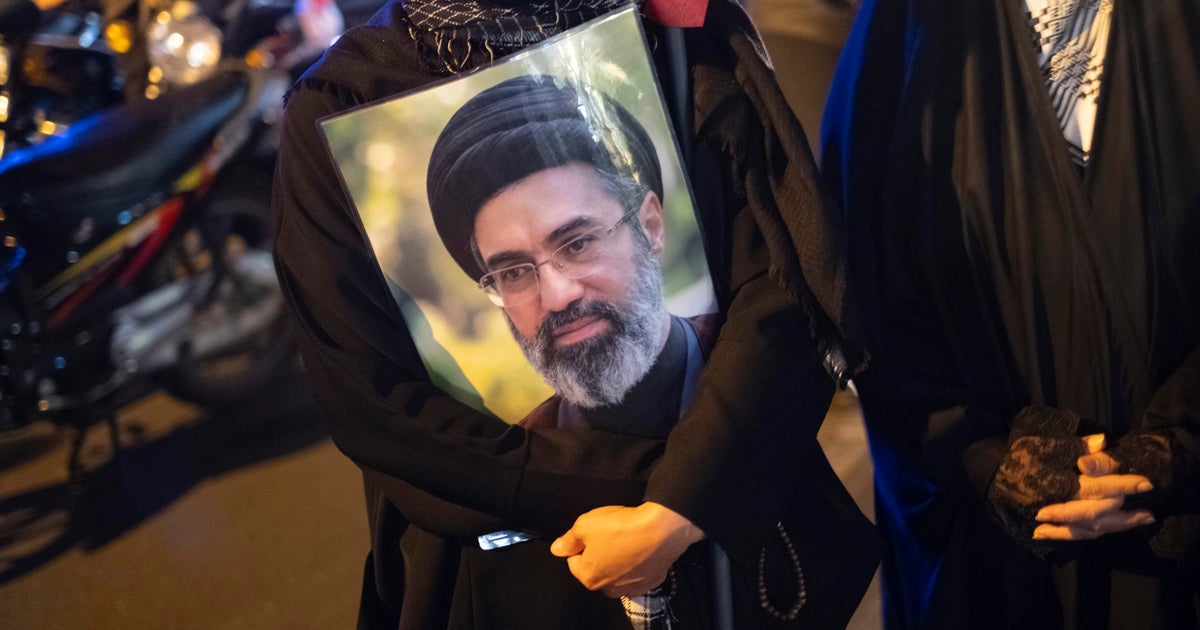
“If the enemies once again launch military or terrorist attacks, it is the armed forces of the Islamic Republic and the Iranian nation that will determine the time and conditions for ending them,” Mojtaba Khamenei said in a statement posted on his Telegram channel. He directed senior commanders to prepare an “immediate, impactful and geographically unrestricted response” to any threat.
The statement followed what Iranian authorities described as a meeting between Khamenei and senior military commanders. He has not appeared publicly since succeeding his father, Ayatollah Ali Khamenei, who was killed in U.S.-Israeli strikes at the start of the war in February.
Diplomatic efforts continued, but Iran’s foreign minister ruled out direct talks with Washington for now. “Currently, there are no plans for meetings with American officials,” Abbas Araghchi told Al Jazeera, according to Iran’s IRNA news agency. He said Iran had made its conditions clear and mediators remained in contact.
Qatari diplomats held talks in Tehran on Friday, Al Jazeera reported. CBS News reported that Qatari and Pakistani mediators met Saturday in Doha, where an Iranian delegation was present. According to CBS News, Iranian officials received an outline of a U.S. peace deal through Qatari mediators last weekend, in an effort led by Vice President JD Vance. Al Jazeera reported that Vance also sent a letter to Tehran whose precise contents remain unclear.
President Donald Trump said Friday that the war was “going to end soon,” without saying how, CBS News reported. At a security forum in Bahrain, Saudi Vice Minister of Foreign Affairs Waleed ElKhereiji said regional governments were working to prevent escalation. “People in this part of the world want to bring peace back to the region,” he said. Egyptian Foreign Minister Badr Abdelatty warned that another round of fighting would be “more dangerous, more destructive.”
The Strait of Hormuz remains a flashpoint. Iran’s Revolutionary Guards said Friday that a supertanker carrying more than 2 million barrels of oil struck a mine and caught fire on an unauthorized route. CBS News reported that the Guards described it as the fourth tanker to suffer an explosion Friday; Al Jazeera reported that Iranian state television put the number of tankers damaged in recent days at at least six. The Associated Press could not verify the Iranian claims, CBS News said.
Oman said it evacuated 25 crew members from a burning Panama-flagged tanker near its coast, though it was unclear whether that incident was among those described by Iran. Al Jazeera reported that a British maritime monitor recorded a separate attack in which a small boat attached explosives to a tanker’s hull northeast of Oman’s Khasab.
U.S. Central Command chief Adm. Brad Cooper offered a sharply different picture Friday, saying Iran’s navy had been destroyed and shipping lanes were open. “I didn’t see the IRGC out there at all,” he said after flying over the strait. Al Jazeera reported that the British maritime monitor counted 277 vessel transits in the week ending October 28, 70% below pre-war levels.





Be First to Comment