Key takeaways:
- The United States and China extended their trade truce by two months.
- The leaders announced no broader agreement on trade, Taiwan or artificial intelligence.
- Trump said he and Xi plan to meet in China in November and Miami in December.
President Donald Trump and Chinese President Xi Jinping agreed to extend a trade truce by two months during Xi’s state visit to Washington, but announced no broader deal on the economic and security disputes dividing their countries.
The extension preserves arrangements allowing the United States access to Chinese rare earth elements and China access to some advanced American semiconductor chips. The two sides did not announce crucial details on proposed trade and investment boards, Boeing purchases or pending Chinese agricultural purchases, NPR reported.
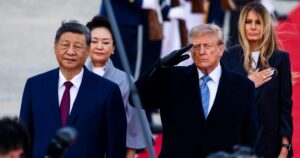
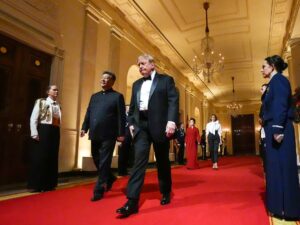
Trump gave Xi a red-carpet welcome and hosted a state dinner attended by about 145 guests. The leaders spent roughly three hours together at the White House on Thursday, NPR reported. Trump also showed Xi a new South Lawn helipad and took him inside the new Marine One helicopter.
At dinner, Xi toasted Trump’s health and a “new chapter” in relations, while Trump emphasized the countries’ long history of commerce. After Xi’s departure, Trump called their meeting one of “Friendship, Strength, and Success, for both China and the USA.” He said they planned to meet again at the Asia-Pacific Economic Cooperation summit in Shenzhen, China, in November and at the Group of 20 summit in Miami in December.
The trade truce was due to expire in November. The Guardian reported that China had sought an extension lasting until the end of Trump’s term in January 2029. Instead, the leaders settled on two months, leaving more time to negotiate but no long-term agreement. China’s restrictions on rare earth exports and U.S. tariffs remain central sources of friction.
Taiwan also remains a point of contention. According to a Chinese account of the meeting cited by The Guardian, Xi urged the United States to adopt a position opposing independence for the self-governing island, which China claims. That would differ from the current U.S. position that it does not support Taiwanese independence. Trump has not said whether he agreed to the change, The Guardian reported.
The leaders discussed artificial intelligence, but announced no agreement. China’s state news agency said Xi called for the countries to “work together to prevent the misuse and abuse of artificial intelligence.” Trump, who has argued against regulating advanced AI, wrote before their meeting that he wanted to leave the technology “exactly where it is.” The Guardian also reported that Trump said the two discussed the Iran war as his administration sought China’s support for a plan to economically isolate Iran.
The warm reception drew differing assessments. Nicholas Burns, a former U.S. ambassador to China, told NPR that Xi would not be swayed by “red carpets, the pomp and circumstance.” Samm Sacks, a senior fellow at New America, said the ceremony could create “a kind of breathing space that is stabilizing” after a tense period in the relationship.
For now, the visit has produced another short trade reprieve and plans for further talks, while the larger disagreements remain unresolved.






Be First to Comment