Key takeaways:
- Cuba’s energy ministry said the national electricity grid suffered a “total disconnection” Friday, triggering a nationwide outage.
- By late Friday, power had been restored to some priority areas, including sites near hospitals and water pumping stations in Havana.
- The blackout was at least the sixth partial or total outage in Cuba this year, amid aging infrastructure, fuel shortages and U.S. restrictions on oil shipments.
Cuba’s electricity grid collapsed again Friday, cutting power to millions of people in at least the sixth major blackout to hit the island this year and deepening daily hardships tied to fuel shortages, aging infrastructure and U.S. sanctions.
The Ministry of Energy and Mines said the national grid suffered a “total disconnection” and announced on X that officials had begun activating service-restoration protocols. Grid operator UNE said the outage began shortly before 2 p.m. local time because of a transmission fault, with poor weather in central Cuba adding strain to the system.
Cuban authorities said a failure in transmission lines in the west caused the system to collapse as far as Matanzas province before the eastern part of the island was disconnected. The official newspaper Granma reported that “unstable” weather further aggravated the grid’s condition.
By late Friday, power had returned to some priority areas, including zones near hospitals and water pumping stations in Havana, UNE said. CBS News reported that by dusk electricity had been restored to 5% of Havana users, out of about 862,000 customers. Officials were also creating small power-distribution “micro-islands” in Camagüey, Pinar del Río and Granma provinces, while systems serving hospitals and other emergency facilities were being reactivated.
Felix Estrada, UNE’s national load dispatch director, said protocols for the “gradual restoration” of power had been activated. The process was continuing Saturday, according to the BBC.
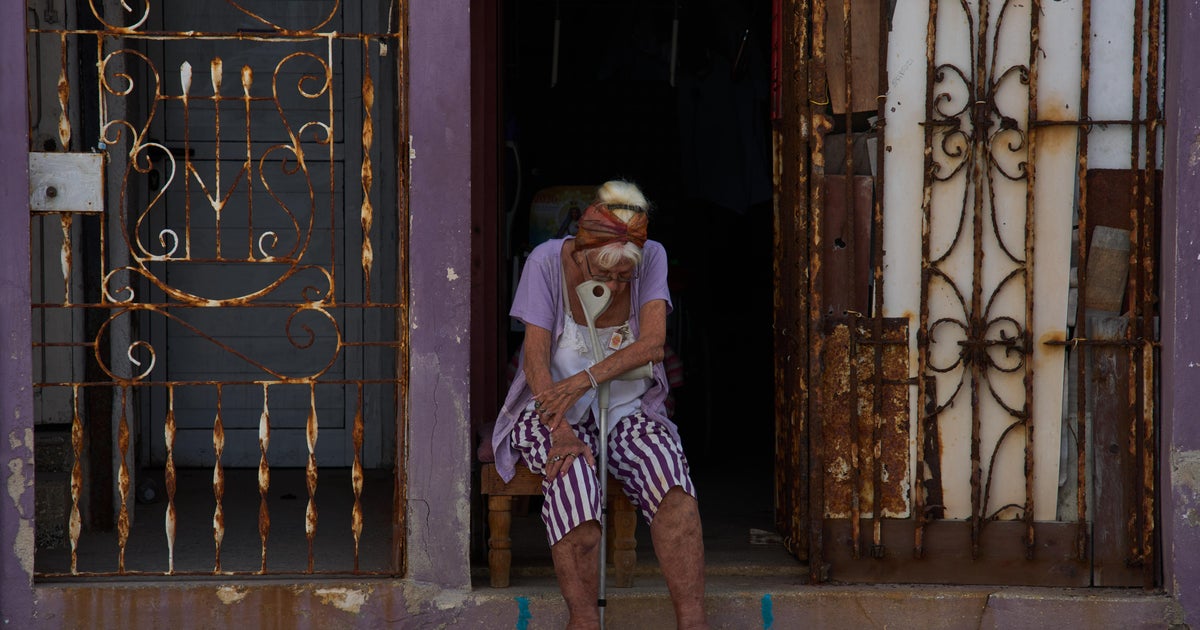
For many Cubans, the blackout was another blow after months of long outages and shortages of basic goods.
“No one can stand these constant blackouts. There isn’t enough food, there’s no water, there’s no electricity — you have no idea,” Mercedes Rodriguez, a 60-year-old worker in Havana, told The Associated Press while waiting for public transportation. “The country is in such a sad state, and there are no words for what we’re going through.”
Abilén Marrero, a homemaker in central Havana, sat outside her building and said there was little to do but wait. “Maybe it’ll come back this afternoon or tomorrow — there’s no way to know,” she said.
Other residents described repeated disruptions. “Lately, it’s becoming a habit,” Havana resident Frank Lorenzo told Reuters. “Before it happened less frequently — once a month … just yesterday we were 24 hours without electricity, they turned it on for just an hour and it went down again.”
“It’s one thing after another: no water, no gas for cooking, no electricity,” 36-year-old schoolteacher Lidia Fernandez told AFP. “Honestly, I don’t know how we haven’t gone crazy.” Francisco Rodriguez, 78, said his home had already been without power for 28 hours Friday and feared he would not have light “for several days.”
Cuba has faced increasingly frequent grid failures over the past two years during a severe economic crisis. Even when the grid is functioning, residents regularly endure outages lasting more than 30 hours, according to CBS News. The blackouts have disrupted cooking, water supply, internet and phone service, transportation, work schedules and flights, and have affected public health.
The BBC reported that food and medicine have grown scarcer, hospitals have struggled to operate normally, and schools and government offices have had to close.
Cuba relies heavily on fuel imports, and both reports said U.S. restrictions and an oil blockade since the start of the year have worsened existing shortages. Havana has blamed the Trump administration for the crisis and denounced sanctions, including a new round announced in August. Washington attributes Cuba’s energy crisis to poor internal management and has accused the island of posing a “national security threat,” according to the BBC.
President Donald Trump has threatened tariffs on countries shipping oil to Cuba. CBS News reported that only one tanker of fuel has reached the island since January, delivered by a Russian tanker in March. The BBC reported that Venezuela had been believed to send Cuba about 35,000 barrels of oil a day, roughly half its needs, until Venezuela’s own supplies were cut off after the U.S. seizure of President Nicolás Maduro in January.
The repeated blackouts have prompted rare protests in Cuba, where unauthorized demonstrations are illegal and participants risk jail, the BBC reported.



Be First to Comment