Key takeaways:
- The inspector general estimated Operation Epic Fury cost $33.4 billion from Feb. 28 through June 30, including $22.3 billion in expended munitions.
- The report said munitions use created strategic inventory shortfalls and revealed industrial base bottlenecks for resupply.
- More than 20,000 U.S. military and diplomatic personnel were displaced, and Iranian strikes damaged U.S. bases and assets across multiple countries in the region.
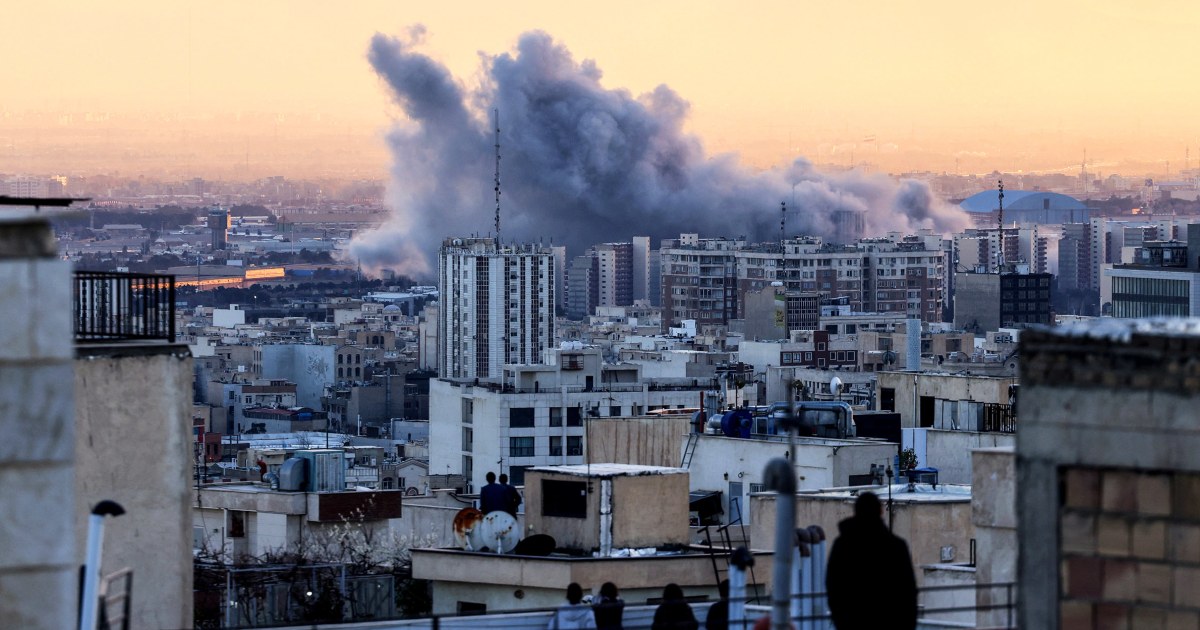
The war with Iran has left the United States facing shortfalls in key munitions and exposed supply chain “bottlenecks,” the Defense Department’s inspector general said Monday in its first public report on the conflict.
The congressionally mandated report, covering Feb. 28 through June 30, put the estimated cost of Operation Epic Fury at $33.4 billion. That total includes $22.3 billion in expended munitions, $3.7 billion in equipment losses and $7.4 billion in other expenditures. It does not include the cost of repairing damaged facilities.
“The munitions expenditure on OEF has resulted in strategic inventory shortfalls and revealed industrial base bottlenecks for munitions resupply,” the report said, according to CBS News. To address the problem, the Pentagon is “working to streamline procurement processes and production lead times, and to stockpile critical materials, components, and selected munitions to respond rapidly to a contingency,” the report said, according to NBC News.
Defense Secretary Pete Hegseth has denied reports that the U.S. is running low on munitions. President Donald Trump also rejected concerns Monday, writing on Truth Social that the United States is “producing more Exquisite and Elite Weapons than at any time in our History” and that they are “being delivered on a daily basis to our Forces in the Middle East and beyond.” Two weeks earlier, Trump said the country had “virtually unlimited” ammunition and criticized reports of shortages.
The report offers one of the first public government accountings of the cost, scope and damage from the U.S.- and Israel-led conflict. It also confirms, according to NBC News, that Iran targeted the U.S. Navy’s main logistics hub in Bahrain with drones and ballistic missiles.
The damage to U.S. military assets was extensive. NBC News reported that the inspector general cataloged the destruction or extensive damage of four F-15E jet fighters, an F-35A Joint Strike Fighter and an A-10 Warthog. CBS News reported that the losses included four F-15s destroyed, one F-35 damaged, seven KC-135 tanker aircraft damaged and up to 30 MQ-9 Reaper drones destroyed. NBC News, citing the report, said 12 KC-135 refuelers and nine other aircraft were destroyed and more than 30 MQ-9 drones had been destroyed as of June, citing the Congressional Research Service.
Iranian strikes damaged or destroyed hundreds of buildings and structures at U.S. bases in Kuwait, Bahrain, Qatar, the United Arab Emirates, Saudi Arabia, Iraq, Oman and Jordan, CBS News reported. The report did not include those repair costs in its estimate because it remains unclear whether all the bases will be rebuilt or who will pay for the work.
The State Department sustained more than $208 million in damage across Iraq, Kuwait, Saudi Arabia and the United Arab Emirates, including $184 million in damage to diplomatic facilities and $25 million tied to construction delays, according to NBC News.
More than 20,000 U.S. military and diplomatic personnel were displaced at the outset of the conflict and in the following days and weeks. Most medical evaluations of injured U.S. forces were carried out on the ground, in some cases by local ambulances, after airlift capabilities were moved because of security concerns. U.S. forces also flew as many as 5,000 flights from European bases in support of the war.
CBS News reported that U.S. Central Command has said the United States struck more than 1,000 targets in the first 24 hours of the war and has not returned to attacks on that scale in recent months.
The inspector general’s estimate differs from other figures previously reported. NBC News reported in July that the war had cost $80 billion to $100 billion, citing three U.S. officials and three people familiar with internal estimates. The Pentagon publicly said in July that the war cost $37.5 billion, an estimate NBC News said did not include replacing aircraft, repairing U.S. bases or replenishing critical weapons.
The Pentagon did not immediately respond to NBC News’ request for comment on the report.








Be First to Comment