Key takeaways:
- Wales, Scotland and Northern Ireland now all have first ministers who support leaving the United Kingdom, the first time that has happened since devolution began.
- The Cardiff agreement said no Westminster government has the right to block democracy and declared that “Westminster’s time is coming to an end.”
- Plaid Cymru has ruled out a Welsh independence referendum before the next Senedd election in 2030, while SNP and Sinn Féin leaders called for referendum rights.
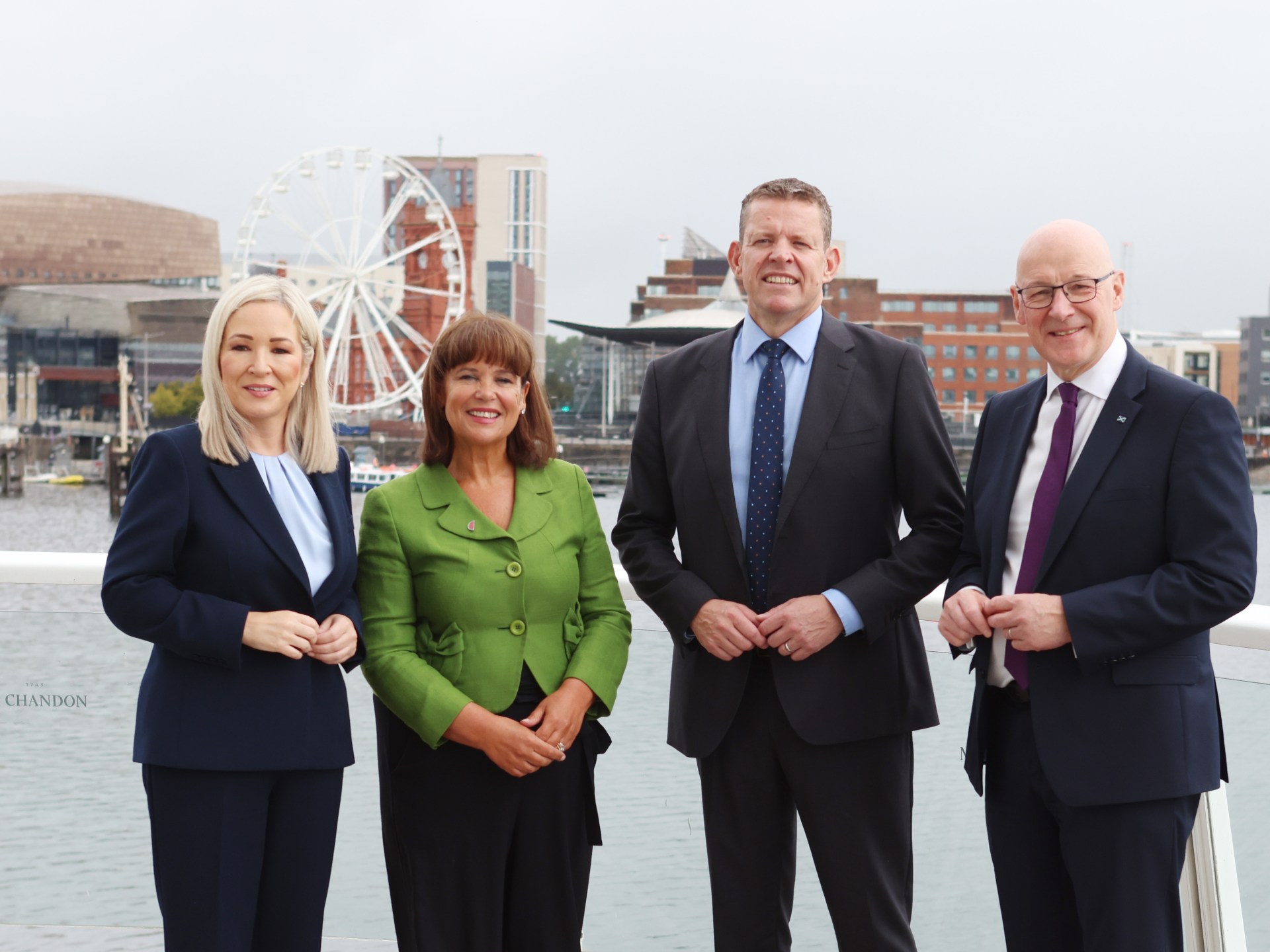
The first ministers of Wales, Scotland and Northern Ireland have signed a joint nationalist agreement declaring that “Westminster’s time is coming to an end” and asserting that no UK government has the right to block their nations from deciding their constitutional futures.
The memorandum of understanding was signed Monday in Cardiff by Plaid Cymru leader Rhun ap Iorwerth, Scotland’s SNP leader John Swinney and Northern Ireland’s Sinn Féin first minister Michelle O’Neill, who attended in their roles as party leaders rather than government officials. Sinn Féin president Mary Lou McDonald also attended.
For the first time since devolution began, Wales, Scotland and Northern Ireland all have first ministers who support leaving the United Kingdom. The three parties differ on timing and tactics, but the agreement framed their shared position around self-determination.
“Our nations have the right to self-determination,” the agreement said. “No Westminster government has the right to block democracy or undermine the principle that our people will decide their own future.” It added: “For people watching across these islands — for people watching around the world — there could be no clearer sign that Westminster’s time is coming to an end.”
Swinney called the meeting a “pivotal moment in the constitutional journey of the United Kingdom” and said the May elections in the three nations had produced leaders who believe “their countries should decide their own future.” He said self-determination was “an inalienable right” and predicted Prime Minister Andy Burnham would be the “last prime minister of the United Kingdom,” adding: “Because the people of Scotland, if given the choice of independence in a referendum will take that choice.”
McDonald described the meeting as “historic,” saying: “We have the right to referendum. We have the right to decide our future. We will not accept or tolerate any prime minister telling us that right is off the table.” O’Neill said the three nations were “distinctively different” but shared the view that “Westminster does not and will never serve our people well.”
Ap Iorwerth took a more cautious position on timing. Plaid Cymru has ruled out an independence referendum before the next Senedd election in 2030. Asked whether the agreement meant asking Westminster not to block a Welsh vote, he said it was “up to the people of Wales to decide its own future.” Pressed further, he said: “The timescale will be set by the people of Wales when they are persuaded. My job is to persuade.”
The Welsh government does not currently have the power to hold an independence referendum, though ap Iorwerth said he wanted that power devolved. His government plans to create a national commission to “lay the foundations” for future Welsh independence plans while seeking more powers, including over policing and youth justice.
The legal position differs across the UK. Scotland held an independence referendum in 2014 after Westminster approval, with voters rejecting independence by 55% to 45%. Wales has no existing legal mechanism allowing the Senedd to call an independence referendum on its own. In Northern Ireland, the 1998 Good Friday Agreement requires the British government to call a referendum if the Northern Ireland secretary believes a majority would likely vote for a united Ireland.
Later Monday, Swinney and ap Iorwerth signed a separate, nonbinding agreement between the Scottish and Welsh governments to press for “greater fairness” in UK funding arrangements and powers over their constitutional futures. They also agreed to work together on issues including child poverty and relations with the European Union.
The UK government said Burnham “is committed to delivering change across all four nations of the United Kingdom and believes strongly in the union.” The devolved leaders are due to meet the prime minister next month.
Opposition parties criticised Plaid Cymru’s role. Welsh Labour leader Ken Skates said Plaid “clearly want to use power to break up Britain,” while Labour and Reform accused the party of wanting to break up the UK. In Northern Ireland, DUP deputy first minister Emma Little-Pengelly accused O’Neill of trying to “weaponise the role of first minister.”









Be First to Comment