Key takeaways:
- Al Jazeera reported that recent surveys put the AfD at 40 percent in Saxony-Anhalt, ahead of the CDU at 23 percent.
- The AfD needs an outright parliamentary majority to be sure of governing because mainstream parties refuse coalition deals with it under the firewall policy.
- If the AfD falls short, Al Jazeera reported that a CDU-led administration under incumbent state premier Sven Schulze is the most likely outcome.
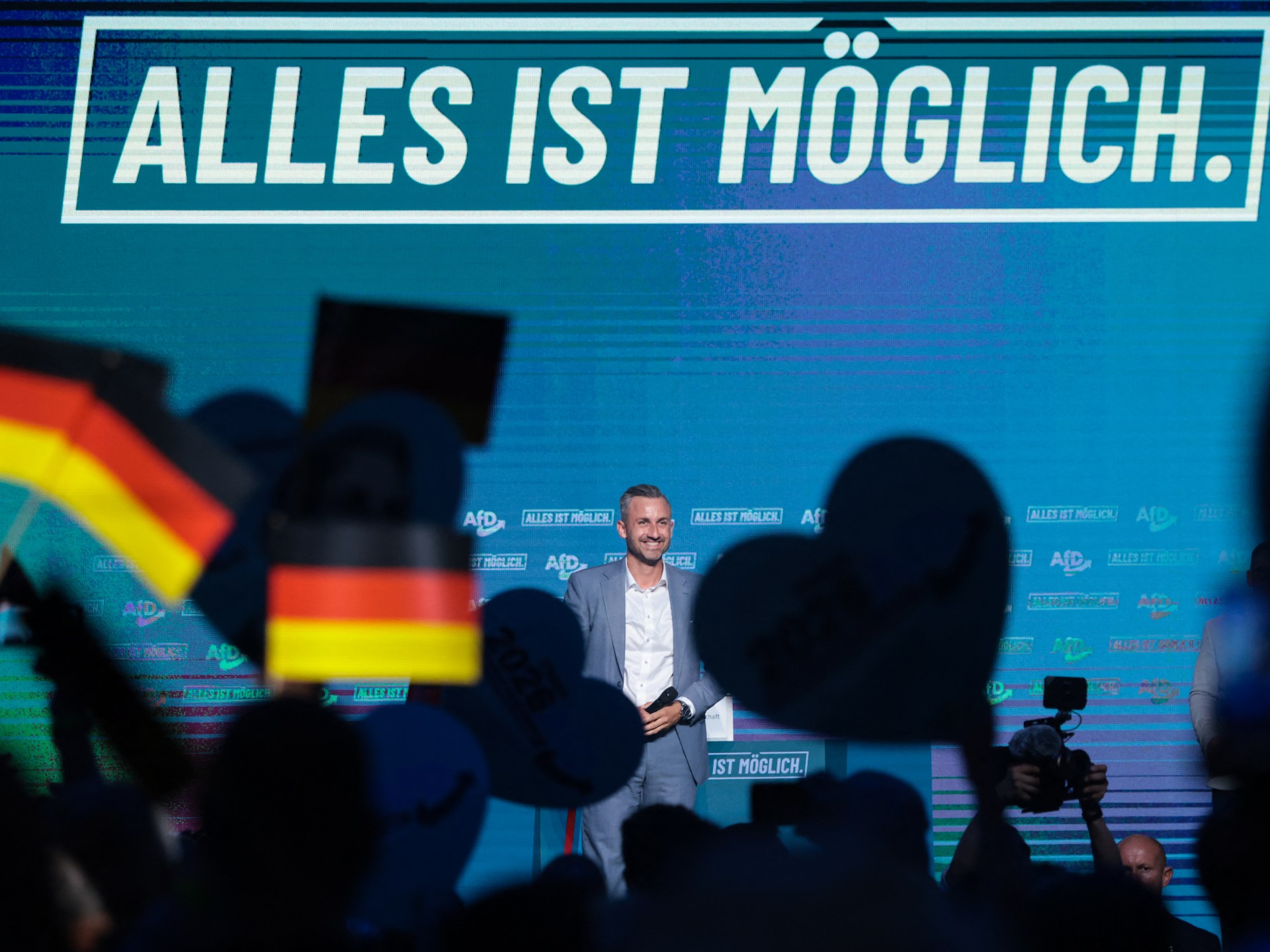
Voters in Saxony-Anhalt are casting ballots Sunday in an election that could give the far-right Alternative for Germany its first state-level government since the country’s postwar era began.
The AfD is aiming for an outright majority in the eastern German state’s regional parliament, a result that would allow it to bypass the “firewall” policy under which mainstream parties refuse to govern with it. Al Jazeera reported that recent surveys put the AfD at 40 percent, well ahead of the centre-right Christian Democrats, or CDU, at 23 percent.
The vote has national stakes. The AfD, strongest in the former communist east but also leading polls nationwide, sees Saxony-Anhalt as a stepping stone toward federal power in 2029. Its opponents see the election as a serious test of Germany’s postwar political consensus.
Ulrich Siegmund, the AfD’s 35-year-old lead candidate in the state and a former CDU member, has predicted an absolute majority. “It was the others who erected the firewalls,” he told Bild, according to Al Jazeera. “If no one wants to work with us, then we’ll just have to do it alone.” Der Spiegel has dubbed him “Germany’s most dangerous man.”
The arithmetic may be decisive. The AfD can be sure of taking power only if it wins a parliamentary majority, because other parties say they will not enter coalition with it. Al Jazeera reported that the party could reach that threshold if several smaller parties fail to clear the 5 percent minimum to enter parliament. If it falls short, a CDU-led administration under incumbent state premier Sven Schulze is considered the most likely outcome, with weeks of coalition talks possible.
The election also poses a challenge for Chancellor Friedrich Merz, whose CDU governs nationally. The BBC reported that Merz has been booed at recent public appearances and is not widely seen as an electoral asset. At a campaign rally in Lower Saxony a week before the vote, Merz urged politicians to engage the AfD more effectively. “We must address the issues at hand. We must also address our choice of words,” he said, referring to comments by Saxony-Anhalt AfD leader Martin Reichardt, who had described Germany to the party’s youth organisation as “a lazy, anti-social bum reeking of dope.”
The BBC reported that voters who support the AfD cite frustration over immigration, public safety, Germany’s struggling economy, high energy costs and aid sent abroad, including to Ukraine. Some supporters said the party offers a chance for radical change, while others said they had lost faith in mainstream parties.
The AfD’s platform in Saxony-Anhalt includes proposals that have drawn controversy. The BBC reported that the party wants child refugees placed in special classes, saying “the refugee children should be given the message that their stay in Germany is only temporary.” Its manifesto says “sexual deviations and non-reproductive lifestyles” have been aggressively promoted over “normal family” structures, calls for LGBT rainbow flags to be banned at schools, and says children should learn less about the Nazis and more about positive aspects of German history. On immigration, the party calls for a task force to detain and deport migrants who no longer have the right to remain and for an end to “illegal, culturally alien” mass migration.
Saxony-Anhalt is among the states where the AfD is officially classified as right-wing extremist. The BBC reported that domestic intelligence accuses the local branch of being infused with a “racist ideology” and anti-constitutional aims. The AfD says it is a conservative, libertarian movement, rejects comparisons with National Socialism and dismisses the designations as politicised smears.
State governments in Germany control areas including local education, policing and culture, and send delegates to the Bundesrat, the federal upper chamber. Initial results are expected around 16:00 GMT, or 6 p.m. local time, according to Al Jazeera.






Be First to Comment