Key takeaways:
- The FCC repealed the rule barring one company from owning TV stations that reach more than 39% of U.S. television households.
- FCC Chairman Brendan Carr and Commissioner Olivia Trusty supported the repeal; Democratic Commissioner Anna M. Gomez opposed it as unlawful.
- Free Press said it will challenge the decision in court, while Nexstar’s proposed $6.2 billion acquisition of Tegna remains on hold.
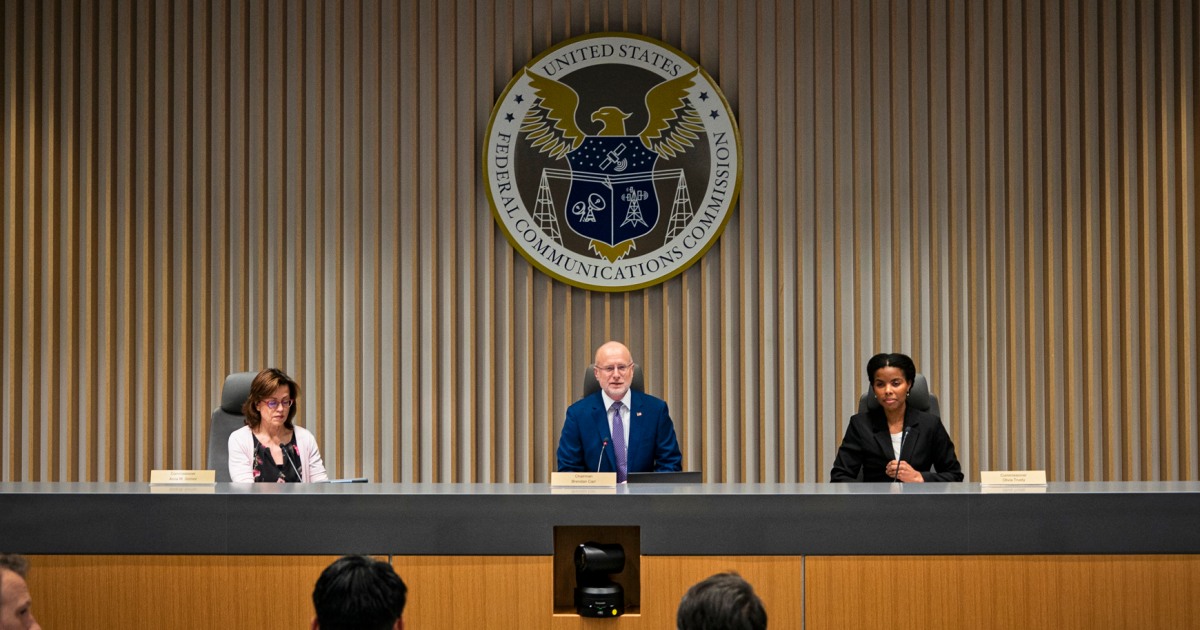
The Federal Communications Commission voted Thursday to eliminate a decades-old limit on how much of the national television audience one company can reach, a change that could clear the way for larger broadcast mergers and a new legal fight over the agency’s authority.
In a 2-1 vote along party lines, the FCC repealed the rule barring a single company from owning television stations that collectively reach more than 39% of U.S. TV households. The cap will be replaced by a case-by-case review process.
FCC Chairman Brendan Carr, a Republican appointed to lead the agency at the start of President Donald Trump’s second term, said the cap is outdated and prevents local broadcasters from competing with streaming services, social media platforms and national programmers that do not face the same restrictions.
“The cap no longer constrains the power of national programmers. Instead, it prevents local broadcasters from competing on a level playing field,” Carr said. At Thursday’s meeting, he said the FCC “has the authority to modify the cap as we did today” and called the repeal “the right policy answer [if] you care about the future of trusted local news.”
Carr and Republican Commissioner Olivia Trusty supported the change. Trusty said she did not view it as a “silver bullet” for competition issues but considered it a meaningful step for broadcasters.
Democratic Commissioner Anna M. Gomez cast the lone dissenting vote, calling the decision illegal and harmful to local journalism.
“Today’s decision to eliminate the 39% national audience reach cap is unlawful on its face and a profound departure from both statutory boundaries and longstanding broadcast policy,” Gomez said. “Congress set this cap in federal law, and only Congress can change it.”
The 39% cap grew out of a 2003 congressional compromise and has been in place since 2004, when Congress raised a previous 35% limit. Because the cap is written into federal law, opponents say the FCC cannot eliminate it on its own.
Free Press, a progressive consumer and free speech advocacy group, said it and its allies would challenge the decision in court. Matt Wood, the group’s vice president of policy and general counsel, said, “Brendan Carr cannot undo the limit that Congress set just because he feels like it.” After the vote, Carr told reporters, “If it goes to the courts, it goes to the courts. And we’ll litigate it and see where it goes.”
The decision is a major victory for large station owners, including Nexstar Media Group, the country’s largest owner of local TV stations. Nexstar is seeking to acquire rival broadcaster Tegna in a $6.2 billion deal, but the transaction is on hold after a federal judge issued an injunction following an antitrust lawsuit by eight state attorneys general. The combined company would reach at least 60% of U.S. households.
In March, Carr said Nexstar’s proposed purchase of Tegna had been exempted from the 39% cap on a standalone basis, calling the move “consistent with longstanding FCC authorities.”
Nexstar and other broadcasters have argued that the ownership limit was written for a media landscape that no longer exists. “These rules were last updated before Netflix streamed a single movie, before the first iPhone, and before Instagram existed,” a Nexstar spokesperson said before the vote.
Critics warned that removing the cap could accelerate consolidation, reduce independent ownership, trigger layoffs and narrow the range of viewpoints on local television. Sen. Elizabeth Warren, D-Mass., said the move would make it easier for “billionaires to line their own pockets while jacking up costs and controlling what Americans watch.”
Press freedom and media pluralism groups also condemned the vote. Reporters Without Borders North America Executive Director Clayton Weimers said the FCC had abandoned “one of the last significant safeguards against excessive concentration of media ownership in the United States.”







Be First to Comment