Key takeaways:
- Netanyahu spokesperson Doron Spielman said Israel has conveyed concerns to the United States and wants “genuine, verifiable, and irreversible demilitarization of Hamas.”
- Hamas has indicated it agreed to disarm, but only if Israel withdraws from Gaza and ends “all forms of aggression.”
- Gaza’s Health Ministry said 19 people were killed and 35 injured in the previous 24 hours, while Israel said its strikes targeted militants and Hamas infrastructure.
Israel has told the United States it has concerns about a proposed Hamas disarmament deal, casting uncertainty over an agreement President Donald Trump had described as a step toward advancing a Gaza peace plan.
“Israel has conveyed its comments and concerns on the proposed framework to our American counterparts. The version that has been made public does not reflect Israel’s position,” Doron Spielman, a spokesperson for Prime Minister Benjamin Netanyahu’s office, said in comments sent to NBC News.
Spielman said Israel’s “indispensable first step” toward any lasting arrangement is the “genuine, verifiable, and irreversible demilitarization of Hamas,” meaning the group must physically surrender its weapons. He told The Associated Press that Israeli forces would not withdraw from Gaza before Hamas disarms.
“Our assessment is that if we redeploy before Hamas is truly disarmed, it will quickly expand its presence throughout Gaza, rebuild its terrorist infrastructure, once again threaten Israeli communities, and seek to carry out another Oct. 7-style attack,” Spielman said. “Disarming means physically giving up the weapons. Nothing less.”
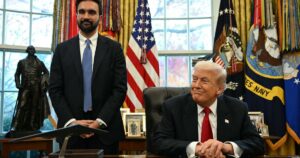
Hamas has indicated it agreed to disarm, but said that would be conditional on Israel’s withdrawal from Gaza and the complete cessation of “all forms of aggression.” Trump said Friday he had “an understanding” with Israel, which he said was “very happy” about the Hamas disarmament agreement. The White House did not immediately provide further comment when asked about Israel’s concerns, NBC News and NPR reported.
The dispute comes as Israeli strikes continued in Gaza despite the ceasefire. Gaza’s Health Ministry said Monday that 19 people had been killed and 35 injured in the previous 24 hours. Local hospitals said at least 17 people were killed in the latest Israeli strikes, including children, NPR reported. Nasser hospital said a strike on a residential apartment in southern Gaza killed three family members, including a 4-year-old child.
The Israeli military said its strikes targeted militant operatives, Hamas militants and infrastructure. In several statements Sunday, it said it had eliminated Hamas or Hamas-aligned militants in recent days, including a Hamas commander it said had infiltrated an Israeli kibbutz during the Oct. 7, 2023, attack. On Saturday, the military said it struck several areas across Gaza and dismantled five Hamas weapons storage facilities.
Dr. Muneer al-Bursh, director of Gaza’s Health Ministry, told NBC News the number of casualties was rising because of ongoing Israeli attacks on homes and vehicles. “Hospitals are suffering from the pressure of these continuous attacks amidst a severe shortage of medical supplies,” he said.
More than 73,000 people have been killed in Gaza since Israel launched its military offensive after the Oct. 7 attack, according to the Gaza Health Ministry. Hamas-led militants killed around 1,200 people, mostly civilians, and took 251 others hostage in that attack. The ministry does not distinguish between civilians and militants but says women and children make up around half of those killed.
Trump’s ceasefire plan calls for Hamas to surrender its weapons and destroy its tunnel network. It also envisions Israeli forces withdrawing from Gaza, a new technocratic Palestinian government, an international security force and reconstruction of the enclave. NPR, citing a copy of the agreement obtained and verified by The Associated Press, reported that weapons held by Hamas-run police would be transferred to a U.S.-backed Palestinian technocratic committee once it arrives in Gaza. Heavy weapons, military production sites and tunnels would be addressed later, after the committee’s arrival and the deployment of international forces, in a process linked to phased Israeli withdrawal.
NPR reported that people familiar with the talks said Israel had raised additional issues, including opposition to Qatar and Turkey taking part in verification, a demand that confiscated Hamas weapons be destroyed, and a desire for freedom to conduct military operations in Gaza.
Nickolay Mladenov, director-general of Trump’s Board of Peace, wrote on X that two days of strikes across Gaza “have killed civilians and destroyed medical supplies that people depend on.” He said the strikes followed “intense efforts” to get Palestinian factions to agree to a roadmap for implementing Trump’s plan. “Achieving a lasting peace is hard but achievable if everyone make their best efforts,” he wrote.







Be First to Comment