Key takeaways:
- Brent crude reached $98.82 a barrel, according to CBS News, while NBC News reported it rose above $100 in early Thursday trading.
- Houthi rebels claimed attacks on two Saudi oil tankers in the Red Sea near the Bab el-Mandeb Strait, a key route for oil and maritime trade.
- AAA data showed the national average gasoline price rose to $4.09 a gallon Thursday.
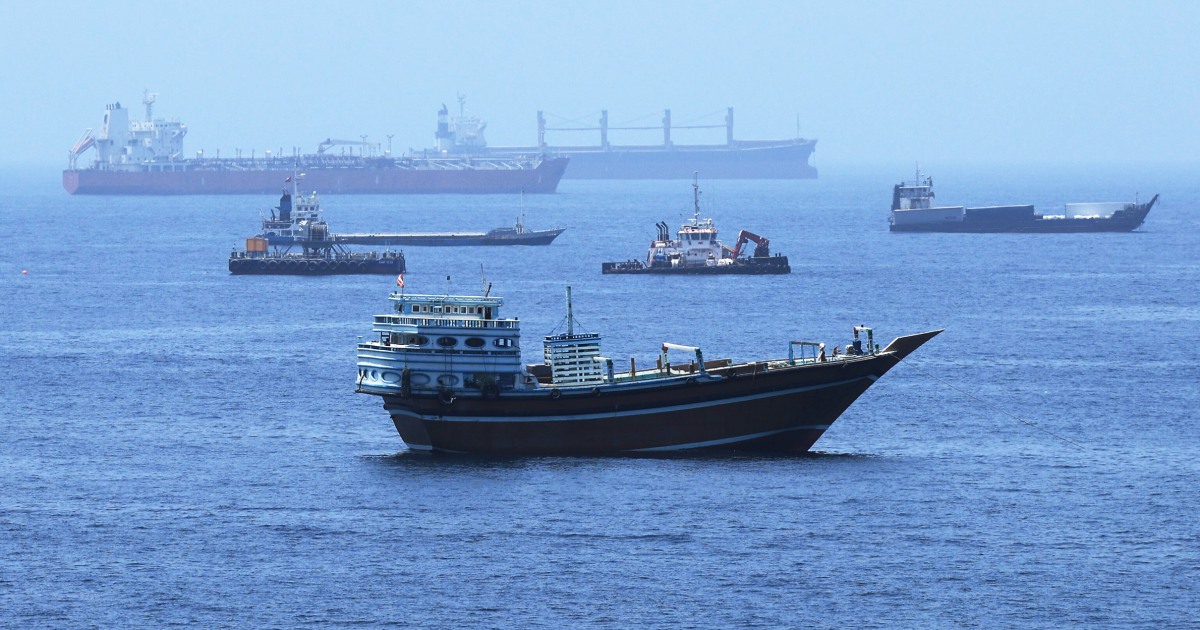
Oil prices climbed toward $100 a barrel Thursday after Iran-backed Houthi rebels in Yemen claimed attacks on two Saudi oil tankers in the Red Sea, raising fears that the Middle East conflict could disrupt a critical route for global energy shipments.
Brent crude, the international benchmark, reached $98.82 a barrel, up $4.75, or 5.05%, according to oilprice.com data cited by CBS News. NBC News reported that Brent rose more than 6% to above $100 a barrel in early Thursday trading, its highest level in eight weeks, since the end of May.
West Texas Intermediate, the U.S. benchmark, hit $90.67 a barrel, up $3.84, or 4.42%, CBS News reported. NBC News said U.S. crude rose more than 5% to almost $92 a barrel, its highest level since June 11.
The latest price jump followed Houthi claims that they struck two Saudi oil tankers in the Red Sea on Wednesday, after the group announced a naval blockade on Saudi Arabia. NBC News reported that the attacks appeared to mark the first time since the Iran war began that ship attacks had spread beyond the vicinity of the Strait of Hormuz.
The Red Sea attacks threatened shipping near the Bab el-Mandeb Strait, which connects the Red Sea with the Gulf of Aden. Oxford Economics said the strait carries about 7% of the global oil supply, according to CBS News. NBC News reported that millions of barrels a day pass through the waterway and that about 12% to 15% of global maritime trade, worth more than $1 trillion annually, transits the route.
The United Kingdom’s Maritime Trade Office reported a tanker “being struck by an unknown projectile” north of the Bab el-Mandeb strait, NBC News reported. The state-run Saudi Press Agency said the Encelia was set ablaze by an attack while sailing overnight in the Red Sea, citing an unidentified source from the General Authority of Transport. It did not mention the Layla, NBC News reported.
Gasoline prices also moved higher. The national average reached $4.09 a gallon Thursday, up from $3.94 a week earlier, AAA data cited by CBS News showed. NBC News, also citing AAA data, said the average rose from $4.06 on Wednesday to $4.09 on Thursday.
The rise in energy prices is adding pressure to inflation concerns and financial markets. “Inflation has remained top of the agenda for markets this morning,” Deutsche Bank’s global head of macro research, Jim Reid, said, citing the jump in Brent oil. “Indeed, the strikes between the US and Iran show no sign of easing, and the Houthis said they targeted two oil tankers in the Red Sea yesterday, raising fears that the conflict is widening.”
CBS News reported that the oil surge complicates the outlook for the Federal Reserve ahead of its July 29 interest rate decision. “Rate cuts investors were counting on for later this year look a lot less certain today than they did even a week ago, and then they were on shaky ground,” Nigel Green, CEO of investment firm deVere Group, said in an email.
CME FedWatch data cited by CBS News showed a 36% probability that the Fed could increase its benchmark rate on July 29, up from about 11% a week earlier.
Treasury yields rose alongside oil prices. CBS News reported that the 10-year Treasury climbed to 4.71%, while NBC News said it traded early Thursday at 4.67%, its highest level since January 2025. NBC News also reported that the average 30-year U.S. mortgage rate rose Wednesday to 6.77%, its highest level since July 2025.
The conflict showed other signs of intensifying. CBS News reported that the United States increased the number of refueling aircraft deployed to Israel, open-source flight-tracking data showed American B-1 bombers leaving the United Kingdom, and the U.S. had launched 12 consecutive nights of strikes on targets across Iran.






Be First to Comment