Key takeaways:
- Lonnie G. Bunch III will step down as Smithsonian secretary at the end of the year after 38 years at the institution.
- Bunch became Smithsonian secretary in 2019 and was the first Black person and first historian to lead the institution.
- The Trump administration has criticized the Smithsonian’s presentation of American history and accused it of promoting a “radical ideology.”
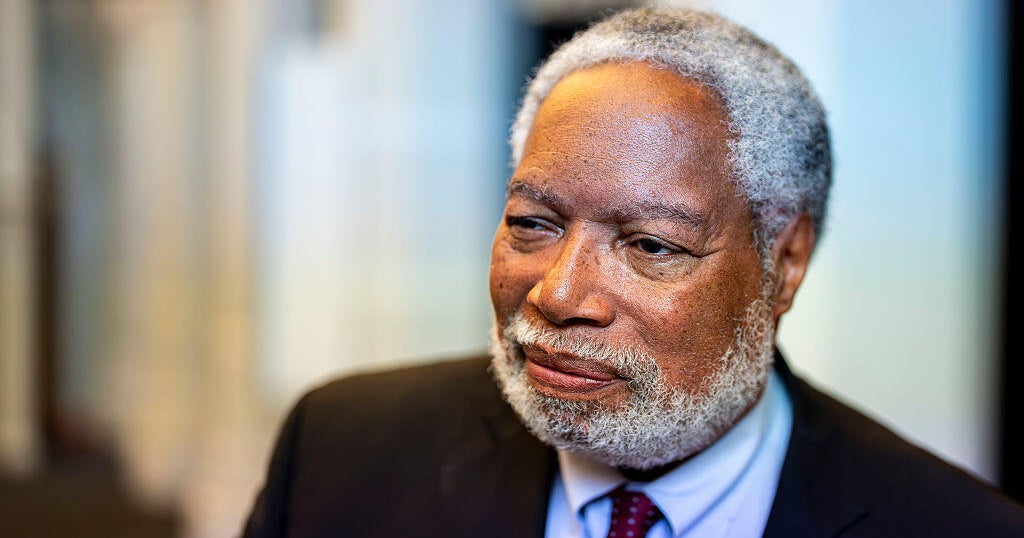
Lonnie G. Bunch III, the historian who became the first Black person to lead the Smithsonian Institution, will retire at the end of the year after 38 years at the nation’s largest museum and research complex.
Bunch announced his decision Tuesday, ending a tenure that included the Smithsonian’s top job since 2019 and, before that, a central role in creating the National Museum of African American History and Culture. His departure comes as the institution faces sustained criticism from the Trump administration over how it presents American history.
“It is with very mixed emotions and heartfelt gratitude that I announce my retirement from the Smithsonian,” Bunch said in a statement. “I have spent nearly half of my life working at and being part of the Smithsonian family, and what a privilege it has been. There is no place like the Smithsonian — it has been one of the great loves of my life, and I am extraordinarily proud of what we have accomplished together.”
Bunch, 73, said he leaves “with pride and sadness, gratitude and joy, and with enormous confidence in the people who will carry this remarkable institution forward.”
In an interview with The New York Times cited by CBS News, Bunch said his decision was not due to conflicts with the administration, saying, “now’s the time.” He also said the period had been difficult. “I have to be honest, it has been stressful,” he said. “And at a certain point, I’d like to wake up in the morning and not look at my cellphone.”
The Smithsonian includes 21 museums, 20 libraries, numerous research centers and the National Zoo in Washington. It has traditionally operated independently of the party in power, but President Donald Trump’s administration has increasingly targeted the institution’s exhibits and leadership during his second term.
CBS News reported that the administration launched an internal review of some of the Smithsonian’s best-known museums, and that Trump signed a March executive order pushing for changes at the institution, including the removal of “improper ideology.” In July, Trump ordered federal officials to install signs outside the National Museum of American History to correct what he called “inaccurate” information about American history, CBS News reported.
Last month, Interior Secretary Doug Burgum sent a letter accusing Smithsonian leaders of allowing “a radical institutional ideology to permeate” the American history museum. “The ultimate effect of this radical ideology is to weaken our shared American identity. erase our heritage and condition the public to accept these attempts to weaponize our national institutions and traditions in support of a radical political agenda,” Burgum wrote, according to CBS News. NBC News reported that the Interior Department last week threatened to cut off support, alleging that Smithsonian facilities present a “radical ideology” that weakens “shared American identity.”
Chief Justice John Roberts, who serves as chancellor of the Smithsonian and sits on its Board of Regents, praised Bunch’s leadership.
“From his days as a young curator at the National Air and Space and American History Museums through his tenure as the founding director of the African American History and Culture Museum and culminating in his distinguished service for the past seven years in the Smithsonian’s top job, Secretary Bunch has pursued excellence in the telling of our nation’s story,” Roberts said.
“The Regents, and the Smithsonian, have benefited greatly from his wisdom, vision and leadership,” Roberts added. “We look forward to working with him in the coming months to ensure a smooth transition for his successor.”
In a 2019 interview with CBS “Sunday Morning,” Bunch described the Smithsonian as “part of the glue that holds the country together.” He said culture can help people find common ground: “Culture is so important. Culture is something that sometimes is seen as dividing people, but in my mind, culture holds us together.”









Be First to Comment