Key takeaways:
- The 50% tariffs on many Canadian imports are scheduled to take effect Aug. 19.
- Energy products, fish, critical minerals and potash are excluded, but USMCA-covered goods will not be exempt, according to a senior administration official cited by CBS News.
- The White House said the tariffs respond to Canadian actions involving U.S. autos, dairy and alcohol, while Trump has also raised Canadian wildfire smoke as a concern.
President Donald Trump signed orders Monday imposing 50% tariffs on a broad range of Canadian imports, sharply escalating a trade dispute with one of the United States’ closest trading partners.
The duties are set to take effect Aug. 19 and target goods including alcoholic beverages, milk, hockey equipment, honey, flower bulbs, down feathers, plywood, cowhides, jewelry, electronics and commercial cement. The White House said the measures respond to what it called Canada’s “unreasonable, unequal, and discriminatory actions” affecting U.S. autos, dairy and alcohol.
Energy products, fish, critical minerals and potash will be excluded. But goods that move across the border under the United States-Mexico-Canada Agreement will not be exempt from the new tariffs, a senior administration official told reporters Monday, according to CBS News.
The tariffs were laid out in three proclamations signed by Trump. The Guardian reported that a White House official said the measures were being launched under Section 338 of the 1930 Trade Act. The official said the action was a response to Canadian retaliation over earlier U.S. tariffs and said the administration remained open to negotiations.
“While the Administration continues to secure fair and reciprocal trade deals with our trading partners, Canada, unlike other partners and allies, continues to retaliate against the United States for its efforts to rebalance trade and protect U.S. industry in national-security sensitive sectors,” U.S. Trade Representative Jamieson Greer said in a statement.
The new duties add to existing trade barriers between the two countries. The United States already has active tariffs ranging from 15% to 50% on Canadian steel, aluminum and copper, along with a 35% tariff on Canadian softwood lumber and a 25% tax on non-U.S. parts in cars. Canada has imposed its own 25% counter-tariff on selected imports of American steel, aluminum and vehicles.
Trump’s auto proclamation accuses Canada of applying a 25% tariff, beginning in April 2025, on U.S. motor vehicles that do not qualify for preferential treatment under the USMCA. He argues Canada discriminates against the United States by not applying the same treatment to other countries. Automotive manufacturing in North America is highly integrated across the United States, Canada and Mexico.
Dairy has also been a long-running dispute. Canada’s supply management system limits foreign imports, and products above the quota can face tariffs of more than 300%. Trump also objected to Canada’s treatment of U.S. cheese, saying Canada discriminates against the United States compared with Europe on dairy products.
Alcohol has become another flashpoint. The White House said all but two Canadian provinces and territories halted the purchase and retailing of American alcoholic beverages beginning last year. Canadian premiers have said the boycott will be lifted if the United States removes tariffs on key Canadian sectors, including metals and automobiles.
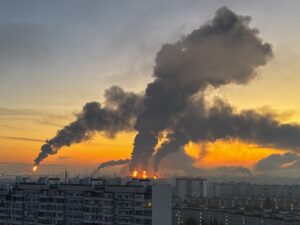
The orders followed Trump’s threat last week to impose tariffs over smoke from Canadian wildfires drifting into U.S. cities. “We are holding Canada responsible for the fact that they are not properly maintaining their Forests, and Brush therein, and the United States is being unnecessarily invaded by filthy, polluted, and unhealthy air, the quality of which is dangerous, and totally unacceptable!” Trump wrote on Truth Social, according to The Guardian.
The BBC reported that the executive orders signed Monday do not mention wildfires. The Guardian reported that the administration official said Trump had separately asked aides to examine additional tariffs related to Canadian wildfires and their effect on U.S. air quality.
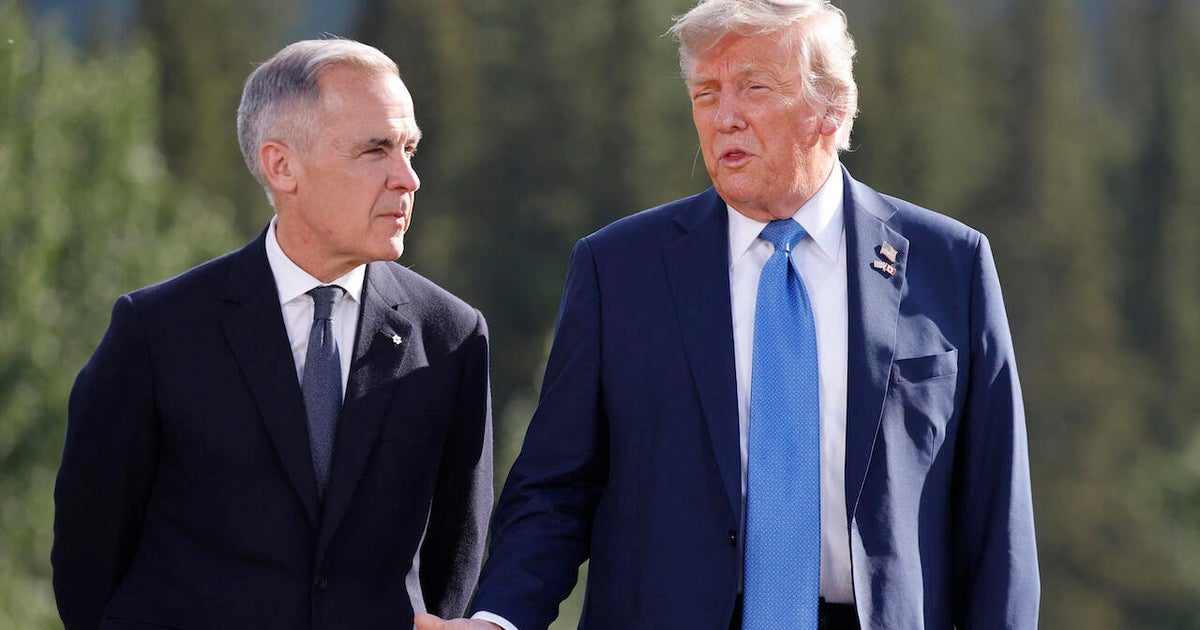
Trump told reporters after watching Sunday’s World Cup final with Canadian Prime Minister Mark Carney that he raised the smoke issue with him. “I told him, I mean, ‘You got to stop these fires from coming in and, you know, poisoning our air. Our air has been poisoned,’” Trump said.
CBS News said it had reached out to Carney’s office for comment.










Be First to Comment