Key takeaways:
- The White House said before Trump’s speech that the declassified documents would not allege votes were switched or voting machines hacked.
- Trump claimed China acquired 220 million U.S. voter registration files, but he did not say the data was used to influence an election.
- Trump urged passage of the SAVE America Act, including proof-of-citizenship requirements for voter registration, but the legislation remains stalled.
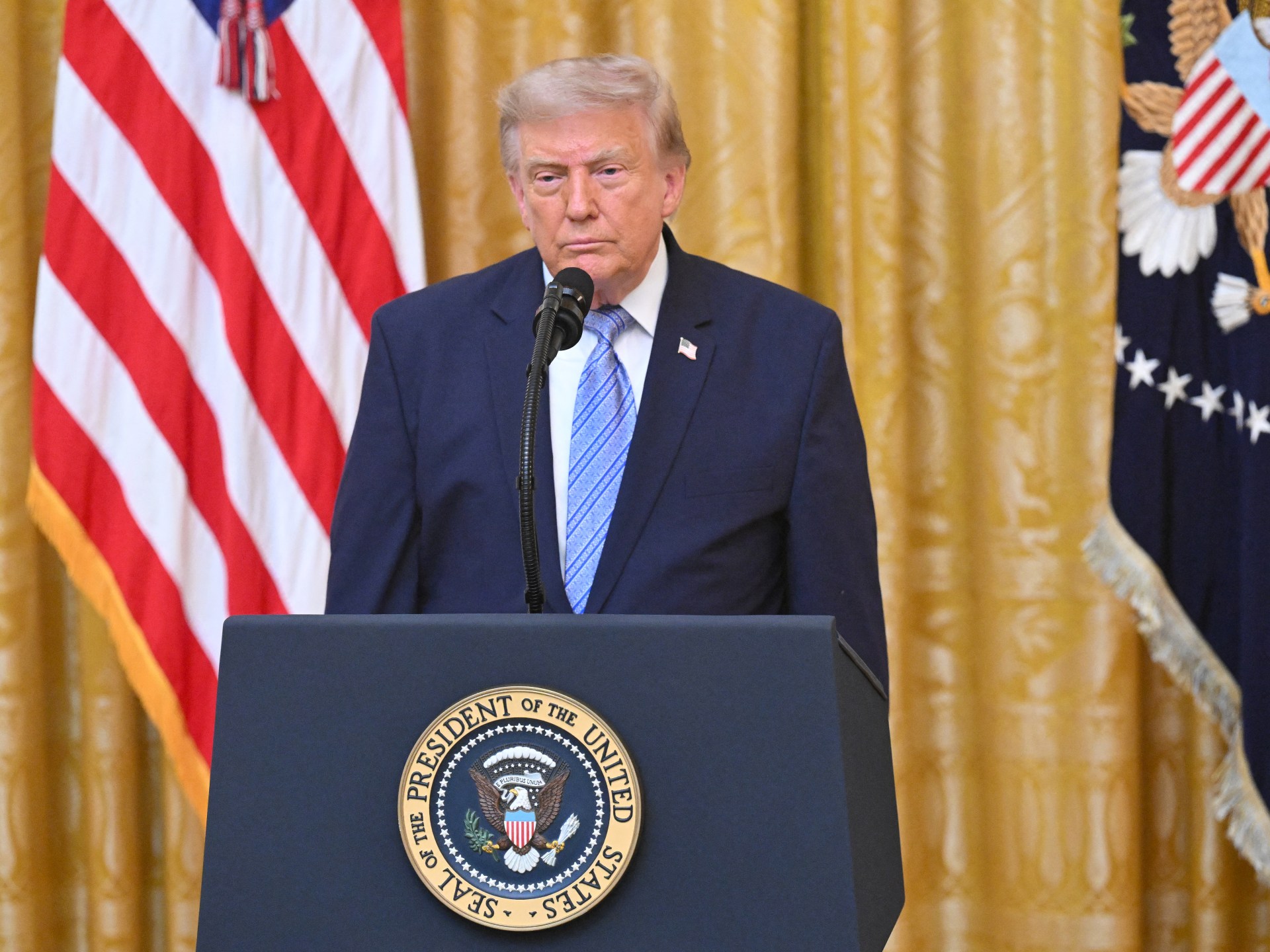
President Donald Trump used a primetime address Thursday to argue that the U.S. election system falls “catastrophically short,” releasing declassified documents and reviving disputed claims about election security less than four months before the midterm elections.
The White House released the documents alongside the speech, but a White House official told reporters beforehand that the newly released material would not allege that votes were switched or that voting machines were hacked. Election experts and Democrats said Trump failed to present conclusive evidence that past presidential elections had been changed by fraud or interference.
Trump, who has long falsely claimed the 2020 election was stolen from him through widespread fraud, stopped short of saying Thursday that he won that race. But he sought to cast doubt on the election system and urged lawmakers to pass the SAVE America Act, a package of proposed election law changes that includes requiring proof of citizenship to register to vote. The bill remains stalled, with some Senate Republicans skeptical. Republican allies largely praised the speech, while Democrats accused Trump of trying to undermine confidence in elections.
David Becker, executive director of the Center for Election Innovation and Research, said the address offered little new information. “This administration has been in total control of the federal government for 18 months. They’ve redirected untold taxpayer resources to try to uncover evidence of massive voter fraud,” he said. “And at the end of that 18 months, all we got is more rehashed, debunked conspiracy theories, many of which we’ve known about before and already knew didn’t affect our elections.”
One of Trump’s central claims was that China acquired 220 million U.S. voter registration files from 2020 to 2023, including names, addresses, phone numbers and party affiliations. He called it “the largest compromise of election data in history” and alleged that intelligence agencies kept the information from him and Congress.
Trump did not say the information was used to influence an election. Voter registration data is publicly available in many states, though some personal details are kept confidential. “It sounds bad when you hear about it,” Becker said. “The reality is: voter files in the United States are public.”
A 2020 intelligence report declassified nearly four years ago found that China had obtained voter data from multiple states “to conduct public opinion analysis on the 2020 US general election.” A January 2021 intelligence assessment found with “high confidence” that China considered an influence campaign but decided against it, while noting a minority view that China took some steps to denigrate Trump through social media posts, official statements and media. The U.S. intelligence community assessed in March 2021 that no foreign actor attempted to alter voting processes, vote counting or voter registrations.
China denied seeking to interfere. A spokesperson for its embassy said the country “has never and will never interfere in the presidential elections of the US,” and told CBS News it has “all along adhered to the principle of non-interference in other’s internal affairs.”
Trump also alleged that “hundreds of thousands of non-citizens and dead people are listed and active on the voter rolls,” citing a Department of Homeland Security review that found more than 250,000 non-citizens registered across California, Pennsylvania, New Jersey and Nevada. Becker questioned the findings, saying they relied on commercial data likely to produce “a ton of false positives.”
Documented non-citizen voting cases are rare. The Brennan Center for Justice found 30 suspected cases among 23.5 million votes cast in 42 jurisdictions in 2016. State reviews have found small numbers, including 20 noncitizens among Georgia’s 8.2 million registered voters in 2024 and 597 noncitizen registered voters in Ohio out of more than 8 million, including 138 who cast ballots.
Trump also called voting machines and ballot-counting systems “vulnerable” and “easily compromised.” The White House released intelligence related to Venezuela and Smartmatic election systems, though CBS News reported that Smartmatic technology is not used in the United States except in a limited jurisdiction. U.S. elections are administered at the state and local levels, and the intelligence community has long assessed that large-scale voting manipulation would be extremely difficult.
The president also revisited a Michigan voter registration investigation involving allegedly fake forms. Al Jazeera reported that the forms were flagged before the 2020 election, were not processed and did not affect the vote. State and federal investigators did not find that fraud had been successfully committed.







Be First to Comment