Key takeaways:
- U.S. Central Command said American forces struck about 90 Iranian targets, including air defenses, coastal surveillance assets, missile and drone storage sites, naval capabilities and logistics infrastructure.
- Iran said it attacked sites linked to the U.S. military in Kuwait, Bahrain and Qatar; Kuwait reported intercepting missiles and drones, while Qatar issued an elevated security alert.
- Iran’s Health Ministry said at least 14 people were killed and 78 wounded over two days of U.S. attacks, as the renewed fighting put a mid-June ceasefire memorandum in doubt.
The United States and Iran traded a second day of attacks Thursday, with U.S. forces striking about 90 targets across Iran and Tehran firing at sites in Bahrain, Kuwait and Qatar, deepening doubts over a fragile ceasefire meant to lead toward an end to the war.
The escalation followed President Donald Trump’s declaration that recent Iranian attacks on commercial shipping in the Strait of Hormuz meant the truce was “over.” The waterway, through which about a fifth of the world’s oil and natural gas passed before the war, has become a central dispute in negotiations between Washington and Tehran.
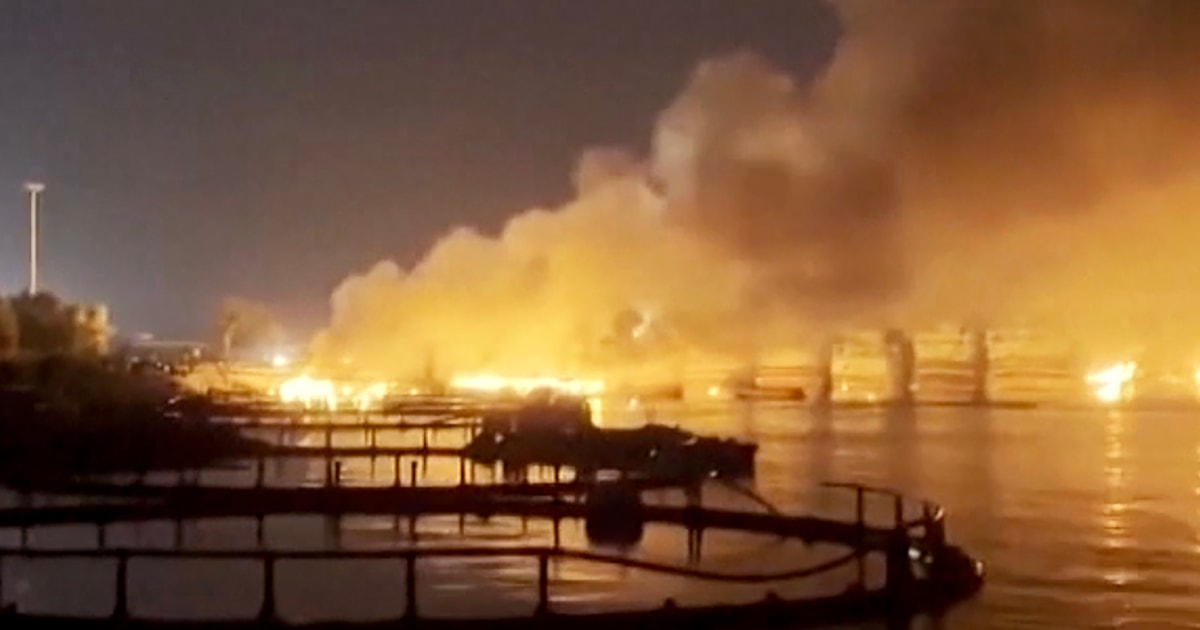
U.S. Central Command said American forces struck Iranian air defense systems, coastal surveillance assets, missile and drone storage sites, naval capabilities and military logistics infrastructure along Iran’s coastline. It said the strikes were intended to “further degrade” Iran’s ability “to threaten freedom of navigation” in the strait.
“U.S. forces remain vigilant, lethal, and prepared to execute operations directed by the Commander in Chief,” Central Command said.
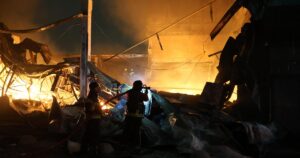
Iranian state media reported explosions in several areas, including Bushehr, Chabahar, Konarak, Bandar Abbas and Sirik. Al Jazeera reported, citing Iran’s IRNA news agency, that strikes hit a military base in coastal Bushehr, which hosts Iran’s only civilian nuclear power plant. Iranian outlets also reported attacks on railway bridges, including on a route to Mashhad, where officials planned to bury the late Supreme Leader Ayatollah Ali Khamenei on Thursday.
Iran’s foreign ministry denounced the U.S. strikes as a “gross war crime” and said civilian infrastructure had been hit, including two railway bridges. The Pentagon did not immediately respond to those accusations, NBC News reported.
Iran’s Health Ministry said at least 14 people were killed and 78 wounded over two days of U.S. attacks. Iranian state media reported at least three deaths in Khuzestan province and said a firefighter was killed in a strike on an airport facility in Iranshahr.
Iran’s Islamic Revolutionary Guard Corps said it attacked “key infrastructure and facilities” at bases used by the U.S. military in Kuwait and Bahrain. Iran’s army later said it targeted a Patriot missile system in Kuwait, a satellite antenna in Qatar and U.S. military fuel depots in Bahrain, Al Jazeera reported. Kuwait’s military said it was intercepting incoming drones and missiles, and Qatar issued an “elevated security threat” alert. Sirens sounded at least twice in Bahrain, home to the U.S. Navy’s 5th Fleet headquarters, NPR reported. There was no immediate word of damage in the three Gulf Arab states.
Trump, returning from a NATO summit in Turkey, wrote on Truth Social that the U.S. strikes were “in retribution for yesterday’s bombing of ships by Iran. If it happens again, it will get much worse!” He also told reporters that he did not expect “long-term” military action, while leaving open the possibility of continued negotiations.
“For me, I think it’s over,” Trump said when asked about the ceasefire, according to NPR. “They can talk, but I think they’re wasting their time.” Later aboard Air Force One, he said Iran wanted “to make a deal so badly,” but added, “I just don’t know that they’re worthy of making a deal. I don’t know that they’re going to honor the deal. That’s the problem.”
Iranian Parliament Speaker Mohammad Bagher Qalibaf, a negotiator in the talks, responded defiantly on X: “America still hasn’t learned that bullying and breaking promises are no longer cost-free. Let me put it plainly: if you strike, you’ll get hit.” Iranian Deputy Foreign Minister Kazem Gharibabadi said Trump’s remarks “are not a sign of power but an admission of the failure” of U.S. policy toward Iran.
The fighting threatens a memorandum of understanding signed in mid-June to extend a ceasefire, ease a U.S. naval blockade and gradually reopen the Strait of Hormuz. The deal launched a 60-day negotiating period on unresolved issues, including the strait, Iran’s nuclear program and frozen Iranian funds, Al Jazeera reported.
The talks have been paused during funeral events for Khamenei, who was killed in U.S.-Israeli strikes at the start of the war. United Nations Secretary-General Antonio Guterres called “on all parties to exercise maximum restraint,” while Qatar’s prime minister urged both Washington and Tehran to commit to diplomacy and implement the memorandum.







Be First to Comment