Key takeaways:
- David Streever filed a federal lawsuit in Washington, D.C., after ICE officers went to his Rochester home and later tried to contact him at a New York City hotel over a January email to then-acting ICE Director Todd Lyons.
- Streever’s attorneys say his email criticizing ICE after the fatal shooting of Renee Good was protected political speech under the First Amendment.
- Paigelynne Gonyea was also approached by federal officials in June at a Syracuse polling place over an Instagram post involving ICE officer Jonathan Ross, though she and DHS dispute which post prompted the warning.
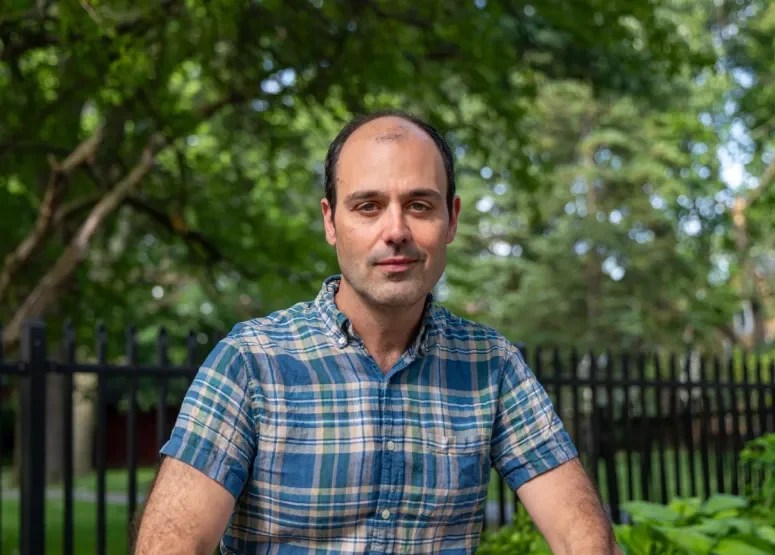
A Rochester, New York, man has sued U.S. Immigration and Customs Enforcement, alleging federal officers violated his First Amendment rights after they tried to serve him with a warning notice over a sharply critical email he sent to the agency’s then-acting director.
David Streever, a U.S. citizen, filed the lawsuit Monday in federal court in Washington, D.C. His attorneys say ICE’s Office of Professional Responsibility sent officers to his home in June while he was traveling in Finland and later tried to reach him at a New York City hotel after he returned. Streever refused to sign the warning notice, Talking Points Memo reported.
The case is one of at least two in upstate New York in which federal officers confronted residents over criticism of ICE. The other involved Paigelynne Gonyea, a poll worker in Syracuse, who was approached at a voting location during New York’s primaries about a social media post involving an ICE officer.
Streever’s email was sent in January to Todd Lyons, then the acting director of ICE, after an immigration officer fatally shot Minneapolis resident Renee Good during a confrontation captured on video at an anti-ICE demonstration, The Guardian reported. The email had the subject line “What’s next” and called Lyons “a monstrous human being” who “will go down in history as America’s Reinhard Heydrich, the butcher.”
“You will never know peace,” Streever wrote in the email, according to The Guardian. “You will seek to lose yourself, to escape the burden of knowing the truth about yourself. But wherever you go, you will find yourself. You will torment yourself until your last day on Earth.”
Streever said in a statement released with the lawsuit that he was reacting to the Minnesota shooting. “Like many Americans, I was deeply upset after the shootings in Minnesota and I felt compelled to do something,” he said. “Writing an email to the head of ICE seemed like the least I could do to express my sense of outrage. I never dreamed it would lead to a knock on my door by federal officers or descending on my hotel in the dark of night.”
The Foundation for Individual Rights and Expression, a Philadelphia-based group representing Streever, said the email was protected political speech. “Simply put, the only threat here is the one DHS and ICE officials pose to Streever’s First Amendment freedoms — and those of his fellow Americans,” the group said in a statement cited by Talking Points Memo.
Adam Steinbaugh, an attorney with the foundation, told The Guardian: “This is very clearly within the protection of the first amendment. It was in the context of political speech.”
ICE previously declined to comment on the Streever warning, citing an ongoing investigation, and did not immediately comment Monday, The Guardian reported. The lawsuit also names Markwayne Mullin, the secretary of homeland security, according to The Guardian. Mullin’s office said in a statement: “Any allegation DHS and its components are attempting to ‘squash’ free speech is categorically FALSE.” The statement added: “Anyone who assaults or threatens our law enforcement officers will face the consequences.”
In Gonyea’s case, the dispute centers on which Instagram post prompted federal attention. Gonyea believes the warning stemmed from a January post saying, “I think today is a great day for Jonathan to be indicted,” alongside a photo of Jonathan Ross, the ICE officer who shot and killed Good. Ross had already been identified by news media, The Guardian reported.
A Homeland Security spokesperson, Lauren Bis, said Gonyea had shared Ross’s address in a different post, part of which was redacted in an image provided to The Guardian. Bis said in June that Gonyea “committed a federal crime by posting the address of an ICE law enforcement officer online” and added, “if you doxx [sic] our officers, we will investigate you, and you will be brought to justice.” Gonyea denies that claim, according to Talking Points Memo.
A representative for the New York attorney general’s office has said the office is aware of the two residents’ encounters with federal agents and has been reviewing the interaction between Gonyea and agents at the polls.







Be First to Comment