Key takeaways:
- ICE officer Christian Castro faces four counts of second-degree assault and one count of falsely reporting a crime for shooting Julio Sosa-Celis in January.
- Prosecutors say Castro fired through a front door without threat, striking Sosa-Celis, who was lawfully in Minnesota and involved in a case of mistaken identity.
- The charges follow video evidence contradicting initial federal claims and come amid broader legal disputes over prosecuting federal agents for actions during immigration enforcement.
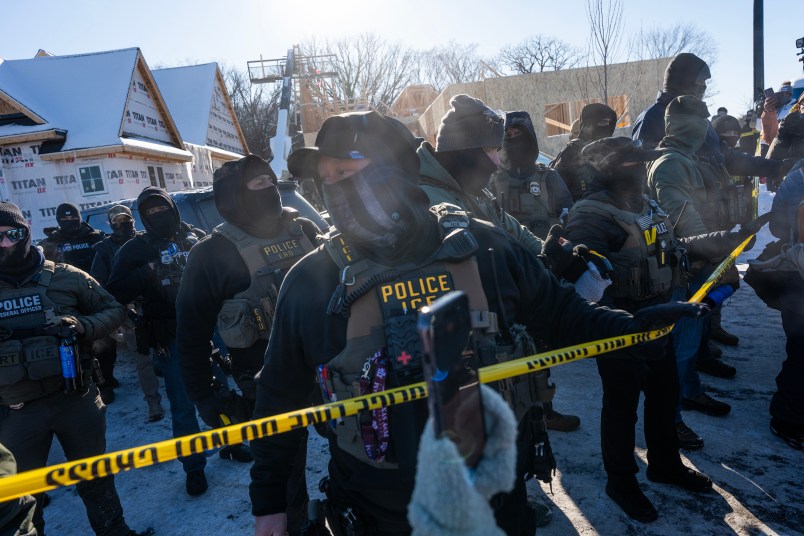
Minnesota prosecutors charged Immigration and Customs Enforcement (ICE) officer Christian Castro on Monday with four counts of second-degree assault and one count of falsely reporting a crime related to a January shooting during an immigration enforcement action. The charges stem from an incident in which Castro allegedly fired his service weapon through the front door of a residence, striking Julio Sosa-Celis, a Venezuelan man who was legally in the United States, in the leg.
Hennepin County Attorney Mary Moriarty stated at a news conference that Castro fired his weapon “with the intent to cause fear of immediate bodily harm or death to the four adults who were just inside the door.” She added, “Mr. Castro fired his service weapon at the front door of the home, knowing there were people who had just run inside that presented absolutely no threat to him or anyone else.” The bullet passed through the door, hit Sosa-Celis’ leg, traveled through a closet, and lodged in a child’s bedroom wall.
The incident occurred on January 14 during an attempted immigration arrest near the home of Sosa-Celis and his housemate, Alfredo Alejandro Aljorna. According to prosecutors, Sosa-Celis helped Aljorna escape an ICE officer and was inside the home when Castro fired. Moriarty emphasized that both men were in Minnesota lawfully and that the case involved mistaken identity.
The Department of Homeland Security (DHS) initially claimed that Sosa-Celis and Aljorna attacked officers with a shovel and a broom, leading to assault charges against the men. However, those charges were later dismissed with prejudice after prosecutors cited new evidence inconsistent with the allegations. Video footage released in February and April contradicted the DHS account, showing one man dropping a shovel and another running empty-handed before an officer tackled one of them.
Acting ICE Director Todd Lyons acknowledged in February that a review of video evidence revealed that two officers, including Castro, appeared to have made untruthful statements under oath. Both officers were placed on administrative leave pending investigation. Lyons stated, “Lying under oath is a serious federal offense,” and noted that the officers could face termination and criminal prosecution.
Moriarty said Castro “was not under any physical threat when he fired his weapon, or even beforehand,” and that he was not hit by any objects.
This case is part of a broader legal challenge involving ICE agents deployed to Minnesota during the Trump administration’s Metro Surge immigration enforcement operation. Another ICE agent, Gregory Donnell Morgan Jr., was charged last month with felony second-degree assault with a dangerous weapon for allegedly pointing a gun at two civilians while driving an unmarked SUV. Morgan remains at large under a nationwide arrest warrant.
The Metro Surge, which began in late November, was marked by controversy, including the fatal shootings of two U.S. citizens, Renee Good and Alex Pretti, by immigration authorities. These deaths sparked widespread protests and criticism.
The Minnesota charges against Castro set the stage for a likely legal battle over the extent to which state authorities can prosecute federal agents for actions taken during their official duties. Moriarty asserted, “His federal badge does not make him immune from state charges for his criminal conduct in Minnesota,” and noted that there is “no such thing as absolute immunity for federal officers who commit crimes in this state or another.”
Federal officials have resisted cooperation with local investigations into the shootings and assaults, prompting Minnesota to sue for records. Moriarty revealed that state officials identified Castro after hearing FBI agents mention his name at the shooting scene before federal agents ceased cooperation.
The case may be moved to federal court, where a judge will decide if the officer’s conduct was a “necessary and proper” part of his duties. Moriarty also noted that if convicted, Castro would be ineligible for a presidential pardon.
The developments highlight ongoing tensions between federal immigration enforcement and local jurisdictions, as well as questions about accountability for law enforcement actions during aggressive immigration operations.





Be First to Comment