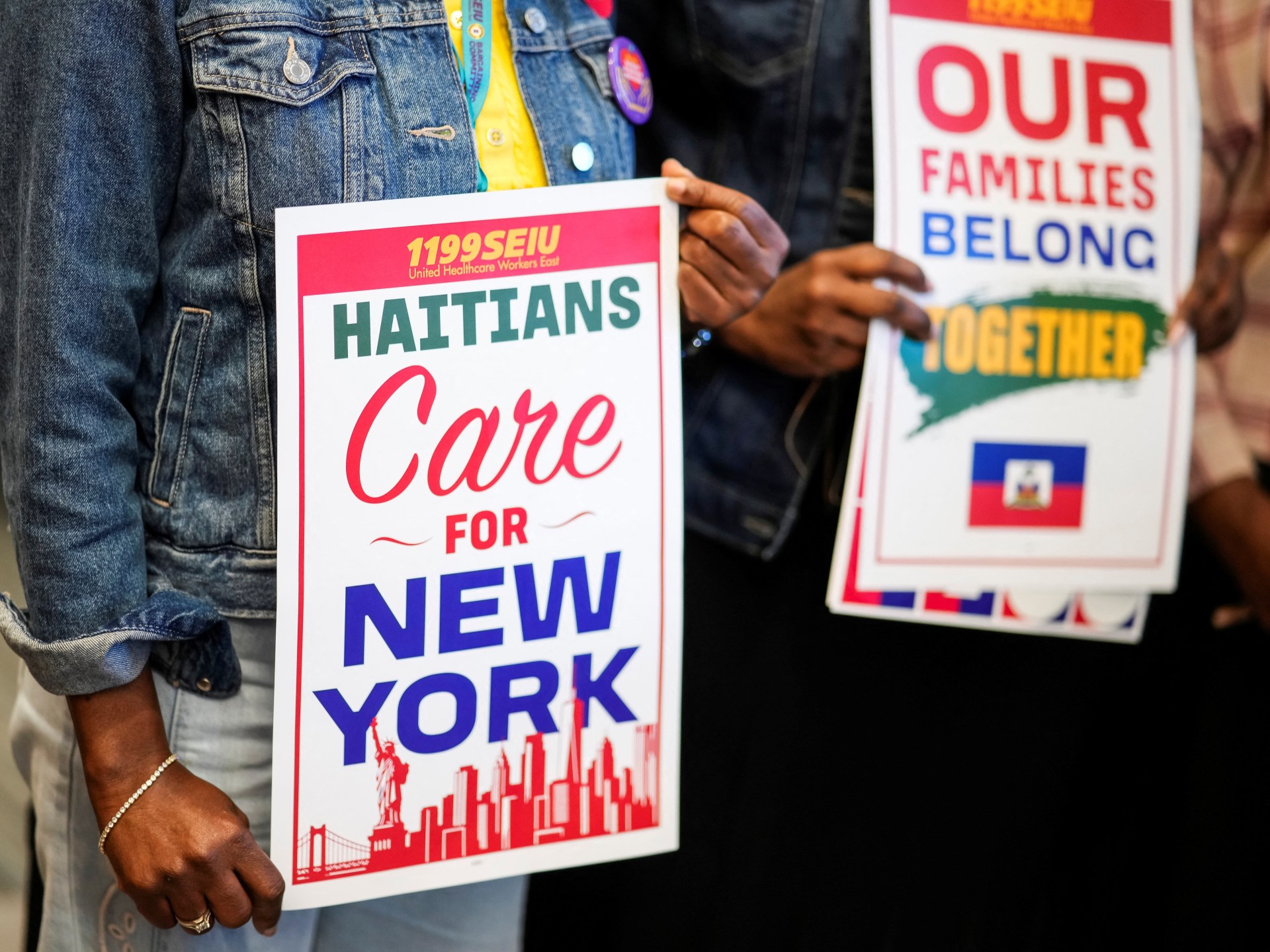
Key takeaways:
- The ruling affects about 330,000 Haitian TPS holders whose work authorizations expire July 10, along with Syrians and Venezuelans covered by the decision.
- FWD.us estimates 21,000 Haitian TPS holders work in hard-to-fill nursing assistant and caregiver jobs.
- Healthcare experts say the effects will be felt most acutely in Florida, New York and Massachusetts, where large Haitian TPS populations work in care roles.
A Supreme Court ruling allowing the Trump administration to end Temporary Protected Status for Haitians has intensified fears of a staffing crisis across U.S. healthcare, particularly in nursing homes, assisted living facilities and home care agencies that rely heavily on immigrant workers.
The June 25 decision cleared the way for the administration to remove legal protections for about 330,000 Haitian TPS holders, as well as thousands of Syrians. The Department of Homeland Security said existing work authorizations for affected TPS recipients will expire July 10. Those who do not qualify for another immigration status could face deportation.
Healthcare researchers and industry groups say the impact could be immediate. Immigrants with TPS are more likely to work in healthcare, representing 15% of all noncitizen healthcare workers, according to a 2025 study cited by Al Jazeera. TPS holders make up about 2.1% of the total immigrant population.
Steffie Woolhandler, a distinguished professor of health policy at the City University of New York at Hunter College and a faculty member at Harvard Medical School, told NPR the ruling could disrupt care nationwide.
“It’s going to be a disaster in the Boston area, where a lot of our nursing home and home care aides are Haitian,” Woolhandler said. “If the United States becomes inhospitable to noncitizens, which I think Trump is doing, we’re going to have a lot of problems staffing our entire healthcare system.”
Massachusetts has about 19,000 Haitians with TPS, behind Florida with 158,000 and New York with 40,000, NPR reported. Florida, home to nearly 404,000 TPS recipients from all countries, has the largest TPS population in the United States, according to the Congressional Research Service cited by Al Jazeera. More than half are from Venezuela and about one-third are from Haiti.
Lawmakers in both parties have warned of consequences for patients and older adults. Republican Rep. Mike Lawler wrote on X that “of the 350,000+ lawful Haitian TPS holders, roughly 1/3 work in our healthcare system” and that ending TPS immediately “will create a crisis in our hospitals, nursing homes, and in the [intellectual disabilities] community.” Democratic Rep. Ayanna Pressley said in a statement, “Seniors will lose their caregivers when we already have a caregiving crisis, and seniors will lose their ability to age in community with much-needed assistance.”
The Boston Globe found that about 13,000 Haitian TPS holders work daily as nursing assistants, caring for 65,000 patients, Al Jazeera reported. Another 8,000 Haitian caregivers serve 12,000 children and older people, according to Americans for Immigrant Justice. FWD.us estimates that 21,000 Haitian TPS holders work in hard-to-fill jobs as nursing assistants and caregivers.
The broader healthcare system is already strained. Woolhandler said two-thirds of hospitals report closing beds because they lack staff, while about half of nursing homes say they cannot accept new admissions for the same reason. Al Jazeera reported that nearly half of U.S. nursing homes limit admissions because of staffing shortages, and that shortages of nurses and other employees caused about two-thirds of hospitals to operate below capacity in 2023.
“The healthcare of everybody is going to be compromised by this,” Woolhandler told NPR. “If you start throwing out workers that play a key role in the whole continuum of care … it tends to create a bottleneck or a backup.”
Katie Smith Sloan, president and CEO of LeadingAge, which represents more than 5,300 aging services providers, called the ruling a direct threat to care. “Staff and caregivers who support older adults every day — legal employees who in some of our communities represent 8% or more of the entire workforce — can now lose their jobs overnight,” she said.
In Springfield, Ohio, where NPR reported one in four residents is of Haitian descent, Haitian Support Center co-founder Viles Dorsainvil said TPS holders began calling within hours of the ruling. “They’re wondering if they can still keep their assets or money at the bank, if they can still go to work because TPS came with the work permit, and with the driver’s license privilege,” he said. “The community is devastated.”










Be First to Comment