Key takeaways:
- Venezuelan officials said at least 235 people were killed and about 4,300 injured by magnitude 7.2 and 7.5 earthquakes that struck Wednesday evening.
- La Guaira state, north of Caracas, was among the hardest-hit areas, with about 70,000 families affected and the country’s main international airport closed because of damage.
- The United States eased some sanctions for earthquake relief and joined countries across the Americas, Europe and Asia in sending rescue teams, medical aid and supplies.
International rescue teams and emergency aid poured into Venezuela on Friday as crews searched collapsed buildings for survivors after twin earthquakes killed at least 235 people and injured about 4,300, overwhelming hospitals and displacing thousands.
The magnitude 7.2 and 7.5 earthquakes struck Wednesday evening less than a minute apart west of Caracas, according to the U.S. Geological Survey. The agency said the second, larger quake hit 39 seconds after the first and was centered northwest of Montalbán. The tremors, among the strongest to hit Venezuela in more than a century, were felt across much of the country and in neighboring areas, including parts of Brazil and Colombia.
Jorge Rodríguez, president of Venezuela’s National Assembly, said late Thursday that about 200 people remained trapped beneath collapsed buildings, while roughly 250 structures had been damaged or destroyed. Health Minister Carlos Alvarado said hospitals were full as the health system struggled to treat the injured.
“Unfortunately we have received around 235 patients who arrive without vital signs or die when they arrive at our health facilities,” Alvarado told state media Thursday.
La Guaira, the coastal state north of Caracas, was among the hardest-hit areas. Acting President Delcy Rodríguez called it a disaster zone, saying dozens of buildings had collapsed. Interior Minister Diosdado Cabello said about 70,000 families were affected there, and Al Jazeera reported that more than 100 buildings in the state had collapsed.
“Dozens of buildings have collapsed and we are engaged in the arduous task of rescuing the lives that God allows us to save,” Rodríguez said. “The state of La Guaira is facing a true tragedy and has become a disaster zone.”
The quakes damaged Simón Bolívar International Airport, prompting its closure. Rodríguez declared a state of emergency, suspended metro and rail services in affected areas and canceled classes for several days. Some schools were designated as shelters and donation centers.
In Caracas, residents described walls cracking, buildings swaying and streets filling with dust and debris. Many people spent the night outdoors or in cars, afraid that aftershocks could bring down damaged structures. Cabello warned residents to stay outside and check on children and the elderly.
Nelson Ospedales, whose home in Caracas’ Altamira neighborhood partially collapsed, said emergency services needed help. “Material possessions can be recovered, but at this moment, the competent authorities — such as firefighters and civil defense — have been completely overwhelmed. They need more personnel,” he told Noticias Telemundo. “Hospitals have become severely congested.”
Aid offers came from across the Americas, Europe and Asia. The United Nations said search-and-rescue teams were deploying worldwide. “Every hour counts,” U.N. humanitarian chief Tom Fletcher wrote on social media. He also said: “To the Venezuelan people, to those whose loved ones are under the rubble, know that we are determined that help gets to you.”
The United States said it was sending search teams, medical resources and humanitarian aid. President Donald Trump said the U.S. was “ready, willing, and able to help,” and Secretary of State Marco Rubio said Washington would deploy rescue teams while the Pentagon provided logistical support. A senior U.S. Southern Command official, Marine Corps Maj. Gen. Kevin J. Jarrard, arrived in Caracas to oversee relief operations. The Treasury Department also eased some sanctions until Oct. 23 to allow earthquake-relief transactions that would otherwise be prohibited.
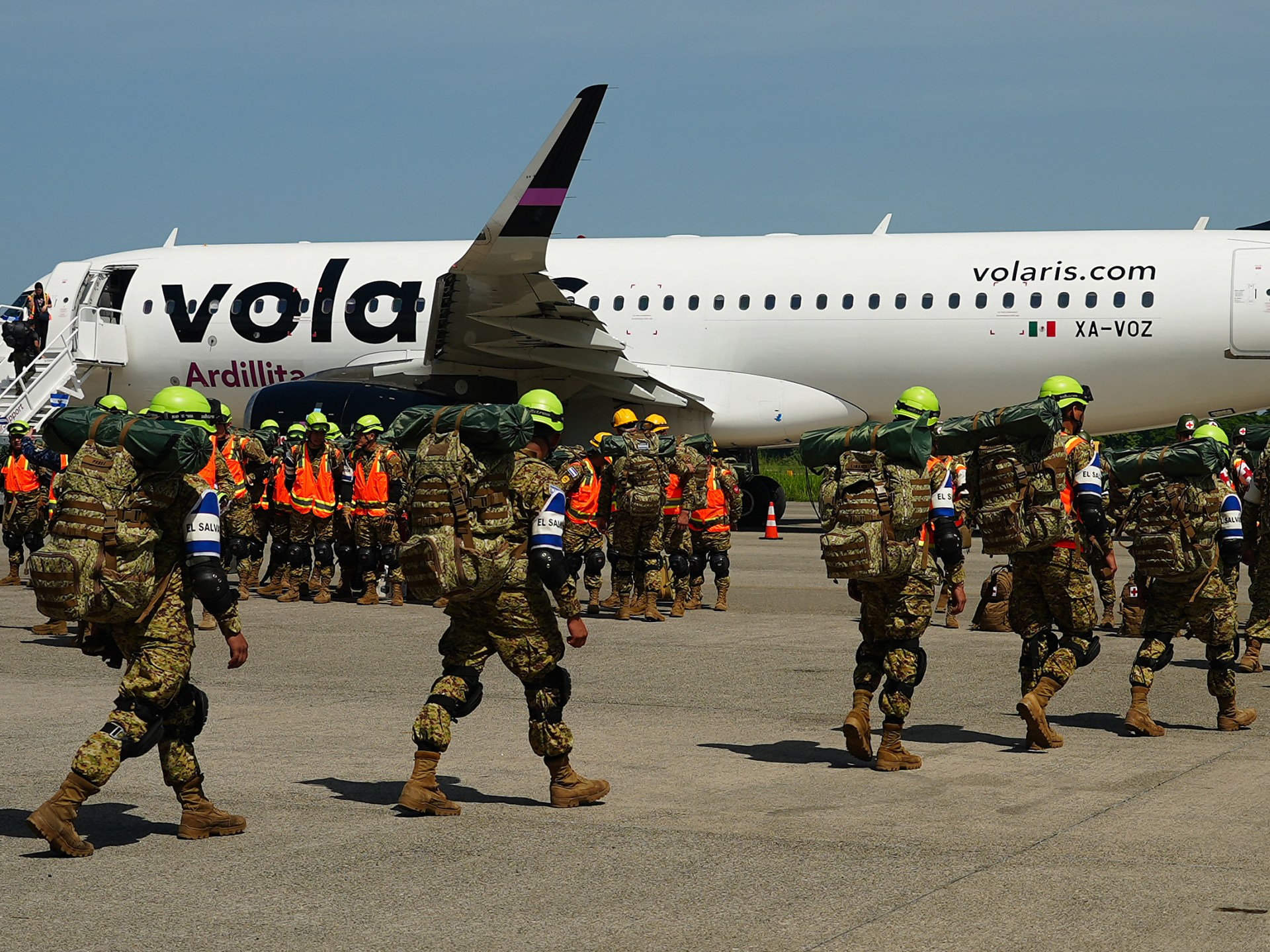
Brazil, Mexico, Colombia, El Salvador, Cuba, Canada, China and others announced aid, while the International Federation of Red Cross and Red Crescent Societies released $2.5 million for recovery. The Vatican sent initial emergency aid of 100,000 euros, and several European countries prepared rescue teams, equipment or transport aircraft.
In the United States, Venezuelan communities organized donation drives. NPR reported that in Katy, Texas, west of Houston, volunteers packed canned food, diapers, medicine and hygiene supplies for shipment to Venezuela. “Being far away from your family, and being on the outside…it’s very important for us to come together and support our people,” volunteer Arianna Regardia said.
Another donor, Alberto Avila, said, “We are outside the country, the only way we can help is — our stuff. Clothes, food, something to send to Venezuela to help.”



Be First to Comment