Key takeaways:
- Alan Greenspan died Monday at age 100 from complications of Parkinson’s disease, his wife Andrea Mitchell said.
- Greenspan chaired the Federal Reserve from 1987 to 2006 under Ronald Reagan, George H.W. Bush, Bill Clinton and George W. Bush.
- Critics linked Greenspan’s support for deregulation and market self-regulation to conditions preceding the 2007-08 financial crisis, though he defended his record.
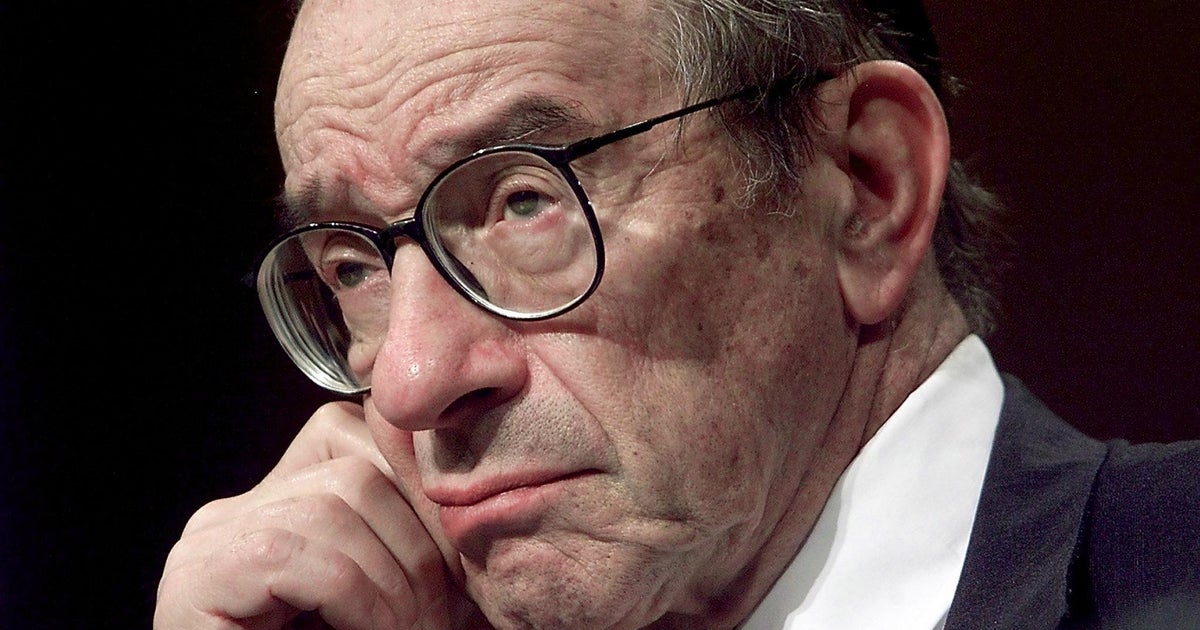
Alan Greenspan, the economist who led the Federal Reserve through market crashes, a technology boom and one of the longest expansions in U.S. history, died Monday at his home from complications of Parkinson’s disease, his wife, NBC News correspondent Andrea Mitchell, said. He was 100.
Greenspan served five terms as Fed chair under Presidents Ronald Reagan, George H.W. Bush, Bill Clinton and George W. Bush, making him one of the longest-serving leaders in the central bank’s history. His tenure, from 1987 to 2006, coincided with a period of low inflation, rising stocks and strong growth often described as the Great Moderation. It also left him tied to fierce debates over deregulation, financial bubbles and the roots of the 2007-08 global financial crisis.
“Alan passed away at our home this morning at the age of 100 from complications of Parkinson’s disease,” Mitchell said in a statement reported by NBC News. “He was a giant of a man who helped shape the U.S. economy for decades under presidents of both parties, but was always honest in acknowledging his mistakes.”
Mitchell, who was married to Greenspan for 29 years, added that he had “irrational exuberance” for baseball, the Washington Commanders, tennis, golf and music, especially jazz. “He will be remembered for his brilliance and his kindness,” she said.
Born March 6, 1926, in New York City, Greenspan showed an early gift for numbers and studied clarinet at Juilliard before turning to economics. He earned bachelor’s and master’s degrees from New York University and later received a doctorate there. In the early 1950s, he became associated with novelist Ayn Rand and her objectivist circle, an influence he later acknowledged in his memoir, “The Age of Turbulence.”
Greenspan built his reputation as an economic consultant at Townsend-Greenspan & Co. before entering Republican policy circles. He advised Richard Nixon’s 1968 presidential campaign, chaired the Council of Economic Advisers under President Gerald Ford and later served on Reagan’s Economic Policy Advisory Board. Reagan appointed him Fed chair in 1987.
His first major test came quickly. On Oct. 19, 1987, “Black Monday,” the Dow Jones Industrial Average plunged more than 22%, its largest one-day percentage drop. Greenspan moved to keep markets liquid, helping define what became known as the “Greenspan put,” shorthand for Fed action to support markets during instability.
He drew broad praise during the 1990s expansion, which stretched from 1991 to 2001 and included the rise of the internet and globalization. He also became an unlikely public figure. The Economist called him a “rock star,” while admirers dubbed him “the maestro.” His 1996 warning about “irrational exuberance” became one of the most famous phrases in modern economic policy.
But his legacy was reshaped after the financial collapse that began after he left office. Critics faulted his support for financial deregulation, his reluctance to rein in speculative bubbles and policies they said contributed to the housing and subprime mortgage crisis. The bipartisan Financial Crisis Inquiry Commission said in 2011 that more than 30 years of deregulation and reliance on self-regulation, “championed by former Federal Reserve chairman Alan Greenspan and others,” had stripped away safeguards that could have helped avert catastrophe.
Greenspan defended his record, telling Fortune in 2007 that he was the subject of “revisionist history” and had warned about subprime mortgages and other risks. In 2008 congressional testimony, he called the crisis a “once-in-a-century credit tsunami” and acknowledged, “The crisis, however, has turned out to be much broader than anything I could have imagined.”
After leaving the Fed in 2006, Greenspan founded a consulting firm in Washington and wrote several books. He received the French Legion of Honor in 2000, an honorary British knighthood in 2002 and the Presidential Medal of Freedom in 2005.





Be First to Comment