Key takeaways:
- Mediators Qatar and Pakistan said the United States and Iran agreed to a roadmap toward a final deal within 60 days.
- The sides agreed to set up a communication channel for the Strait of Hormuz and a Lebanon deconfliction cell with Lebanese authorities.
- The Guardian reported that the U.S. Treasury was preparing a 60-day waiver lifting sanctions on Iranian oil, petrochemicals and derivatives.
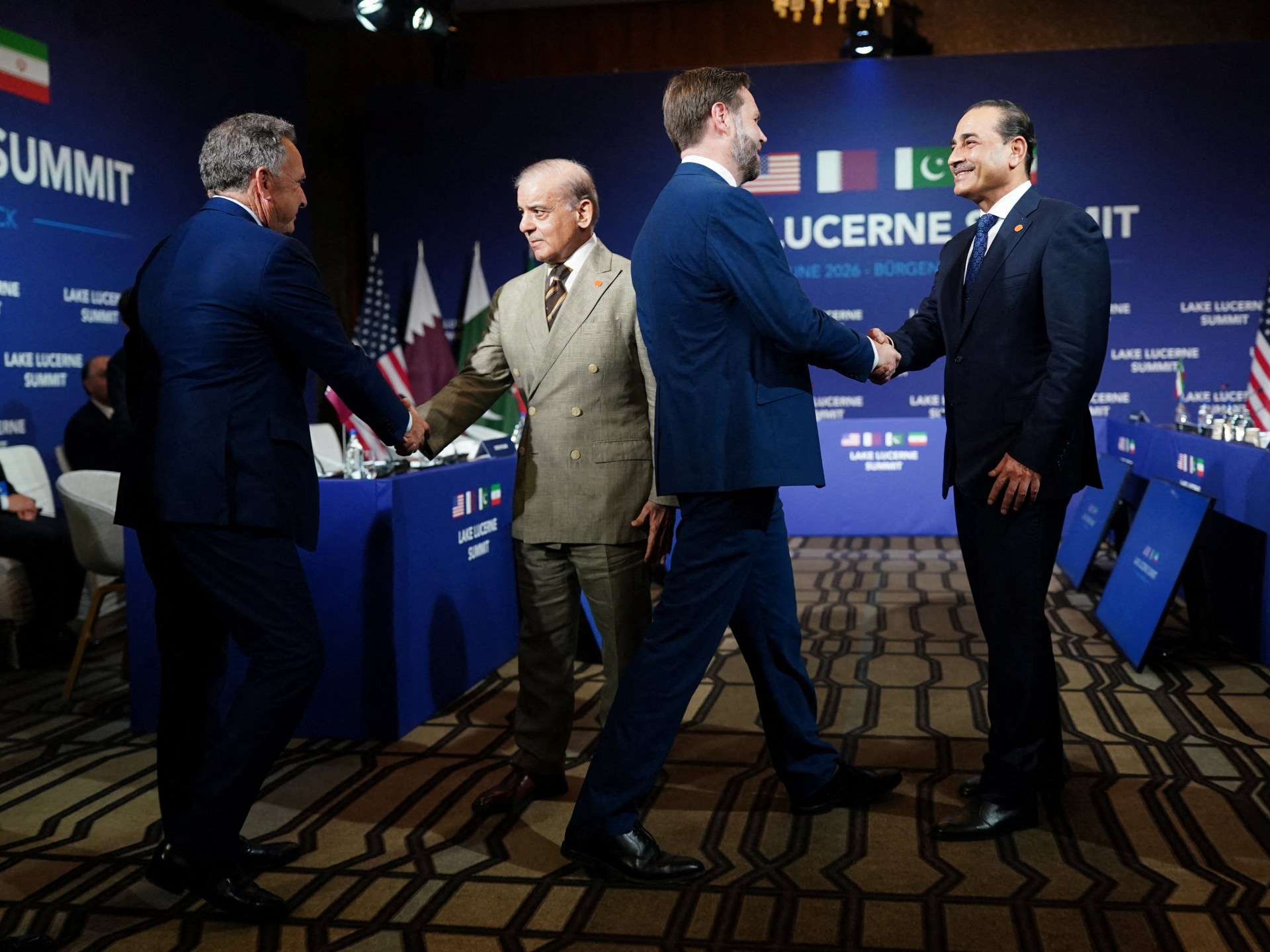
The United States and Iran agreed to a 60-day roadmap toward a final deal after marathon talks in Switzerland, mediators said, a sign of progress after a tense opening marked by threats from President Donald Trump and a temporary walkout by the Iranian delegation.
Pakistan and Qatar, which mediated the talks at the Swiss resort of Burgenstock, said technical discussions would continue through the week. The negotiations are aimed at turning a memorandum of understanding signed last week by Washington and Tehran into a final agreement, with fighting in Lebanon and the Strait of Hormuz among the most urgent issues.
“Encouraging progress has been made, including the creation of a mechanism for further technical talks,” the mediators said, according to Al Jazeera. They said the sides agreed to create a communication channel to “avoid incidents and miscommunication” over the Strait of Hormuz and to establish a “deconfliction cell” with Lebanese authorities to prevent renewed fighting there.
Iranian Foreign Minister Abbas Araghchi welcomed the outcome after talks ended just after 3 a.m. local time Monday. “Tireless Pakistani and Qatari mediation has delivered major progress to end Lebanon War,” he wrote on X. He said oil and petrochemical exports had been waived, a blockade lifted, some frozen assets released and a reconstruction and development plan launched for Iran. He called the Lebanon deconfliction mechanism the “1st real test.”
The high-level teams were led by U.S. Vice President JD Vance and Iranian parliament Speaker Mohammad Bagher Ghalibaf. Vance was joined by U.S. special envoy Steve Witkoff and Jared Kushner, Trump’s son-in-law. Iran was also represented by Araghchi.
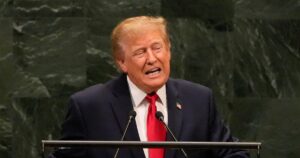
The talks began Sunday under strain. Trump warned Iran on social media to stop its “highly paid PROXIES in Lebanon from causing trouble,” adding: “If they don’t, we’ll hit Iran very hard again, just like we did last week, only harder!!!” The Guardian also reported that Trump threatened Iran over the Strait of Hormuz, saying: “You close it and you won’t have a country. You won’t even make it back to your fucking country.”
Iranian state media said the delegation paused talks after what it called an insulting message by Trump, while the semi-official Tasnim news agency said the delegation refused to return to the negotiating room but continued exchanging messages through Qatari and Pakistani mediators. A senior U.S. diplomat said late Sunday that the Iranians remained on site and negotiations were continuing, according to the Associated Press.
Ghalibaf issued his own warning. “They would do better to be careful with their statements; our armed forces are ready to respond to them in a different manner. No matter what they say, we are the ones who act,” he said, according to Al Jazeera.
Lebanon has emerged as a major test for the preliminary agreement. The memorandum calls for a ceasefire on all fronts, but Israeli attacks and clashes have continued. The Guardian reported that Israel killed more than 30 people in attacks Saturday in central and southern Lebanon. Al Jazeera reported that the overall death toll from fighting in Lebanon has surpassed 4,100 since it escalated on March 2, citing Lebanon’s Ministry of Public Health.
Economic measures were also central to the talks. The Guardian reported that the U.S. Treasury was preparing to issue a 60-day waiver lifting sanctions on oil, petrochemicals and derivatives, allowing Iran’s central bank to sell oil, mainly to China, and receive payments without the threat of sanctions. Qatar and Iran also signed a memorandum on the release of Iranian assets frozen in Qatari bank accounts because of U.S. secondary sanctions, though it was not clear whether Washington placed restrictions on their use.
The nuclear file remains unresolved. The preliminary agreement calls for Iran to at least dilute its stockpile of highly enriched uranium, while questions remain over Tehran’s right to enrich uranium in the future. Iranian President Masoud Pezeshkian said Sunday that Iran would not give up that right but repeated that it does not seek nuclear weapons. “We can also state in writing that we have no intention of building a bomb,” he said.



Be First to Comment