Key takeaways:
- NOAA declared El Niño conditions after central and eastern equatorial Pacific sea surface temperatures rose above its 0.5C threshold.
- NOAA said there is a 63% chance of a very strong El Niño during November to January, potentially ranking among the largest since 1950.
- Japan’s Meteorological Agency says El Niño is present, while Australia’s Bureau of Meteorology says the Pacific is approaching El Niño conditions but has not formally declared one.
El Niño has officially formed in the tropical Pacific, U.S. scientists said, raising the prospect of a powerful global weather disruption that could intensify heat, floods, drought and wildfires on a planet already warmed by climate change.
The U.S. National Oceanic and Atmospheric Administration declared that El Niño conditions are under way after sea surface temperatures rose sharply across the central and eastern equatorial Pacific. The agency said temperatures have passed the 0.5C-above-average threshold it uses to define an El Niño event, and winds above the equatorial Pacific have begun to shift, indicating the atmosphere is responding to the warmer ocean.
“El Niño conditions developed over the past month, as shown by above-average sea surface temperatures (SSTs) across the central to eastern equatorial Pacific Ocean,” NOAA said.
The pattern, a natural warming cycle that occurs every two to seven years and usually lasts about a year, can reshape weather around the world. NOAA said there is a 63% chance it will become very strong during November to January, a level that “would rank among the largest El Niño events in the historical record going back to 1950.” The strongest events in that record occurred in 1982/83, 1997/98 and 2015/16.
Some U.S. and European models show tropical Pacific temperatures potentially rising more than 3C above average by the end of the year, the BBC reported. NOAA urged caution about translating strength forecasts into precise impacts, saying: “Even very strong El Niño events do not lead to the expected impact everywhere, but stronger events can more significantly tilt the odds in favour of expected outcomes.”
Scientists said the main concern is the interaction between El Niño and human-caused warming. “The current El Niño is… riding on top of a substantial amount of global warming,” said Prof Adam Scaife, head of monthly to decadal prediction at the UK Met Office. “This means that the actual temperatures in affected regions could well be unprecedented, as the warming from El Niño is being topped up by climate change.”
A very strong El Niño typically lifts global air temperatures by about 0.2C, according to the BBC. Several climate scientists forecast that 2027 could be the hottest year on record because of lagging effects from the event, The Guardian reported. Scaife said that “at the end of this year and into 2027, we’re likely to see very high temperatures globally,” adding that 2027 could bring another year above 1.5C of warming compared with late-19th-century levels.
The UN secretary-general, António Guterres, called El Niño an “urgent climate warning.” In a video message, he said: “El Niño conditions will pour fuel on the fire of a warming world.”
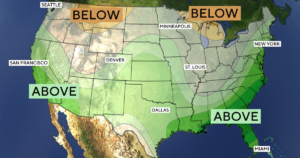
Regional effects vary. Flooding is common in northern Peru and southern Ecuador and can reach parts of East Africa, Central Asia and the southern United States. Drought and wildfire risks rise across much of Australia, Indonesia and northern South America, threatening agriculture and food supplies. India faces more intense heatwaves, while north-eastern Africa could swing from intense drought to dangerously heavy rains, Columbia University climate scientist Muhammad Azhar Ehsan told The Guardian.
El Niño often suppresses Atlantic hurricanes, though it can increase activity in the Pacific. Liz Stephens, professor of climate risk and resilience at the University of Reading, said reduced Atlantic hurricane activity can mean less rainfall for Central America and “potentially drought conditions.”
Japan’s Meteorological Agency also judges El Niño conditions to be present and says they are almost certain to last into autumn. Australia’s Bureau of Meteorology, which uses a stricter 0.8C sea-surface-temperature threshold, said the tropical Pacific is “approaching El Niño conditions” but has not formally declared the event.
There is no conclusive proof that climate change is making El Niño events stronger or more frequent, the BBC reported, but scientists said a warmer world can amplify their effects.




Be First to Comment