Key takeaways:
- Iran said it had suspended military operations after firing dozens of ballistic missiles at Israel, while warning of stronger measures if attacks continue.
- Israeli reports said Iranian missiles caused no casualties, while Israel’s strike on Dahiyeh killed two people and injured about two dozen more.
- Israeli public approval of the Iran war’s military achievements fell from about 60% in March to 27% last month, according to the Institute for National Security Studies.
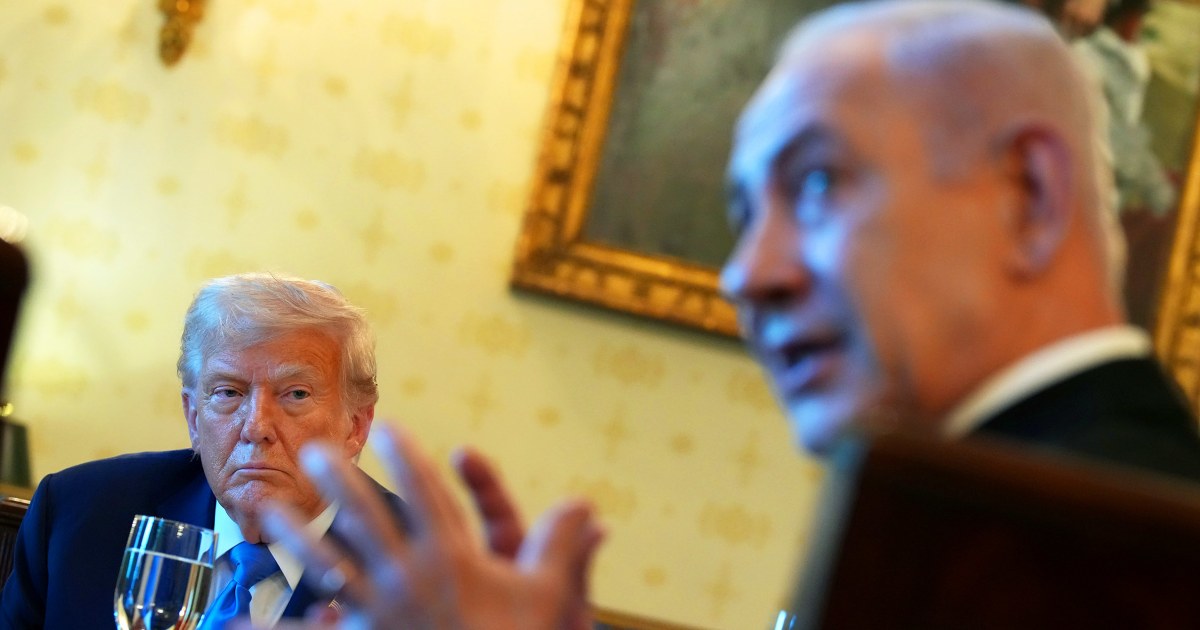
A new exchange of fire between Israel and Iran has put Prime Minister Benjamin Netanyahu under fresh political pressure, forcing him to balance demands at home for a forceful military response with public calls for restraint from President Donald Trump.
The latest hostilities began after Israel struck Dahiyeh, a Hezbollah stronghold south of Beirut, on Sunday. The strike killed two people and injured about two dozen more, according to NBC News. Iran’s government said the Israeli attack followed a Hezbollah strike on a northern Israeli town, and Iran responded by firing dozens of ballistic missiles at Israel.
Early Israeli reports said none of the Iranian missiles appeared to hit their targets or cause casualties. The Guardian reported that Israel intercepted incoming projectiles and that Netanyahu then ordered missile strikes against targets in Iran despite Trump urging Israel not to retaliate. The exchanges continued into Monday morning before both sides signaled a halt.
Iran’s Islamic Revolutionary Guard Corps headquarters said through the semiofficial Tasnim news agency that it had “suspended” military operations, while warning of “far more severe and crushing measures” if “aggressions and hostile actions continue, including in southern Lebanon.”
Trump said negotiations were continuing on an end to the war with Iran that would reopen the Strait of Hormuz to international shipping. The Guardian reported that a blockade remained in place on the strait “until a ‘final deal’ is reached.” Trump wrote on Truth Social, “Things should move quickly.”
The fighting has exposed strains between Trump and Netanyahu. Trump told the Financial Times on Sunday, “I call all the shots. He doesn’t call the shots.” Less than a week earlier, the White House had leaked details of a phone call in which Trump reportedly called Netanyahu “crazy,” with NBC News reporting that Trump said he had called the prime minister “f—— crazy” for continuing attacks in Lebanon.
Netanyahu has repeatedly described Trump as “the greatest friend that the state of Israel has ever had in the White House.” But Israeli critics have seized on Trump’s public rebukes, while some Israeli military leaders have complained that U.S. restrictions have limited operations in Lebanon.
“It puts him in a very delicate situation,” said Gideon Rahat, a political science professor at the Hebrew University of Jerusalem. “I think that Netanyahu was trapped under the claim that he’s serving U.S. interests and doing whatever Trump is telling him and therefore he cannot respond.”
Israeli politicians quickly pressed Netanyahu to answer forcefully. Naftali Bennett, a former prime minister widely viewed as a leading contender to succeed him, wrote on X: “This is a moment of truth: Is Israel a sovereign state capable of defending itself. A weak or symbolic response will signal to our enemies that the blood of our citizens has been spilled with impunity; therefore, Israel must act with strength and effectiveness.”
Itamar Ben-Gvir, Israel’s national security minister and a far-right member of Netanyahu’s cabinet, wrote: “Tonight Tehran must burn!”
The political stakes are high. Elections must be held before the end of October, The Guardian reported. Bennett’s “Together” party, formed with opposition leader Yair Lapid six weeks ago, initially polled strongly, but recent surveys put it narrowly behind Netanyahu’s Likud Party, according to NBC News.
Public support for the Iran war has also fallen. In March, about 60% of Israelis approved of the war’s military achievements, according to the Institute for National Security Studies. By last month, that figure had dropped to 27%.
Analysts said Iran has tied the Lebanon fighting to broader negotiations with the United States and Israel. Yaakov Amidror, a former Israeli national security adviser and fellow at the Jewish Institute for National Security of America, said the Trump administration had given Tehran an opening by appearing to recognize a connection between the conflicts.
“The Americans gave the Iranians the impression that they understand the connection” between the U.S.-Israeli war with Iran and Israel’s war in Lebanon, Amidror said. “It was a huge mistake, legitimizing the influence of Iran in Lebanon.”
Rahat cautioned that Netanyahu remains politically resilient. “He has already faced so many elections and I’m not sure that this is the most problematic,” he said. “He can say in one sentence that Trump is limiting me and the other sentence is that there was never a war in which Israel and the United States fought together against anyone. He can play both things.”






Be First to Comment