Key takeaways:
- The U.S. Treasury Department sanctioned Cuban President Miguel Díaz-Canel, his wife Lis Cuesta Peraza, his stepson Miguel Anido Cuesta and two relatives of former President Raúl Castro.
- President Donald Trump denied the sanctions were meant to accelerate Cuba’s collapse, saying, “We just want them to be a nicely run country.”
- Cuba is facing severe shortages and blackouts, with Al Jazeera reporting power outages of up to 22 hours a day since diesel for generators ran out in January.
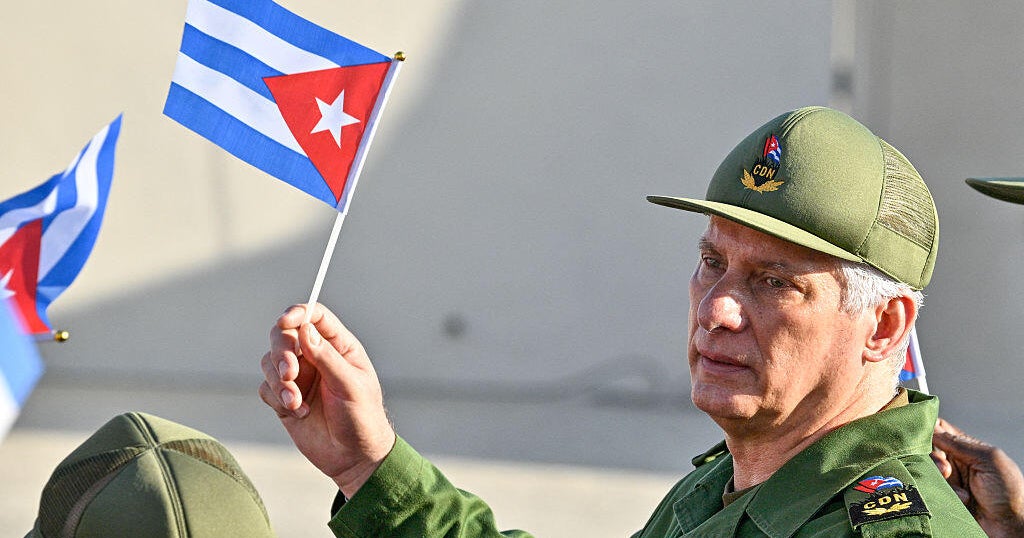
The United States imposed sanctions Thursday on Cuban President Miguel Díaz-Canel, his wife and several relatives of Cuba’s current and former leadership, escalating pressure on Havana as the island faces severe blackouts, food shortages and a deepening economic crisis.
The measures, posted on the U.S. Treasury Department’s website, freeze any property and bank accounts the designated individuals hold in the United States, though CBS News reported it is unclear how closely their finances are tied to the U.S. financial system.
The sanctions list includes Díaz-Canel; his wife, Lis Cuesta Peraza; his stepson, Miguel Anido Cuesta; Alejandro Castro Espín, the only son of former President Raúl Castro and Vilma Espín; and Castro Espín’s son, Raúl Alejandro Castro Calis. Alejandro Castro Espín previously served as an adviser to Cuba’s Defense and National Security Commission and was present when Raúl Castro greeted then-President Barack Obama in Havana in March 2016.
Al Jazeera reported that the Ministry of the Revolutionary Armed Forces, the Cuban military and the Committees for the Defense of the Revolution were also targeted. The CDR is tasked with monitoring counter-revolutionary activity.
The action follows an executive order signed by President Donald Trump expanding sanctions against Cuba and comes after the administration imposed sanctions last month on several senior Cuban officials. Secretary of State Marco Rubio had warned that more sanctions were likely.
Rubio said in a statement that those “designated today direct or fund the regime and its efforts to mobilize its radical revolutionary movements in the United States and around the world.” He has defended the administration’s escalating sanctions on Havana, including measures against GAESA, a business conglomerate operated by Cuba’s Revolutionary Armed Forces. Rubio has alleged GAESA has $18 billion in assets and controls 70% of the Cuban economy.
Asked Thursday whether the sanctions were intended to speed Cuba’s collapse, Trump said, “We just want them to be a nicely run country.”
“The country is starving and it’s got no energy, it’s got no oil, it’s got no money, it’s got nothing. It’s got a beautiful piece of land. You could have beautiful resorts,” Trump told reporters at the Oval Office during an unrelated event.
Asked whether Cuba is close to collapsing, he said, “It’s sort of collapsed,” and added that “we’re going to handle that as soon as we’ve finished” military operations in Iran. “I like to do one thing at a time,” Trump said, according to CBS News. Al Jazeera quoted Trump as saying, “We’ll take care of the Islamic republic of Iran, and as soon as that’s done, on our way back, we’ll just make a little brief stopover,” in an allusion to Cuba.
The sanctions come amid heightened U.S. pressure on Cuba. CBS News reported that Trump has threatened military action since ousting Venezuelan leader Nicolás Maduro in January and ordering an energy blockade that choked off fuel shipments to Cuba. Al Jazeera reported that an energy blockade enforced by the U.S. Navy has contributed to critical blackouts and food shortages, and that Cuba has been without diesel for generators since January, causing power outages of up to 22 hours a day and water shortages. The outlet also reported that the island is short on food and medicine and has become dependent on aid shipments from Mexico and China.
Díaz-Canel has said Cuba would “be ready” for a possible U.S. attack. After the new sanctions, he accused Trump of trying to “strengthen the blockade and scenario of conflict between Cuba and the United States.” He wrote on social media that the measures were “designed to harm the Cuban people” and said, “The aggressiveness and perversity of the Yankee government will clash with our determination to confront the worst scenarios and resist the imperialist onslaught.”
Cuban Foreign Minister Bruno Rodriguez called the sanctions “vile” and “the latest example of US interventionism,” writing, “Every threat against the independence and sovereignty of Cuba will be met with an even greater unity and resolve from our people.” Cuban authorities did not immediately respond to a CBS News request for comment.
Díaz-Canel was chosen in 2018 to succeed Raúl Castro, becoming the first person in decades to lead Cuba without the Castro name. His term runs until 2028. Before becoming president, he served as minister of higher education and first secretary of the Communist Party of Cuba.


Be First to Comment