Key takeaways:
- A PPIC poll put Xavier Becerra at 23%, Steve Hilton at 20% and Tom Steyer at 15% in California’s governor primary.
- Only the top two vote-getters advance under California’s nonpartisan primary system, regardless of party.
- As of Monday, 16% of all ballots had been submitted, according to Political Data Inc.
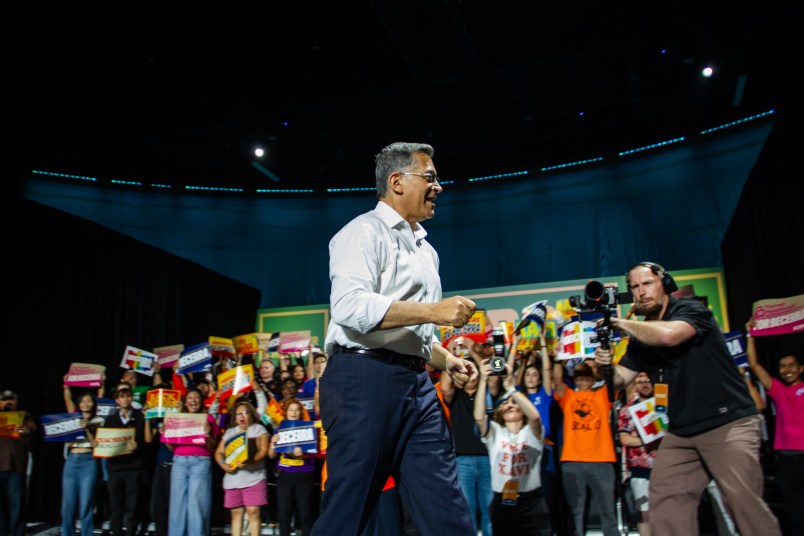
Xavier Becerra heads into Tuesday’s California primary with a narrow lead in a volatile governor’s race shaped by scandal, voter frustration and Democratic anxiety over the state’s top-two election system.
The contest to succeed term-limited Democratic Gov. Gavin Newsom is the marquee race on a crowded ballot that also includes the Los Angeles mayor’s race and congressional primaries that could help determine control of the U.S. House. Under California’s nonpartisan primary system, all candidates appear on one ballot regardless of party, and only the top two vote-getters advance to the general election.
Three late surveys show Becerra, the former U.S. health and human services secretary, moving slightly ahead of a field that once lacked a clear consensus candidate. A Public Policy Institute of California poll released last week put Becerra at 23%, followed by Republican Steve Hilton, a British-born former Fox News personality endorsed by President Donald Trump, at 20%, and billionaire environmental activist Tom Steyer at 15%. Republican Riverside County Sheriff Chad Bianco and former Rep. Katie Porter also reached double digits.
A Berkeley IGS Poll released Friday also placed Becerra, Hilton and Steyer at the front of the pack. An Emerson College Polling survey released Saturday found Becerra at 28%, with Steyer and Hilton statistically tied behind him.
Becerra’s rise followed the collapse of Rep. Eric Swalwell’s campaign after multiple women accused him of sexual misconduct, including allegations ranging from sending graphic unsolicited photos to rape. Source 1 reported that the allegations ended his campaign and political career, and that he dropped out of the governor’s race and resigned his House seat.
Porter, who began as an early frontrunner, also lost ground after two videos went viral in the fall, according to Source 1: one showing her berating a staffer and another showing her walking out of a televised interview. Democrats had worried that a splintered field could allow two Republicans to take the top two spots and lock Democrats out of November, though pollsters and political observers now describe that scenario as increasingly remote.
The late campaign has sharpened as candidates barnstorm the state. “We are not going to let a billionaire or Trump’s handpicked candidate take over this state,” Becerra said Sunday at a Long Beach rally. Steyer, speaking in downtown Los Angeles, framed the choice this way: “Do you want a California for corporations, or a California for Californians?” Hilton has blamed the state’s problems on 16 years of what he calls “failed” Democratic governance and argued that California needs a change in political leadership.
Voter frustration is broad. Mark Baldassare, survey director at the nonpartisan PPIC, said, “About half of Californians feel that the state is going in the wrong direction,” though he said dissatisfaction with California is “overshadowed by a greater unhappiness about the state of the nation right now.” The latest PPIC survey found three-quarters of Californians say the nation is headed in the wrong direction, the highest share since the question was first asked in 2003, while only about 30% of likely voters approve of Trump’s job performance.
Many voters appear to be waiting. Source 1 reported that Californians were holding mail ballots longer than usual, apparently to see whether late surprises reshuffle the field. Source 2 reported that fears among Democrats of a Republican-only general election have led many voters to hold on to ballots strategically to help ensure at least one Democrat advances. As of Monday, only 16% of all ballots had been submitted, according to Political Data Inc.
In Los Angeles, Mayor Karen Bass faces a close contest shaped by concerns over homelessness, affordability and her handling of last year’s fires. A UC Berkeley poll found Bass at 26% among likely voters, followed by Councilmember Nithya Raman at 25% and reality TV star Spencer Pratt at 22%.
California’s House primaries may carry the largest national consequences. Proposition 50, approved by voters last year, allowed the state to redraw congressional lines in response to Republican redistricting efforts elsewhere. The new map created as many as five Democratic pickup opportunities. Key races include Rep. David Valadao’s Central Valley district, a Republican-on-Republican clash between Reps. Ken Calvert and Young Kim in Orange County, and the San Francisco race to succeed retiring former House Speaker Nancy Pelosi, who has endorsed Supervisor Connie Chan against state Sen. Scott Wiener and Saikat Chakrabarti.









Be First to Comment