Key takeaways:
- Israeli forces captured Beaufort Castle in southern Lebanon, advancing beyond the Litani River for the first time in 26 years.
- The conflict has resulted in over 3,350 Lebanese deaths and displacement of more than 1.2 million people, with Israel reporting 25 soldier fatalities.
- Lebanese Prime Minister Nawaf Salam condemned Israel's actions as collective punishment, while France requested a UN Security Council meeting to address the escalation.
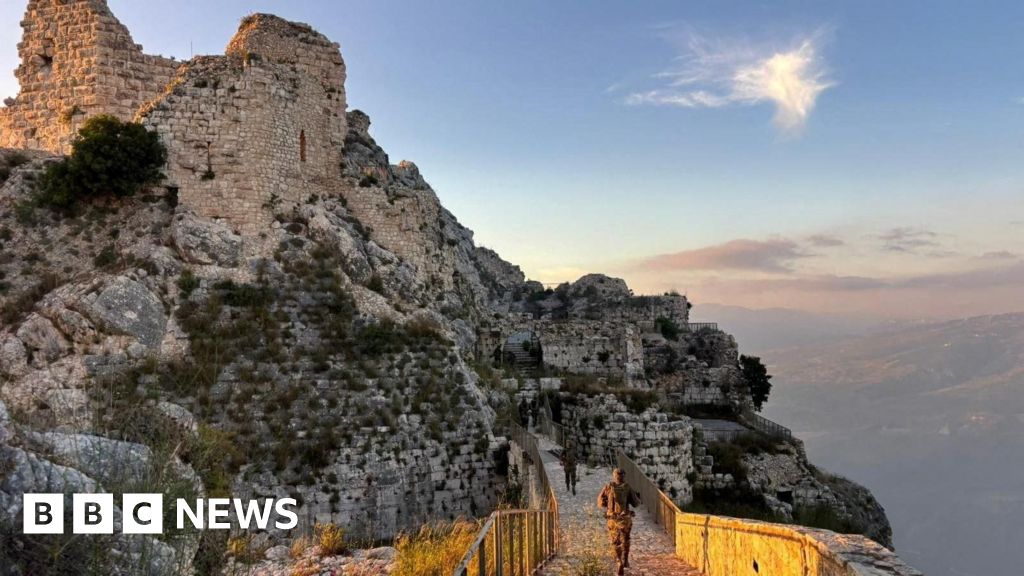
Israeli forces have seized the strategic Beaufort Castle in southern Lebanon, marking their deepest military advance into the country in 26 years. The medieval castle, perched over the Litani River valley and dating back to the Crusader era, was captured after days of intense fighting, with Prime Minister Benjamin Netanyahu calling the operation a “decisive shift” in Israel’s offensive against Hezbollah.
The Israeli military’s advance beyond the Litani River, a de facto boundary since Israel’s 1982 invasion, represents a significant escalation in the conflict. Netanyahu stated Sunday, “Our heroic fighters captured the Beaufort outpost,” and emphasized his directive to “deepen and expand our grip on the places that were under Hezbollah’s control.” Defense Minister Israel Katz added that the Israeli flag was “once again flying over the peaks overlooking the communities of the Galilee,” and that soldiers would remain at the site as part of a security zone in Lebanon.
Beaufort Castle, about nine miles from the Israeli border, has been a key strategic location for centuries. Israel previously held the site from 1982 until its withdrawal in 2000. Katz recalled the Golani Brigade’s original capture of the castle during the Lebanon War and noted the symbolic and strategic importance of its recapture.
The Israeli military has also expanded evacuation orders in southern Lebanon, warning residents to leave areas near Hezbollah positions. An IDF spokesman confirmed that a “significant number of ground soldiers” are involved in operations extending beyond the Litani River. The military has intensified strikes on bridges and infrastructure, citing their use by Hezbollah to smuggle weapons and fighters.
The conflict has resulted in heavy casualties and displacement. Lebanon’s health ministry reports over 3,350 deaths from Israeli strikes, including civilians and first responders, and more than 1.2 million people displaced since early March. Israel reports 25 soldiers and two civilians killed in or near southern Lebanon, with additional civilian casualties in northern Israel.
Lebanese Prime Minister Nawaf Salam condemned the Israeli offensive as “collective punishment,” criticizing the “scorched-earth policy” and calling for an immediate ceasefire and Israeli withdrawal. He described the ongoing strikes and evacuation orders as violations of international norms and laws. Meanwhile, French Foreign Minister Jean-Noël Barrot has requested an emergency United Nations Security Council meeting, denouncing the “ever-deeper occupation” of Lebanese territory.
The fighting complicates ongoing U.S.-brokered efforts to extend a ceasefire between the U.S. and Iran, with Iran insisting any agreement must include an end to the Lebanon conflict. A senior Arab official involved in the negotiations told NBC News that terms for a truce were agreed upon days ago but finalization has been delayed.
Israeli officials accuse Hezbollah of breaching the month-old ceasefire with attacks on Israeli forces and communities, while Lebanese officials point to Israeli strikes as violations. Despite this, Israeli and Lebanese military delegations met in Washington recently to discuss ways to uphold the ceasefire, though Hezbollah was not part of these talks.
Israel’s far-right politicians have called for a permanent occupation of southern Lebanon, citing security concerns. Finance Minister Bezalel Smotrich described the capture of Beaufort Ridge as “correcting old national sins,” while National Security Minister Itamar Ben-Gvir urged further military action against Beirut.
Experts warn that a prolonged Israeli presence risks entangling Israel in a “forever war” in Lebanon. Fawaz Gerges, a professor at the London School of Economics, noted that despite military gains, Israel may never achieve lasting security as Hezbollah continues to pose a threat.
The Beaufort Castle’s capture underscores the intensifying conflict in southern Lebanon, with Israel aiming to weaken Hezbollah’s hold on the region amid complex regional and international dynamics.







Be First to Comment