Key takeaways:
- A U.S. F-15E fighter jet was shot down over Iran; one crew member was rescued, and the other remains missing.
- Iran's Islamic Revolutionary Guard Corps claimed responsibility and released photos of the downed jet.
- Despite U.S. claims of air dominance, Iran retains half of its ballistic missile launchers, thousands of drones, and underground missile stockpiles.
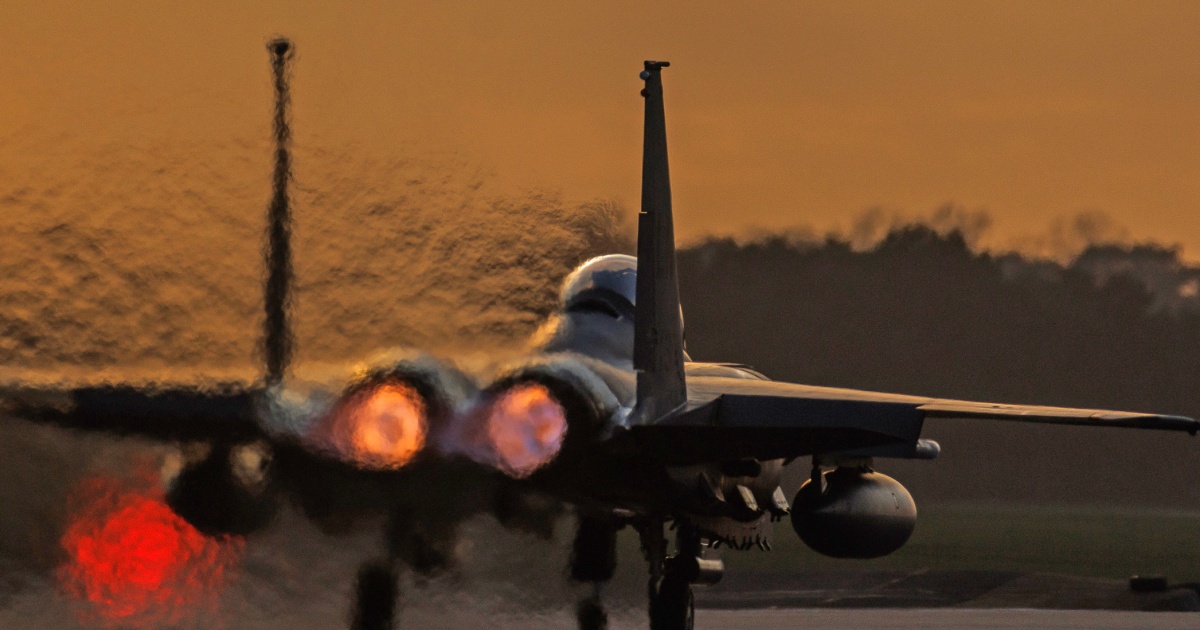
A U.S. F-15E fighter jet was shot down over Iran on Friday, marking the first time in decades that a U.S. fighter jet has been downed by enemy fire, U.S. officials confirmed. One crew member, the pilot, was rescued by American forces, while the search continues for the second crew member, a weapons system officer. The incident triggered a high-risk rescue operation involving two Blackhawk helicopters and an A-10 Thunderbolt attack jet, which were assisting in the search and rescue effort. The A-10 pilot ejected safely over Kuwaiti airspace after the aircraft took fire, and the helicopters came under small arms fire, resulting in minor injuries to U.S. personnel.
Iran’s Islamic Revolutionary Guard Corps claimed responsibility for shooting down the F-15E, releasing photos and videos of the incident. Iranian state media also reported a prize for anyone capturing U.S. pilots alive and urged citizens to shoot at any U.S. aircraft seen overhead. The downing of the jet challenges the U.S. administration’s narrative of air superiority over Iran, which President Donald Trump and military officials have repeatedly asserted.
Despite President Trump’s recent statements claiming the U.S. military has “beaten and completely decimated Iran” and that Iran’s radar and anti-aircraft systems are destroyed, U.S. officials acknowledge that Iran retains significant military capabilities. Roughly half of Iran’s ballistic missile launchers remain intact, along with thousands of attack drones and multiple underground missile stockpiles. Iran continues to launch missiles and drones targeting U.S. forces and allies across the Middle East, with at least 50 ballistic missiles and over 150 drones fired since the conflict began.
The war has entered its second month with ongoing asymmetric warfare tactics employed by Iran, including the use of drones, hidden missile launchers, sea mines, and small attack boats in strategic waterways like the Strait of Hormuz. Experts note that Iran’s ability to sustain attacks and hide weaponry complicates U.S. military efforts. At least 16 U.S. Reaper drones have been downed since the start of the war.
The White House has faced criticism for downplaying the threat posed by Iran. Earlier this week, White House press secretary Karoline Leavitt stated that U.S. and Israeli forces control the skies over Iran, a claim contradicted by recent events. A senior White House official said President Trump convened his national security team to monitor the unfolding situation following the jet’s downing.
Iranian officials have mocked the U.S. administration’s handling of the conflict, with Iran’s parliament speaker posting on social media deriding the U.S. military strategy. Meanwhile, President Trump has expressed frustration with European allies for not supporting U.S. military operations or granting access to airspace and bases for attacks on Iran. NATO’s secretary-general is scheduled to visit the White House next week amid these tensions.
The conflict’s trajectory remains uncertain, with no clear indication that Iran’s leadership has softened its stance or that diplomatic talks are underway, despite President Trump’s claims. The ongoing hostilities continue to impact regional stability and global oil prices, as Iran maintains the capability to disrupt shipping through the Strait of Hormuz.










Be First to Comment