Key takeaways:
- April features key elections including a Georgia special runoff, a Wisconsin Supreme Court race, a New Jersey congressional special election, and a Virginia redistricting referendum, all reflecting shifting party dynamics and voter engagement.
- The Department of Homeland Security shutdown continues amid partisan disputes, with Senate Republicans proposing partial funding and former President Trump linking DHS funding to controversial voting legislation, complicating negotiations.
- These political events highlight ongoing challenges in bipartisan cooperation and will serve as important indicators of party strength and momentum ahead of future elections.
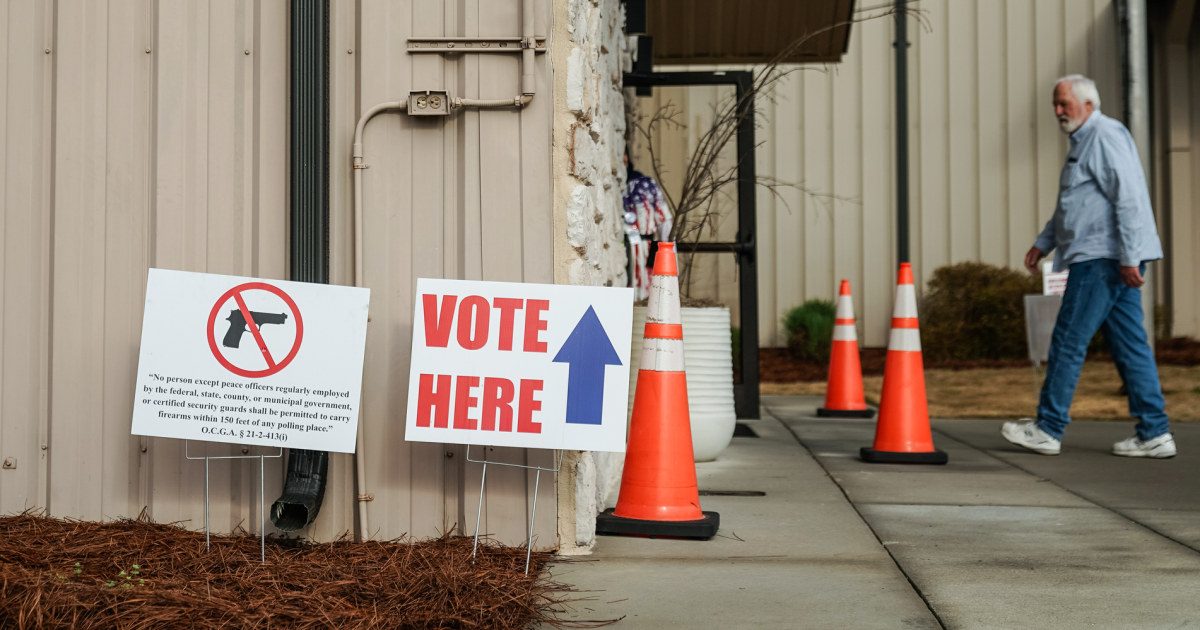
Several key elections and political developments are set to shape the U.S. political landscape in April, amid ongoing legislative standoffs and policy debates in Washington. Notably, a series of special elections and a redistricting referendum will test party strengths in various states, while negotiations to reopen the Department of Homeland Security (DHS) remain stalled due to partisan disagreements.
On April 7, a special runoff election in Georgia’s 14th Congressional District will draw attention. Democrat Shawn Harris led the initial March 10 jungle primary but faces a challenging runoff against Republican Clay Fuller. The district, which spans from Atlanta’s far suburbs to the state’s northwest corner, voted for Donald Trump by 37 points in 2024, making a Democratic win highly unlikely. Analysts note that Democrats have improved their performance in every House special election during Trump’s second term, but a Republican victory is still expected. Meanwhile, Wisconsin will hold a Supreme Court election the same day. Although officially nonpartisan, the race has become highly partisan, with Democrats currently holding an advantage due to their energized voter base. The stakes are lower than in last year’s high-profile contest, but low turnout could influence the outcome.
On April 16, New Jersey’s 11th Congressional District will hold a special election to replace now-Governor Mikie Sherrill. This suburban district, once a Republican stronghold, has trended Democratic in recent years. The Democratic nominee, Analilia Mejia, backed by progressive figures such as Senator Bernie Sanders and Representative Alexandria Ocasio-Cortez, faces Republican Joe Hathaway, a local mayor critical of Trump. Although the district favored Kamala Harris by nine points in 2024, Mejia’s narrow primary victory has added uncertainty to the race. On April 21, Virginia voters will decide on a redistricting referendum that could reshape the state’s congressional delegation. Democrats aim to increase their current 6-5 advantage to a 10-1 majority through a new map modeled after California’s recent redistricting success. However, early polling and voting trends suggest the measure may face resistance, reflecting Virginia’s distinct political culture.
Meanwhile, the DHS shutdown continues to impact government operations, particularly at airports where TSA agents have missed paychecks, causing long lines and delays. Senate Republicans have proposed funding the entire DHS except for Immigration and Customs Enforcement (ICE), with plans to address ICE funding separately through a reconciliation bill requiring only a simple majority. However, President Donald Trump has complicated these efforts by linking DHS funding to the passage of the SAVE America Act, a voting legislation bill unlikely to gain Democratic support. Trump’s public statements and social media posts have intensified pressure on Senate Republicans, urging them not to reach a deal without Democrats agreeing to the voting bill. In a notable move, Trump ordered ICE agents to deploy to airports to assist TSA, further politicizing the situation.
These developments underscore the complex interplay between electoral politics and legislative negotiations in the current U.S. political environment. The upcoming elections will serve as indicators of party momentum, while the DHS funding impasse highlights ongoing challenges in bipartisan cooperation. Observers will be closely watching how these dynamics evolve in the coming weeks.





Be First to Comment