Key takeaways:
- The Trump administration has considered deploying the Joint Special Operations Command (JSOC) to seize or secure Iran’s nuclear materials amid ongoing military actions, aiming to prevent Iran from acquiring nuclear weapons.
- Despite extensive strikes on Iran’s conventional military targets, Iran continues counterattacks, while concerns grow over its enriched uranium stockpiles, which are highly contaminated and difficult to handle according to IAEA experts.
- The conflict has expanded into Lebanon, with Israeli military operations targeting Hezbollah strongholds and infrastructure, leading to large-scale civilian displacement and fears of a broader ground invasion and prolonged occupation.
The Trump administration has been reportedly exploring options to secure or extract Iran’s nuclear materials amid ongoing military operations targeting Tehran. According to multiple sources familiar with the discussions, planning has involved the potential deployment of the Joint Special Operations Command (JSOC), an elite U.S. military unit often assigned sensitive counter-proliferation missions. While President Donald Trump has not yet made a decision on such an operation, White House officials have indicated that seizing Iran’s nuclear stockpiles remains a possible course of action. Trump himself stated on Truth Social that the U.S. is “getting very close to meeting our objectives” in winding down military efforts related to Iran.
The focus of the U.S.-Israel campaign initially targeted Iran’s conventional military capabilities, including air defenses, missile systems, and infrastructure linked to the Islamic Revolutionary Guard Corps. Despite extensive airstrikes, Iran has continued to launch counterattacks against Israel and U.S.-allied countries in the Gulf, including drone attacks that resulted in the deaths of several U.S. service members in Kuwait and Saudi Arabia. The administration has since shifted attention toward a longer-term goal: preventing Iran from acquiring nuclear weapons. As of last year, Iran reportedly possessed nearly 972 pounds of uranium enriched to 60%, a level close to weapons-grade material, much of which remains buried beneath nuclear sites damaged in previous U.S. strikes.
Experts have highlighted the complexity and risks involved in any mission to seize Iran’s uranium stockpiles. Rafael Grossi, director-general of the International Atomic Energy Agency (IAEA), described the material as highly contaminated and difficult to handle, though he acknowledged the military’s capacity to undertake such an operation. The IAEA has noted that Iran is the only non-nuclear weapons state enriching uranium to such high levels, a point of concern given Tehran’s insistence that its nuclear program is for peaceful purposes. Previous indirect talks between the U.S. and Iran, mediated by Oman, included proposals to downblend Iran’s enriched uranium, but Iran has rejected demands to halt enrichment entirely.
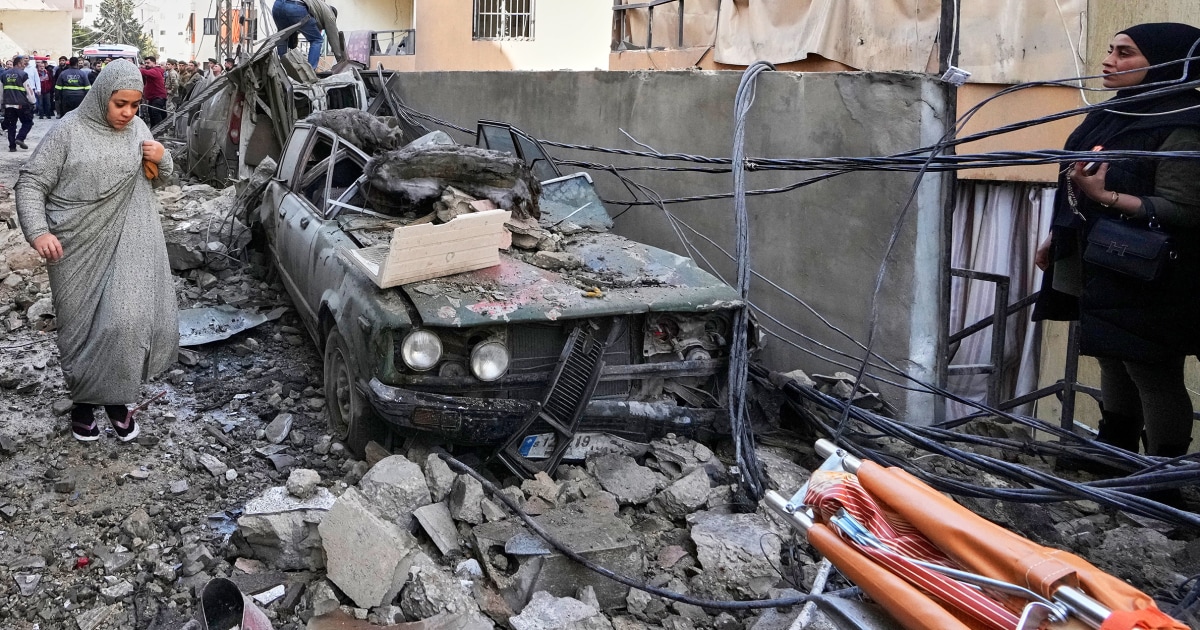
Meanwhile, the conflict in the region has expanded into Lebanon, where fears are mounting over a potential Israeli ground invasion of southern Lebanon. Thousands of residents, including families displaced from Beirut’s Dahieh suburb—a Hezbollah stronghold—are living in makeshift shelters or vehicles, uncertain when they might return home. Hezbollah, an Iran-backed militant group, has engaged in rocket attacks against Israel, prompting Israeli military operations aimed at dismantling the group’s presence near the border. Israeli Defense Minister Israel Katz has described efforts to destroy “terror infrastructure” in Lebanese villages and prevent Hezbollah’s return, with military activity intensifying around key border towns such as Khiam.
The Israeli military has also targeted bridges over the Litani River, which it alleges are used by Hezbollah for smuggling weapons and fighters. Analysts suggest that Israel may seek to establish a formal buffer zone inside Lebanon, similar to its previous operations in Gaza, with a wider ground offensive considered imminent. The displacement of hundreds of thousands of Lebanese civilians south of the Litani River has raised concerns about the duration and scope of any occupation. Some Israeli voices have advocated for permanent control of the area, citing historical and security considerations. Meanwhile, Lebanon’s government has pledged to disarm Hezbollah as part of a U.N.-brokered effort to end hostilities, though progress remains limited amid ongoing violence.







Be First to Comment