Key takeaways:
- TSA employees are facing financial hardship due to a partial government shutdown, leading to missed paychecks, increased resignations, and doubled callout rates, causing significant airport security delays nationwide.
- Major airports like Minneapolis-Saint Paul, Austin, Atlanta, and Houston are experiencing severe staffing shortages and long wait times, with DHS warning of operational risks and urging urgent funding restoration.
- The shutdown results from a political deadlock over immigration policy, with calls from airlines and officials to resolve the funding impasse to support TSA workers and maintain airport security amid rising travel demand.
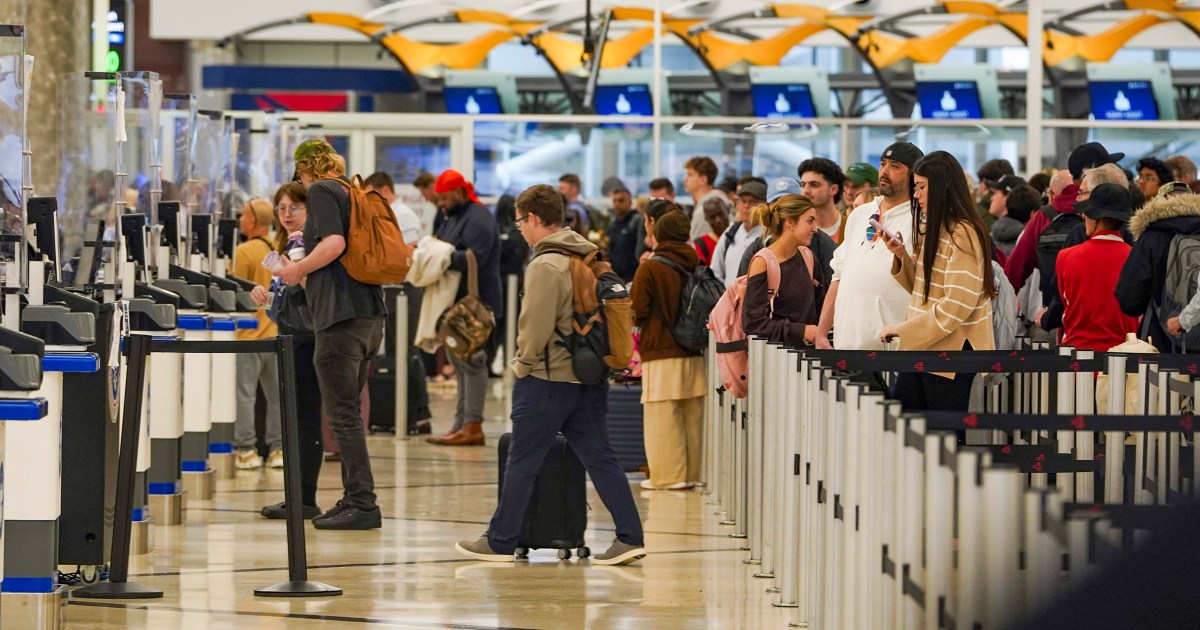
Travelers across the United States are experiencing significant delays at airport security checkpoints as Transportation Security Administration (TSA) employees face financial strain amid a partial government shutdown. The shutdown, which began in mid-February, has resulted in TSA workers missing their first full paycheck on Friday, exacerbating staffing shortages and increasing callout rates at airports nationwide.
According to data obtained by CBS News, over 300 TSA employees have resigned since the funding lapse, and callout rates have more than doubled. The Department of Homeland Security (DHS) reported that on Sunday alone, there were more than 111 incidents where staffing shortages threatened “operational integrity,” creating “hotspots” of severe delays. Airports such as Minneapolis-Saint Paul International, Austin-Bergstrom International, and Hartsfield-Jackson Atlanta International have seen wait times of up to two hours. Houston Hobby International Airport experienced a 55% callout rate on Saturday, the highest since the shutdown began.
Acting TSA Administrator Adam Stahl highlighted the uneven impact across airports, noting that some locations are disproportionately affected. “Austin this morning was particularly problematic,” Stahl said, emphasizing that while security measures remain intact, wait times are expected to worsen. DHS identified Houston, New Orleans, and Atlanta as the most affected areas, with Atlanta serving as a major hub for Delta Airlines and one of the busiest airports in the country. The agency stressed the urgent need to restore TSA funding to maintain operational stability and morale among workers.
The shutdown stems from a political deadlock in Congress over immigration policy reforms. Democrats have delayed funding bills for the Department of Homeland Security (DHS), demanding changes to Immigration and Customs Enforcement (ICE) and Customs and Border Protection (CBP) before approving new appropriations. Transportation Secretary Sean Duffy and other Republican officials have urged Democrats to reopen DHS funding, while Democratic Senator Mark Warner suggested paying all DHS employees except those involved in immigration enforcement if agreement on reforms cannot be reached. President Trump publicly thanked TSA workers for continuing to work without pay, attributing the shutdown to Democratic opposition.
The financial impact on TSA employees has been severe. Many officers earn between $35,000 and $40,000 annually and are struggling to cover basic expenses such as gas and groceries. TSA officer Anthony Riley, who works at Syracuse Hancock International Airport, shared that he has been working without pay for four weeks and is facing the risk of homelessness. “It’s killing me,” Riley said, describing the difficult choices employees must make between paying bills and continuing to work. DHS noted that training new TSA officers takes four to six months, complicating efforts to address staffing shortages amid rising travel demand for spring break, summer vacations, and international events like the World Cup.
Airlines for America, a lobbying group representing major airlines, has called on Congress to resolve the funding impasse, emphasizing the hardship faced by TSA workers and the traveling public. “What else is more important than paying your own workers?” said Chris Sununu, the group’s leader. In a letter to Congress, airline CEOs described the situation as “simply unacceptable,” highlighting the difficulty employees face in meeting basic living expenses without pay. The ongoing shutdown continues to disrupt airport operations and strain the nation’s transportation security system.










Be First to Comment