Key takeaways:
- President Trump expressed optimism about the Iran conflict ending soon, claiming U.S. forces have made significant military progress but acknowledged some targets remain for future strikes.
- He criticized the appointment of Mojtaba Khamenei as Iran’s new supreme leader, preferring internal political change over external intervention, and referenced Venezuela as a model for transition.
- Trump addressed a recent bombing of an Iranian school likely caused unintentionally by U.S. forces, warned Iran against disrupting oil shipments through the Strait of Hormuz, and noted the ongoing casualties and market volatility resulting from the conflict.
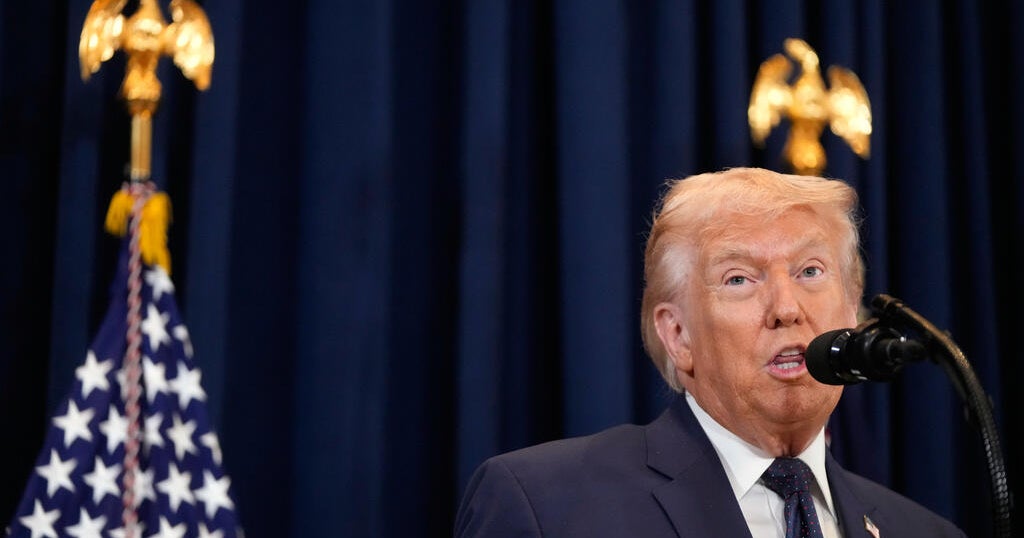
President Trump addressed the ongoing conflict with Iran during a news conference at his Miami-area golf club, offering a range of remarks on the military operation’s progress and future. He expressed optimism that the war would end “very soon,” while also describing the conflict as “the beginning of building a new country.” Trump claimed that U.S. forces had made “major strides” toward their military objectives, asserting that they had “wiped every single force in Iran out, very completely,” though he acknowledged that some important targets, including those related to electricity production, remained for later strikes.
The president’s comments came amid heightened tensions in the Middle East, following U.S. and Israeli strikes on Iran and the appointment of Mojtaba Khamenei, son of the late Ayatollah Ali Khamenei, as Iran’s new supreme leader. Trump expressed disappointment in this selection but refrained from commenting on whether the U.S. would target Khamenei directly. He emphasized a preference for internal leadership changes in Iran rather than external intervention, referencing the destabilizing aftermath of the U.S. invasion of Iraq in 2003. Trump also cited Venezuela as a model for political transition, noting the U.S. approach there involved working with existing leadership structures.
On the issue of a recent bombing of an elementary school in Iran that killed 168 people, including many children, Trump acknowledged that a preliminary U.S. assessment suggested American forces were “likely” responsible, though the attack was not intentional. Despite this, he had previously blamed Iran for the bombing, a stance not shared by other officials. When questioned about this discrepancy, Trump said he did not have enough information and was awaiting the results of ongoing investigations.
The president also issued a stern warning to Iran regarding the Strait of Hormuz, a critical chokepoint for global oil shipments. He stated that Iran would face “much, much harder” strikes if it attempted to disrupt oil tanker traffic, emphasizing that the U.S. would not allow a “terrorist regime” to hold the world hostage by threatening the oil supply. The U.S. has offered political risk insurance to tankers in the region and indicated it could escort vessels through the strait if necessary. These developments have contributed to volatility in global markets, with oil prices surging amid fears of supply disruptions. Since the conflict began, seven American service members have died, and Trump acknowledged that casualties are an unfortunate reality of war, adding that families of the fallen have urged him to “finish the job” in Iran.


Be First to Comment