Key takeaways:
- Three U.S. officials confirmed limited strikes on Qeshm Island after Iranian forces fired at an American aircraft.
- U.S. and Iranian officials described ongoing diplomatic contacts despite the strikes.
- A U.S. Central Command estimate obtained by CBS News put the war’s military cost at at least $47.1 billion as of mid-October.
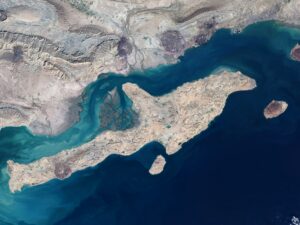
The U.S. military struck targets on Iran’s Qeshm Island on Monday after Iranian forces fired at an American aircraft, U.S. officials said, carrying out a limited attack on the eve of midterm elections as Washington and Tehran pursue talks to end their war.
Three U.S. officials confirmed the strikes to CBS News. A senior official told the network that the targets were on Qeshm, an island in the Strait of Hormuz, and that Iran’s Islamic Revolutionary Guard Corps had fired at the aircraft. Iranian state news agency IRNA reported several explosions on the island; NBC News said Iranian state media reported five.
The strikes were defensive, not a return to major combat operations, two U.S. officials told NBC News. One said the U.S. had targeted a launcher after Iran again tried to hit an American aircraft. “This was a defensive measure for Iranians using surface-to-air missiles against U.S. assets,” a third official told NBC.
U.S. forces continue to intercept drones and missiles aimed at shipping daily, one official told NBC. The official said the Revolutionary Guard had repeatedly targeted manned and unmanned U.S. aircraft around the strait in recent weeks, prompting occasional U.S. strikes on Iranian launchers. The BBC said it had sought comment from U.S. Central Command.
The attack came before Tuesday’s elections, which will decide control of Congress. Trump had said the U.S. would not strike Iran before the vote, NBC reported. Asked Monday whether significant strikes would resume after the elections, Trump said no, according to the BBC. He also told Axios he was in “no rush” to intensify attacks.
Still, Trump raised the possibility of targeting a site linked to Iran’s nuclear programme. In a Fox News appearance, he said the U.S. might need to strike Pickaxe, but described the operation as “not a big deal” that could be completed in “one hour,” the BBC reported. CBS News identified Pickaxe Mountain as the location of a suspected nuclear site.
Diplomatic contacts continued alongside the military activity. Vice President JD Vance said Monday that he and Trump “both feel pretty good about the prospects for potentially coming to a negotiated settlement,” according to NBC. Vance sent a letter last week to Iranian security chief Mohsen Rezaei; Trump said it concerned assistance with “medical supplies and various things,” NBC reported.
Iranian Foreign Minister Abbas Araghchi told IRNA that “very intensive” talks with the U.S. were underway through mediators, the BBC reported. He said Tehran was prepared for diplomacy or military action and that Washington had to choose between negotiation and what he called the “mistake of military aggression.”
The war began with U.S. and Israeli attacks on Iran in February, according to the BBC. NBC reported that thousands of U.S. troops remain off Iran to enforce a naval blockade aimed at stopping Iranian oil tankers, with a third aircraft carrier and more troops headed to the region.
The conflict has also weighed on U.S. voters. CBS News reported that a U.S. Central Command estimate put the military’s cost at at least $47.1 billion as of mid-October, including about $29 billion to replace munitions. The estimate excludes damage to U.S. bases in the Middle East.





Be First to Comment